If you want to wash and dry table napkins in one continuous cycle, choose a washer-dryer by its rated drying capacity, not just its larger washing capacity: a full wash load may need splitting before drying. Then check programmes suited to the napkins’ care labels, the exact model’s energy information and its installation dimensions. A combined appliance uses one footprint, while separate appliances may suit a family that regularly needs to dry larger loads and has room for both.
Who needs to consider what?
Families drying napkins in one cycle
If you want washed napkins ready to reuse without hanging them up, compare the rated dry-load limit with the load you intend to put through a continuous cycle. The larger wash-only figure does not tell you how much the machine can dry at once.
Households handling food-stained linen
If napkins regularly need more than a routine wash, check the chosen model’s cotton, pre-wash and extra-rinse options against the fabric care labels. Which? notes that programme and rinse options vary between washer-dryers.
Space-limited family homes
A combined machine provides washing and drying in one appliance, but it still has to fit the intended space. Check its exact width, height and depth, along with door access and the model’s installation instructions.
What matters when choosing?
Choose between one combined appliance and two separate machines based on available space and how often you need to dry a large load. If a washer-dryer fits your routine, work from its dry-load limit before comparing programmes and running information.
Washer-dryer
Consider it when: One appliance needs to handle both jobs and your intended continuous wash-and-dry load fits its rated drying capacity.
Trade-off: The drying limit is lower than the washing limit, so a full wash load may need reducing before it dries.
Separate washer and tumble dryer
Consider them when: You have space for two appliances and regularly need to dry larger loads after washing.
Trade-off: You must accommodate and install both appliances rather than one combined machine.
| Concern |
What to check |
Who this matters to |
| Continuous-cycle capacity |
Compare the separate wash and wash-and-dry ratings in kilograms with the load you actually want dried at once. |
I want a regular load of napkins and other laundry to finish drying without removing items after the wash; around 42% of consumers put uninterrupted drying capacity first. |
| Washing and rinsing control |
Check the napkins’ care labels and the exact model’s cotton, pre-wash and extra-rinse options where relevant. |
Food-soiled table linen makes suitable wash settings and rinsing control more important to me than maximum load size; roughly 33% of consumers give these controls priority. |
| Running information and fit |
Compare the exact model’s energy label and product information sheet, then measure the installation space and required clearances. |
I need an appliance that fits my laundry space and suits the loads I run most often; around 25% of consumers place physical fit and running information first. |
Buying pitfalls
-
Reading wash capacity as continuous-cycle capacity
A washer-dryer can wash more than it can dry in one cycle. Filling it to the wash-only limit may leave you with items to remove before drying.
If uninterrupted drying matters, plan the load around the rated wash-and-dry capacity; use the larger wash rating for loads you will hang dry or split.
Splitting a load means another drying cycle and more time before everything is ready.
-
Choosing by an energy letter or rapid-cycle claim alone
The label and product information sheet give model-specific information, while a rapid programme may have a different permitted load from a standard cycle.
Compare the exact appliance’s energy information and check the programme load limit before relying on a quick cycle for your usual napkin load.
-
Sizing for the largest occasional load
An oversized machine may spend much of its time washing smaller loads. Which? notes that larger washer-dryers can be less efficient when they are not filled appropriately.
Match capacity to your normal laundry volume as well as the occasional larger load, and use a suitable programme when a small load is unavoidable.
-
Assuming a named feature will remove every stain
Stain, steam and fabric-care features vary by model; a manufacturer’s feature description does not establish how every food stain will respond on every napkin fabric.
Read the exact model’s programme instructions and follow the napkins’ care labels rather than treating a feature name as a cleaning guarantee.
Brands to consider
These model examples help illustrate differences in capacity, dimensions and programme claims; their specifications should not be assumed to apply across an entire brand’s range.
Bosch
One reference for families comparing a larger wash drum with a smaller continuous drying limit.
- Bosch specifies the WNG25401GB at 10.5 kg for washing and 6.0 kg for a wash-and-dry cycle.
- Check that model’s programme list if stain handling or rinsing control matters; its named features do not establish results for every napkin or stain.
Beko
A model example for comparing an 8 kg wash load with a 5 kg continuous wash-and-dry load.
- Beko lists the BMND8545U with 8 kg washing and 5 kg drying capacity, alongside rapid programmes.
- Beko’s stated rapid-cycle times depend on the specified programme and load; check those conditions against your usual laundry.
LG
A reference for buyers comparing a 10 kg wash / 6 kg dry model against the space available at home.
- LG lists the FWY606WWLN1 at 600 mm wide, 850 mm high and 620 mm deep.
- Allow for the chosen model’s installation requirements as well as its stated depth; LG’s fabric-care feature claims do not establish food-stain removal on table napkins.
Haier
A model example for comparing 10 kg washing and 6 kg drying capacity with a specific appliance footprint.
- Haier lists the HWD100-B14387PU1 as a freestanding 10 kg / 6 kg washer-dryer measuring 595 × 598 × 850 mm.
- Check the exact model documentation before relying on named stain-treatment or fabric-care features for your napkins.
Joybuy washer-dryer choices
These combined washer-dryers suit families who want to compare a stated 5 kg or 6 kg drying limit for table-napkin laundry. Choose the dry-load rating around what you intend to finish in one cycle, then check programmes and installation requirements for the exact model.
 No image available
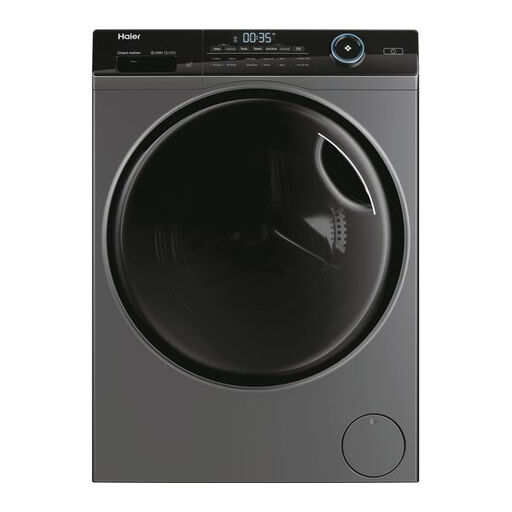
Haier I-Pro Series 5 HWD100-B14959S8NU1, 10 kg / 6 kg, anthracite
Consider this model if your intended continuous load fits within its 6 kg drying limit. Its stated washing capacity is 10 kg, so a larger wash load may need splitting before drying.
Check its programme list for the cotton, pre-wash or extra-rinse controls you would use, and follow its installation instructions when assessing the space.
Joybuy
 No image available
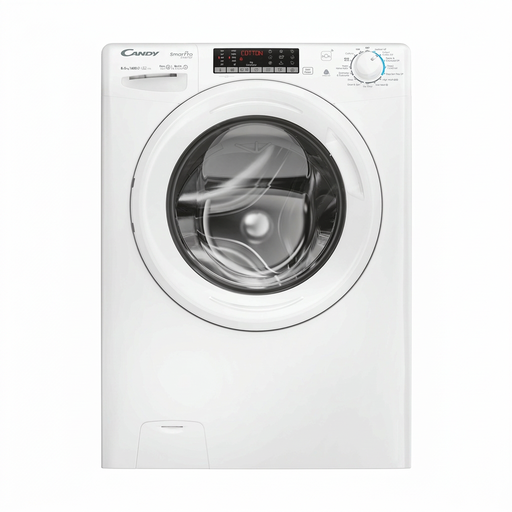
Candy Smart Pro Inverter CSOW4856TWM6-80, 8 kg / 5 kg, white
Consider this model if a 5 kg continuous wash-and-dry load meets your needs; its wash-only capacity is 8 kg. The title also states a 1400 rpm spin speed.
The product information lists no stain-remover option. If cotton or extra-rinse settings matter for your napkins, check the exact programme list before choosing it.
Joybuy
 No image available
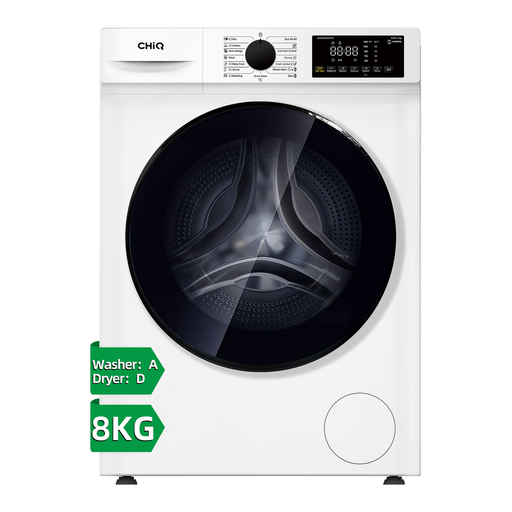
CHiQ JKW85882HW freestanding washer-dryer, 8 kg / 5 kg, white
Consider this model for a continuous load within its 5 kg drying limit; its stated washing capacity is 8 kg. The title identifies it as freestanding with a 1400 rpm spin.
Confirm the complete installation dimensions and the programmes you need for table napkins before deciding whether it fits your home and routine.
Joybuy
 No image available
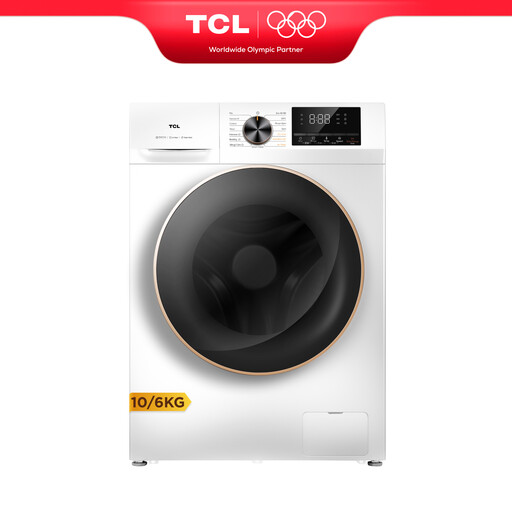
TCL CP1210WA0 freestanding washer-dryer, 10 kg / 6 kg, white
Consider this model if a 6 kg continuous wash-and-dry limit suits your usual load. Its stated wash-only capacity is 10 kg, and the title lists a 1400 rpm spin.
Check the exact dimensions, installation instructions and napkin-relevant programmes before committing to this model.
Joybuy
Frequently asked questions
Can I wash a full washer-dryer load and dry it straight away?
Only if the load is within the machine’s lower wash-and-dry capacity. A load that fills its wash-only allowance may need reducing before drying, so use the exact model’s dry-load figure when planning a continuous cycle.
What should I compare on the energy label?
Compare the exact models’ energy labels alongside their product information sheets rather than relying on an energy-class letter alone. Energy Saving Trust explains the A-to-G label scale, while GOV.UK describes the accompanying product information sheet for appliances within the relevant labelling rules.
Which programmes should I look for when washing table napkins?
Start with the napkins’ care labels, then check whether the chosen washer-dryer offers a suitable cotton programme and any pre-wash or extra-rinse control you need. Which? notes that additional options vary by model; a named stain feature does not guarantee removal of every food stain.
What should I measure before installing a washer-dryer?
Measure the intended space against the exact appliance’s width, height and depth, then allow for door access and the clearances specified in its installation instructions. Dimensions differ between models, so a measurement taken from another washer-dryer is not a substitute.


