Utility-room space planners
If the appliance must fit near pipework, plugs or an opposing door, measure the usable space rather than the empty bay alone. Leave room to open the washer-dryer door and follow the model’s installation instructions.


Choose a washer-dryer around the apron load you need to dry, not just its larger wash capacity: a continuous wash-and-dry cycle must stay within the model’s stated limit. Before choosing a model for a utility room, allow space for pipes, plugs and the door to open, and check that your aprons’ care labels permit the wash and drying programmes you plan to use.
If the appliance must fit near pipework, plugs or an opposing door, measure the usable space rather than the empty bay alone. Leave room to open the washer-dryer door and follow the model’s installation instructions.
If aprons need washing regularly, compare the drying limit with your usual load. Check the permitted load of any short wash-and-dry programme separately: it may be smaller than the machine’s rated capacity.
If your aprons have prints, coatings or other care requirements, let their labels guide the temperature and drying method. Compare models using their energy labels and product information sheets, rather than assuming a named programme will suit every apron.
Decide whether one appliance fits your laundry routine before comparing capacities and programmes. A separate washing machine and tumble dryer need more installation space, but let you wash one load while another dries; a washer-dryer keeps both functions in one appliance, subject to its lower drying limit.
Consider it when: Your utility room has space for one appliance and your usual apron load fits its stated drying capacity.
Trade-off: Washing up to the larger wash-only limit may mean removing items before drying.
Consider them when: You have room for both appliances and regularly need to wash and dry different loads at the same time.
Trade-off: You must accommodate and install two appliances rather than one.
| Concern | What to check | Who this matters to |
|---|---|---|
| Utility-room fit | Measure usable width and depth around pipes and plugs; check door opening and the model’s installation clearances. | I need the door to open and the connections to remain accessible after installation. Around 31% of consumers put fit and clearance first. |
| Small-load turnaround | Check that a short programme both washes and dries, then compare its permitted load and fabric conditions. | When a few aprons need to be ready again soon, a full-capacity wash-only quick cycle will not meet my need. Roughly 25% of consumers primarily seek a suitable short wash-and-dry routine. |
| Drying capacity | Compare the wash-only limit with the stated wash-and-dry or drying limit for the programme you intend to use. | I would rather plan around my normal drying load than have to split it unexpectedly. For around 25% of consumers, that capacity difference is the main concern. |
| Fabric care and energy information | Match cycles to apron care labels; compare the energy label and product information sheet on a like-for-like basis. | If an apron has heat-sensitive details, I need a permitted drying method as well as useful model information. Fabric care and energy comparison come first for roughly 19% of consumers. |
A washer-dryer can have a lower limit for drying than for washing. Bosch, for example, lists 10 kg wash and 6 kg wash-and-dry for WDU8H549GB; Beko lists 8 kg wash and 5 kg dry for BMM5DFO851.
Size your regular continuous cycle to the relevant drying limit. If you use the higher wash-only capacity, plan to air-dry or remove part of the load.
An appliance dimension alone does not tell you whether hoses and plugs will fit behind it or whether you can open its door fully.
Measure the usable opening around services and check the installation instructions. Allow around 25 mm at either side and 50–150 mm at the rear for freestanding machines; the specific model’s requirements still govern your installation.
Short programmes can have their own load limits. Beko describes its BMM5DFO851 Fast Wash and Dry programme as handling up to five shirts in 60 minutes, not a full 8 kg wash load.
Check the programme instructions for its load, textiles and drying conditions before relying on it for aprons.
An apron being washable does not establish that it can be tumble-dried or washed at a particular temperature.
Sort aprons by their care instructions, choose a compatible wash cycle and air-dry those not labelled for tumble drying.
Bosch’s WDU8H549GB is a reference point if you want to compare a 10 kg wash limit with a smaller continuous wash-and-dry limit.
Beko’s BMM5DFO851 offers an 8/5 kg capacity format and a stated short combined programme for small loads.
Samsung’s WD90HG5U34BBEU provides a 9/6 kg capacity reference for buyers considering connected features.
LG’s FWY696WWLN1 is another 9/6 kg model to consider where programme and fabric-care options matter.
These washer-dryers offer stated 5 kg or 6 kg drying capacities for a one-appliance utility-room routine. Compare each model’s installation requirements and the care instructions on your aprons before deciding.
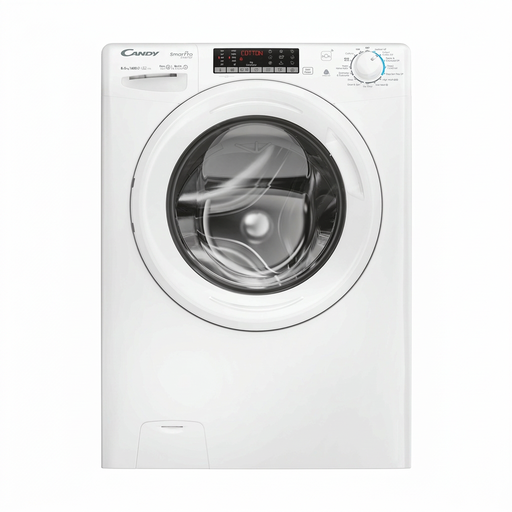 No image available
Consider this model if your usual apron load fits a 5 kg drying limit. Its stated capacities are 8 kg wash and 5 kg dry, with a 1,400 rpm spin speed; check the programme instructions before counting on a short combined cycle.
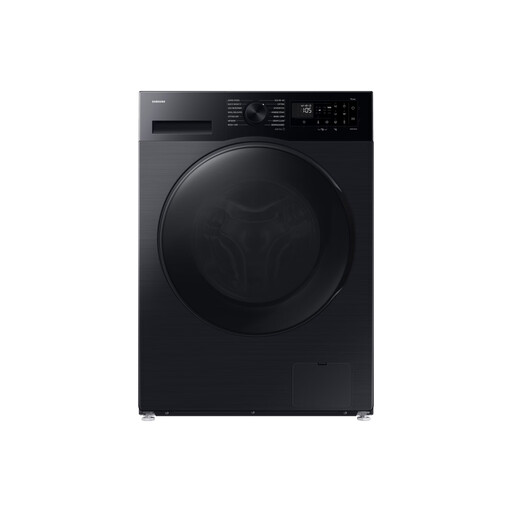 No image available
This 9 kg wash and 6 kg dry model suits a routine that stays within its drying limit. Its 15-minute Quick Wash is a wash programme, so check the combined-cycle instructions if fast washing and drying is important.
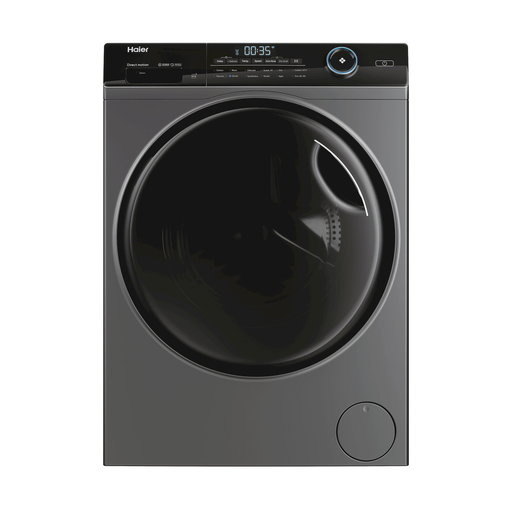 No image available
Consider this model for apron loads within its 6 kg drying capacity. It states 9 kg wash, 6 kg dry and a 1,400 spin speed; confirm its installation depth and consult the model’s energy label when comparing it with other machines.
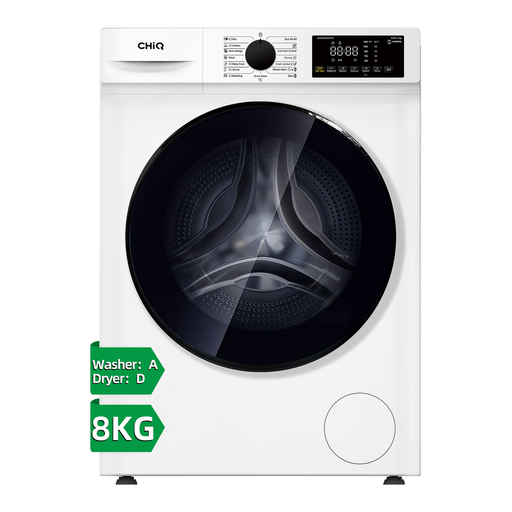 No image available
This model is an option if a 5 kg drying limit accommodates your regular apron load. It states 8 kg wash, 5 kg dry and a 1,400 spin speed; allow for services and door opening when checking utility-room fit.
 No image available
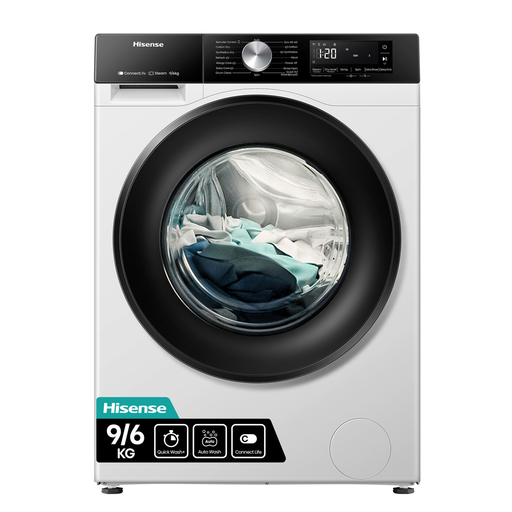
For a routine within a 6 kg drying limit, this model states 9 kg wash, 6 kg dry and 1,400 rpm. Confirm that its installation type suits your utility room; its 15-minute Quick Wash does not by itself establish a short combined wash-and-dry cycle.
Only if that load fits the model’s stated continuous wash-and-dry capacity and the aprons permit tumble drying. The wash-only limit may be higher: Bosch Home UK lists 10 kg wash and 6 kg wash-and-dry for WDU8H549GB, while Beko UK lists 8 kg wash and 5 kg dry for BMM5DFO851.
No. Check its care label for both washing temperature and permitted drying method. Shrewsbury and Telford Hospital NHS Trust advises following clothing instructions when washing and tumble-drying; air-dry an apron if its label does not permit tumble drying.
Leave the clearances required by the specific appliance and enough room for pipes, plugs and its door to open. As a measuring reference, allow around 25 mm on either side and approximately 50–150 mm at the rear for freestanding washing machines and washer-dryers; check the model’s installation instructions against your usable space.
Use the energy label and product information sheet to compare like-for-like model information, including the relevant wash and wash-and-dry cycles. UK government energy-labelling guidance covers labels for products in scope; an energy rating does not tell you whether a particular cycle is permitted by an apron’s care label.