Hosts with short changeovers
If a small batch of washable sports kit must be ready before the next stay, check the load and fabric limits of a combined wash-and-dry programme rather than relying on its advertised time alone.


Choose a washer-dryer by the amount of sports kit it needs to dry between stays, then check that its programmes suit the garments’ care labels. Which? notes that washer-dryers have a smaller drying capacity than washing capacity, so a full wash load may need dividing before drying. A short or continuous wash-and-dry programme is useful only within its permitted load and fabric limits.
If a small batch of washable sports kit must be ready before the next stay, check the load and fabric limits of a combined wash-and-dry programme rather than relying on its advertised time alone.
If several items need washing together, plan for the possibility of splitting them before drying. Which? distinguishes a washer-dryer’s larger wash capacity from its smaller drying capacity.
If the kit includes functional synthetics, microfibre or outdoor layers, match each item’s care label to the exact model’s programme instructions. A sportswear setting does not make every garment suitable for the same wash or for tumble drying.
Start with the batch you need to dry, then check garment care and the time available between stays. These checks matter more than the wash-capacity figure on its own.
| Concern | What to check | Who this matters to |
|---|---|---|
| Changeover time | Check the combined programme’s permitted load and whether its instructions cover the kit’s fabrics. | If kit has to be ready before the next arrival, I need a cycle that works for the actual batch, not just a short advertised time. Around 42% of consumers would put turnaround time first. |
| Drying capacity | Compare the rated wash and dry capacities separately, then allow for the size of a typical kit batch. | When several guests’ items are washed together, I need to know whether they can all go straight into the drying stage. For around 33% of consumers, batch capacity would be the primary concern. |
| Technical-fabric care | Match garment labels to the model’s sportswear, outdoor or synthetics instructions, including whether tumble drying is allowed. | If the kit includes delicate or technical layers, I would put suitable treatment ahead of the quickest cycle. Fabric care would come first for around 25% of consumers. |
A washer-dryer’s drying capacity is lower than its washing capacity, so a larger washed batch may need a second drying load.
Plan around the rated drying capacity in kilograms and the size of a realistic changeover batch.
A stated programme time does not establish its permitted load, suitable soil level or compatibility with coated and technical fabrics.
Check the exact model’s programme instructions and each garment’s care label before building a changeover schedule around it.
If you regularly wash and dry in one process, wash-only figures do not describe that complete use.
Compare the energy-label and product-information figures for the operating mode you expect to use.
Depth, hose clearance, door opening and the access route can all affect whether a washer-dryer fits the property.
Measure the installation space and access route, then check the exact model’s dimensions before ordering.
Worth considering when a larger wash load and model-specific outdoor or fabric-care options suit the kit.
A reference point for checking whether a named Sportswear programme covers the property’s technical textiles.
Relevant if a 9 kg wash and 6 kg dry format fits the intended batch.
Relevant when assessing a 9 kg wash and 6 kg dry model with fabric-sensing features.
Relevant when a stated short wash-and-dry option is important for eligible changeover loads.
These washer-dryers offer stated 8 kg wash/5 kg dry or 10 kg wash/6 kg dry capacities for planning kit batches. Before choosing one for technical sportswear, check the exact model’s programme instructions against the garments’ care labels.
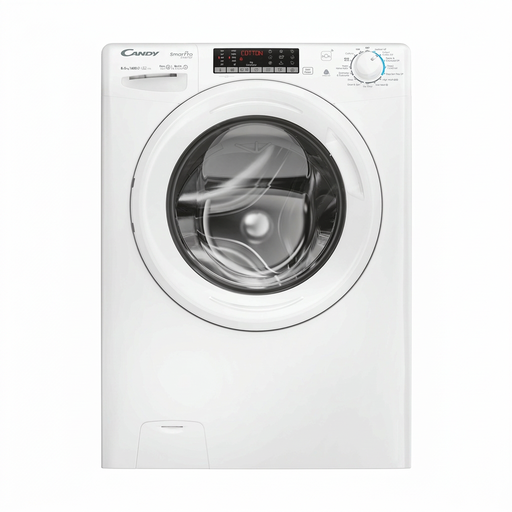 Image unavailable
Consider the 5 kg drying capacity when planning a kit batch that needs to be ready between stays.
The product name states an 8 kg wash capacity and 1,400 rpm spin. Check combined-cycle limits and garment compatibility before relying on a particular turnaround time.
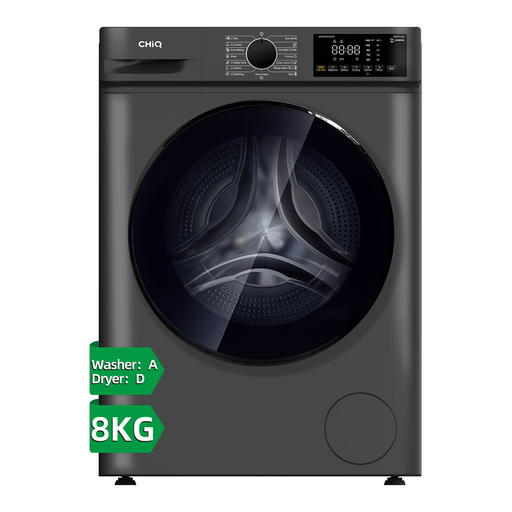 Image unavailable
For a batch intended to wash and dry without being divided, plan around the stated 5 kg drying capacity.
The product name also states an 8 kg wash capacity, freestanding design and 1,400 spin. Confirm programme-specific loads, garment suitability and installation clearance.
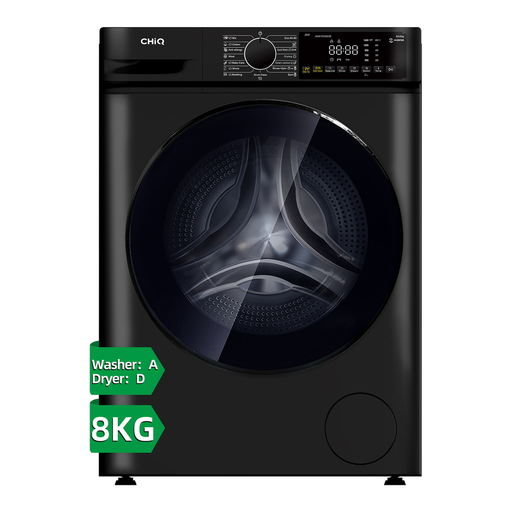 Image unavailable
Use the stated 5 kg drying capacity, rather than the larger washing figure, to assess a changeover batch.
The product name states an 8 kg wash capacity and 1,400 spin. Check the manual for relevant fabric programmes and their drying-load limits.
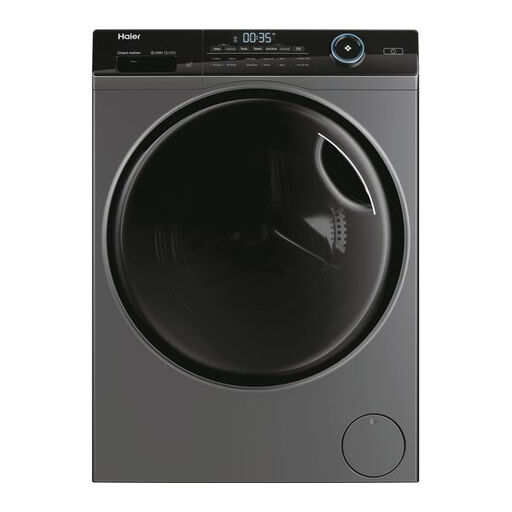 Image unavailable
The stated 6 kg drying capacity may suit a larger kit batch, provided any wash load above that limit is divided before drying.
The product name states a 10 kg wash capacity. Confirm the relevant programme limits, care-label compatibility and usable installation space.
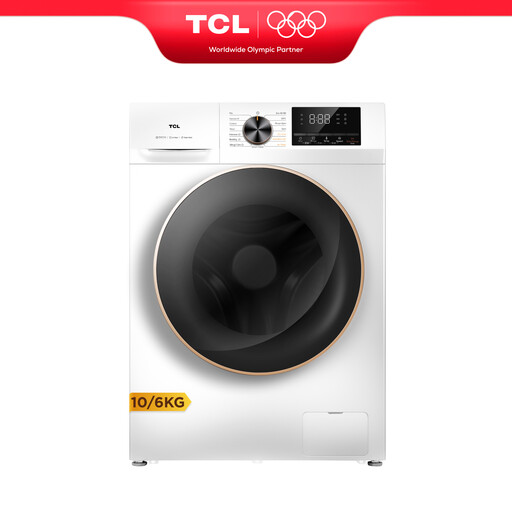 Image unavailable
Plan drying around the stated 6 kg limit if the holiday let regularly has larger washable kit batches.
The product name states a 10 kg wash capacity, 1,400 spin and freestanding design. Check the energy label for each operating mode, along with dimensions and programme-specific fabric and load limits.
Choose by the rated drying capacity if the kit needs to be washed and dried in one process. Which? notes that a washer-dryer’s wash capacity is higher than its drying capacity; a 10 kg wash/6 kg dry machine may therefore require a larger washed load to be divided before drying.
No: the garment care label and the exact washer-dryer’s instructions must both permit the treatment. Bosch describes Sportswear on cited models for microfibre, functional fibres and synthetics, while LG advises checking clothing care labels when choosing a cycle; neither instruction makes every item suitable for tumble drying.
Compare the figures for combined wash-and-dry use, as well as wash-only use if you expect to use both modes. GOV.UK describes energy labels and product information sheets for products within its labelling guidance; a wash-only figure should not be treated as the figure for a complete wash-and-dry cycle.
Not solely because the property is let to guests. GOV.UK’s guidance for England describes the covered arrangement in terms of an occupier paying rent and having the right to occupy the premises as their only or main residence. Confirm the requirements for the property’s nation and its particular letting arrangement rather than applying that England guidance to every UK holiday let.