What matters when choosing?
Start with the household’s likely drying load, then check how the machine fits the available space and the way residents share it. The wash figure alone cannot tell you whether a full load can be washed and dried without interruption.
| Concern |
What to check |
Who this matters to |
| Drying capacity |
Compare the exact model’s wash rating with its drying or continuous wash-and-dry limit. Check the limit for the intended programme. |
If I need napkins and other laundry dry without repeatedly dividing a full wash, the smaller drying figure drives my choice. Around 28% of consumers put avoiding drying-load splits first. |
| Shared-load throughput |
Compare wash capacity with the household’s usual loads, then plan what happens when a washed load exceeds the drying limit. |
With several residents waiting to use one machine, I need to keep routine washing moving. Keeping the shared wash schedule manageable comes first for around 22% of consumers. |
| Space and installation |
Measure the appliance space and access route; check the required water supply, drainage, power and flooring. Confirm whether the space needs an integrated or freestanding model. |
If I have only one suitable appliance space, the machine has to fit and be installable before its programmes matter. Around 17% of consumers make installation their primary concern. |
| Small-load turnaround |
Read the programme table for the stated load limit, whether the cycle includes drying and whether it suits the napkin’s care label. |
When a small batch is needed soon, I want to know whether a short cycle will actually wash and dry it. Around 22% of consumers prioritise that turnaround. |
| Energy information |
Compare the exact models’ energy labels and product information sheets, paying attention to wash-only and combined-cycle information relevant to your use. |
If the household expects to dry frequently, I want to compare information for the complete wash-and-dry cycle rather than washing alone. That comparison is the first priority for around 11% of consumers. |
Brands to consider for specific washer-dryer features
These examples show which model details are worth comparing; a brand’s inclusion does not establish availability or suitability across its whole range.
Bosch
A reference point for comparing separate capacities and small-load programmes on an exact freestanding model.
- Bosch lists the WNA144V9GB with 9kg wash capacity, 5kg wash-and-dry capacity and a Wash & Dry 60 programme for small loads.
- Its 5kg combined-cycle limit matters if the house expects to dry much of a full 9kg wash; check current availability before considering this model.
Beko
Relevant when comparing a freestanding 9kg wash and 6kg dry format with model-specific rapid programmes.
- Beko presents the BM5D59645U as a 9kg wash and 6kg dry model with sensor drying and a 28-minute programme for washing a full 9kg load.
- The stated rapid wash is not a promise to dry a full load in that time; a full 9kg wash also exceeds the stated 6kg drying capacity.
LG
Relevant for comparing an exact 9kg wash and 6kg dry model with fabric-care features.
- LG describes a UK 9kg/6kg Steam washer-dryer; check the exact model sheet for the programmes you would use.
- A steam feature does not establish that a programme suits every napkin fabric or removes food stains; follow the item’s care label.
Hotpoint
Its NDD 9725 DA UK illustrates why the drying figure is worth checking alongside wash capacity.
- Hotpoint lists this model at 9kg wash and 7kg dry capacity.
- Hotpoint says this particular model is no longer in its catalogue, so use it as a capacity reference rather than a current product recommendation.
Joybuy washer-dryer choices
These combined washer-dryers offer different wash and dry capacities for a shared household. Compare the stated drying limit against the loads you expect to finish in one cycle, and check whether an integrated or freestanding design suits the available space.
 No image available
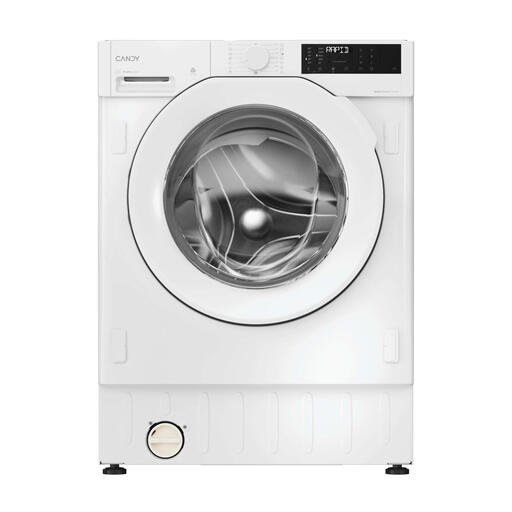
Candy BC4S496M6D8-80 integrated washer-dryer, 9kg/6kg
Consider this integrated model if a fitted appliance space is available and the household wants a stated 6kg drying limit alongside a 9kg wash capacity.
The title lists a 1400rpm spin speed. Confirm cabinet-door fit and connections, and check the programme table against the napkins’ care labels.
View on Joybuy
 No image available
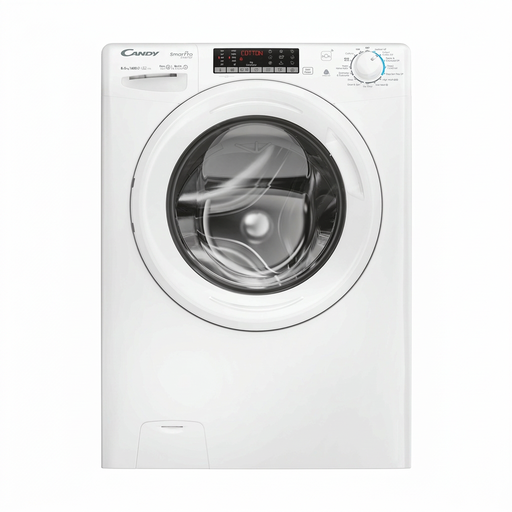
Candy Smart Pro Inverter CSOW4856TWM6-80 washer-dryer, 8kg/5kg
This freestanding model may suit a household that mainly washes routine loads and expects to dry smaller amounts.
Its stated capacities are 8kg for washing and 5kg for drying, with a 1400rpm spin speed. A larger washed load would need reducing before drying; check any quick programme’s load and drying limits separately.
View on Joybuy
 No image available
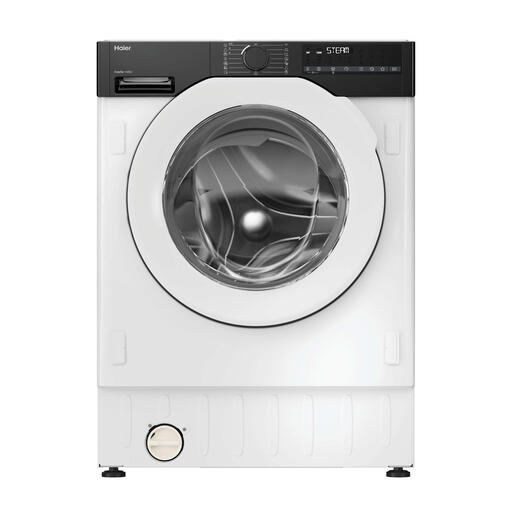
Haier Series 6 BHA6S696M6D9-80 integrated washer-dryer, 9kg/6kg
Consider this model for a suitable fitted space when a 9kg wash capacity and a separate 6kg drying limit match the house’s laundry pattern.
The title states a 1600rpm spin speed. Check the cabinet and installation requirements, and read the programme table before relying on Quick Wash for a particular napkin load.
View on Joybuy
 No image available
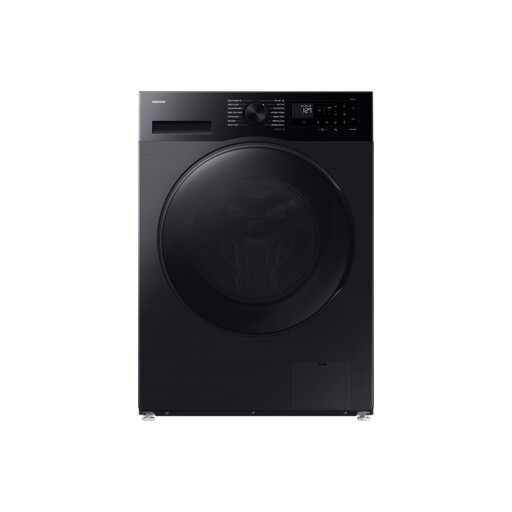
Samsung Series 5 AI Energy WD11DG5B15BBEU washer-dryer, 11kg/6kg
This freestanding model is worth considering if several residents need the stated 11kg wash capacity and can manage its lower 6kg drying limit.
Do not plan to dry a full 11kg wash in one cycle. Check the load limit and wash-or-dry scope of its 15-minute Quick Wash before treating it as a solution for urgent napkins.
View on Joybuy
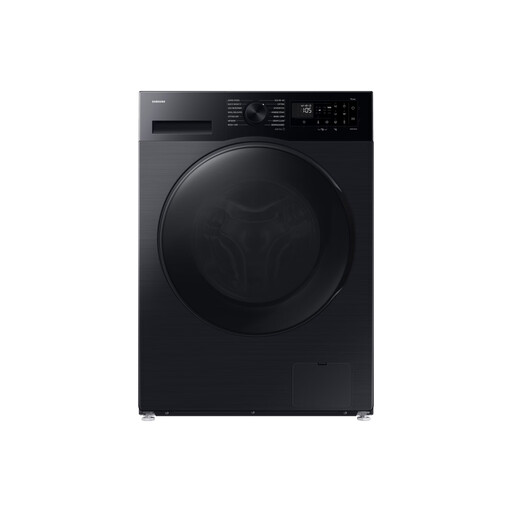 No image available
Samsung Series 5 AI Energy WD90DG5G34BBEU washer-dryer, 9kg/6kg
This freestanding option has a stated 9kg wash capacity and 6kg drying capacity for a shared-house load plan.
Reduce a full wash load before drying. Check whether the listed 15-minute Quick Wash includes drying, its permitted load and a programme suitable for the napkins’ care labels.
View on Joybuy
Frequently asked questions
Can a 9kg washer-dryer dry a full 9kg wash?
No: the 9kg figure describes washing, while the drying limit is lower. Which? advises comparing both capacities; check the exact model and programme, then split a full wash load when it exceeds the drying limit.
Do reusable table napkins need a special hygiene programme?
Ordinary table napkins do not necessarily need a specialist programme. Follow each napkin’s care label and choose a compatible wash cycle; handle unusually soiled items according to the nature of the soiling rather than assuming every food stain calls for a clinical laundry procedure.
Does a freestanding washer-dryer need an external vent hose?
Beko says its freestanding washer-dryers use ventless condenser drying and do not need an external vent hose. Check the installation instructions for the exact model you are considering; ventless drying does not remove its water, drainage or power requirements.
What should a shared house check before installation?
Check the exact machine’s dimensions, access route and installation instructions against the available space and connections. For its freestanding range, Beko specifies water supply, waste-water drainage, suitable power and hard, level, stable flooring; also confirm whether your tenancy requires approval.
Which energy information matters if we will use drying regularly?
Compare the exact models’ combined wash-and-dry information as well as their wash-only information. Use the energy label and product information sheet for the model and market where you are buying, and relate the figures to the cycles the household expects to run.


