What to check before buying
Decide whether the appliance must be built in or freestanding, then measure the space and identify the largest load you expect to dry. If two separate appliances fit and you regularly handle larger loads, compare that arrangement too; it requires space for both machines and involves transferring laundry between them.
| Concern |
What to check |
Who this matters to |
| Installed footprint |
Measure width, height and depth, then check door-opening space and the exact model’s installation clearances. Confirm whether the location needs a built-in or freestanding appliance. |
If I can fit only one machine, I need its door and connections to work in the space as well as its body to fit. Around 33% of consumers put installed fit first. |
| Drying load |
Compare the stated wash capacity with the separate dry or wash-and-dry capacity, in kg, for the load you intend to finish in the machine. |
When I wash napkins alongside other linen, I want to know whether everything I intend to dry fits within one drying load. For around 27% of consumers, that is the primary concern. |
| Napkin care |
Match the napkins’ care labels to the exact model’s programmes and temperature options; check any quick or combined cycle’s conditions. |
Different napkin fabrics may call for different care, so I do not want a convenient combined cycle to override the label. Fabric and programme choice comes first for around 20% of consumers. |
| Energy and connection |
Compare energy information for the cycle you expect to use and confirm the socket arrangement against the appliance’s installation instructions. |
If I expect to run combined wash-and-dry cycles, I want to compare the relevant label information and make sure the planned connection is appropriate. Around 20% of consumers prioritise those checks. |
Relevant brands for reference
These examples illustrate different installation and drying-capacity choices; check the exact model rather than assuming the same specifications apply across a brand’s range.
Bosch
A freestanding example for households that need one appliance and expect to dry a larger mixed load.
- Bosch UK specifies the WNG25401GB at 10.5 kg wash and 6 kg wash-and-dry capacity, measuring 848 × 598 × 590 mm.
- Check whether its 590 mm stated body depth leaves enough room for access and the installation requirements in your space.
LG
A freestanding example where appliance depth is a significant constraint and intended drying loads are modest.
- LG UK specifies the FWV595WSE at 9 kg wash and 5 kg dry capacity, with a 565 mm body depth and cotton, delicates, wash-and-dry and dry-only programmes.
- LG gives 1,100 mm from the back cover to the open door. Account for that operating space as well as the 5 kg drying limit.
Haier
A built-in example for a kitchen installation designed to accommodate a laundry appliance.
- Haier UK specifies the HWDB10B14858U1UK as built-in, with 10 kg wash and 6 kg dry capacity and dimensions of H825 × W597 × D550 mm.
- Confirm the housing, cabinet door and installation requirements for that exact model before choosing it for an existing kitchen.
Joybuy washer-dryer options
These built-in and freestanding washer-dryers offer different routes to washing napkins with one appliance. Choose the installation type that suits your space, then compare the stated drying capacity with the load you expect to dry.
 No image available
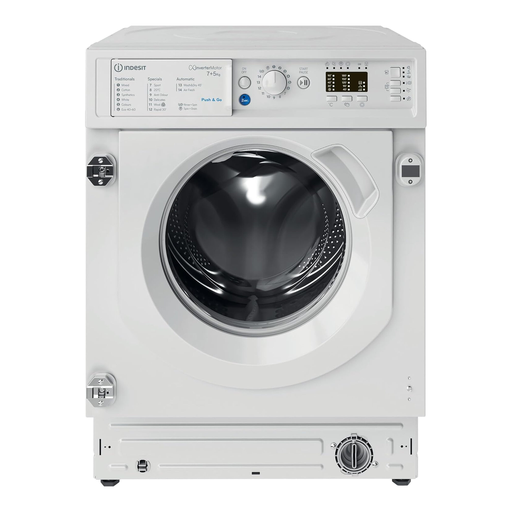
Hotpoint BI WDHG 75148 UK N integrated washer-dryer, 7 kg/5 kg
Consider this model if your napkin laundry belongs in a fitted-kitchen setup and a 5 kg drying limit suits the load you plan to dry.
The stated width is 59.5 cm, with 7 kg wash and 5 kg dry capacity. Check the cabinet, door arrangement and full installation requirements before ordering; a full wash load exceeds the stated drying limit.
View on Joybuy
 No image available
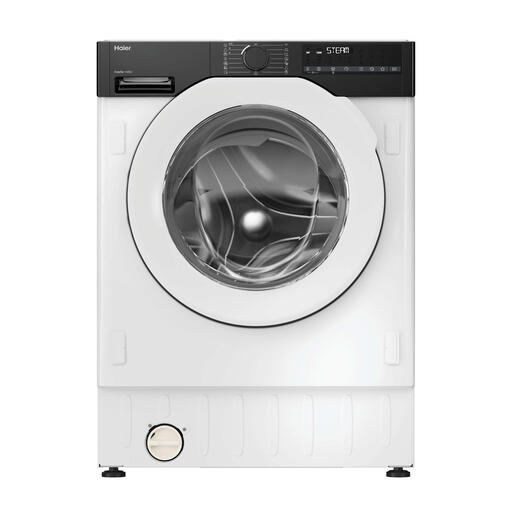
Haier Series 6 BHA6S696M6D9-80 integrated washer-dryer, 9 kg/6 kg
This built-in option is worth comparing if napkins are part of a mixed load and you want a 6 kg drying limit within a fitted-kitchen installation.
The product name states 9 kg wash capacity, 6 kg dry capacity and 1600 rpm. Check the cabinet opening, door arrangement and installation clearances; washing 9 kg does not mean drying 9 kg in one load.
View on Joybuy
 No image available
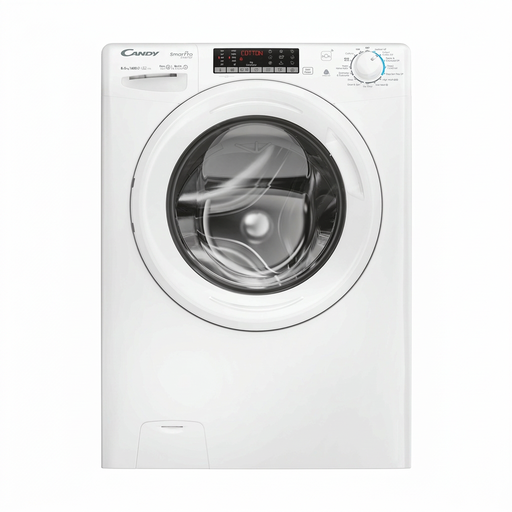
Candy Smart Pro Inverter CSOW4856TWM6-80 washer-dryer, 8 kg/5 kg
Consider this freestanding model when you need one machine for modest napkin or mixed-linen drying loads.
Its product name states 8 kg wash capacity, 5 kg dry capacity and 1400 rpm. Measure the door-opening and connection space against the installation instructions; a full wash load would exceed the drying limit.
View on Joybuy
 No image available
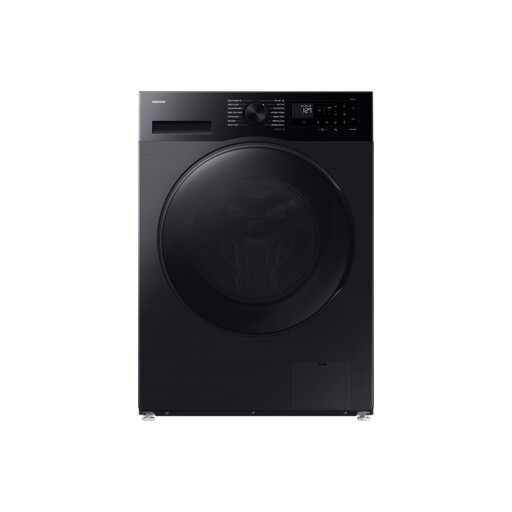
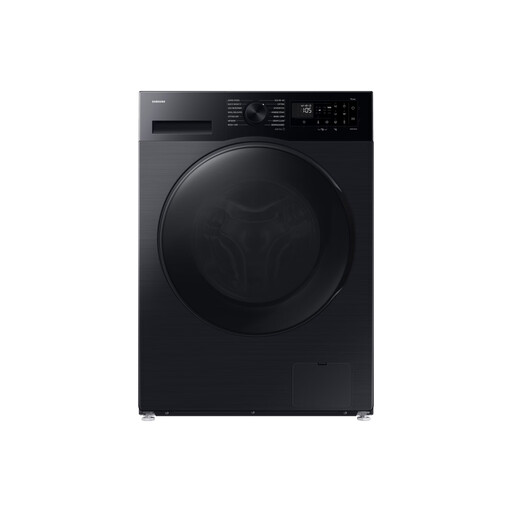
Samsung Series 5 AI Energy WD11DG5B15BBEU washer-dryer, 11 kg/6 kg, black
This freestanding model is an option when napkins are washed with other laundry and the intended drying load fits a 6 kg limit.
The product name states 11 kg wash and 6 kg dry capacity. Compare the full installed space with the exact instructions, and plan to split any wash load that exceeds the drying limit.
View on Joybuy
 No image available
Samsung Series 5 AI Energy WD90DG5G34BBEU washer-dryer, 9 kg/6 kg, black
Consider this freestanding option if you want a 6 kg drying limit for napkins washed with a larger mixed load.
The product name states 9 kg wash and 6 kg dry capacity. Check door-opening space, connections and installation clearances, and do not assume the full wash load can go straight into one drying cycle.
View on Joybuy
Frequently asked questions
Can I dry a full wash load without removing anything?
Only if the load is within the washer-dryer’s separate drying or wash-and-dry capacity. That limit can be lower than its wash capacity, so remove some items or use another drying cycle when the washed load exceeds it.
What should I measure before buying a washer-dryer for a small kitchen?
Measure the available width, height and depth, plus the space needed to open the door and reach the connections. Compare those measurements with the exact appliance and its installation instructions, including any required clearances.
Does a narrow space mean I need a built-in model?
No: choose a built-in washer-dryer when it must fit cabinetry designed for that installation. Otherwise, compare freestanding models against the measured space; similar external widths do not make built-in and freestanding machines interchangeable.
Which programme should I use for reusable table napkins?
Start with each napkin’s textile care label, then select a compatible programme and temperature on the exact machine. LG UK advises using the care label to guide cycle choice; do not assume that a quick or combined wash-and-dry programme suits every fabric.
Can an extension lead solve an awkward socket location?
Do not plan a crowded extension lead as the routine connection for a washer-dryer. Electrical Safety First warns that a washing machine used with other large appliances on an extension lead can overload it; check the intended socket arrangement against the appliance’s installation instructions.


