What matters when choosing?
Start with the load you want to wash and dry without interruption, then check whether the appliance fits and whether its labelled cycle information and programmes suit the way the household will use it.
| Concern |
What to check |
Who this matters to |
| Continuous wash-and-dry capacity |
Compare wash-only and wash-and-dry capacities, then check the load limit for the programme you intend to use. Bosch lists its WNG254R1GB at 10.5 kg for washing but 6 kg for a wash-and-dry cycle. |
If housemates want to load pillowcases and other everyday laundry once and return to a finished cycle, avoiding a drying hand-off becomes the priority; around 36% of consumers put continuous capacity first. |
| Installed fit |
Measure the usable space around pipes and plugs, including door-opening room. For freestanding machines, allow around 25 mm at each side and roughly 50–150 mm behind for ventilation and connections. |
Where a kitchen or utility gap is shallow, I need to know the machine can be installed and opened before comparing its programmes; roughly 29% of consumers prioritise fit. |
| Energy information |
Compare the energy label and product information sheet for the exact model, paying attention to the cycle being rated rather than relying on a feature name. |
When residents share the cost of frequent laundry, I want comparable information for the cycles we expect to use; around 21% of consumers make energy information their main concern. |
| Fabric care and sensitive loads |
Read each pillowcase’s care label and check compatible temperature, spin and rinse options. Handle laundry associated with a known infection separately where applicable healthcare guidance calls for it. |
If our pillowcases need different wash settings, I want a suitable programme without assuming a named steam or allergy feature works for every fabric; roughly 14% of consumers put fabric care first. |
Joybuy washer-dryer options
These washer-dryers have stated 9 kg wash and 6 kg dry capacities. The list includes both freestanding and integrated models, so check the intended programme’s load limit and your installation space before choosing between them.
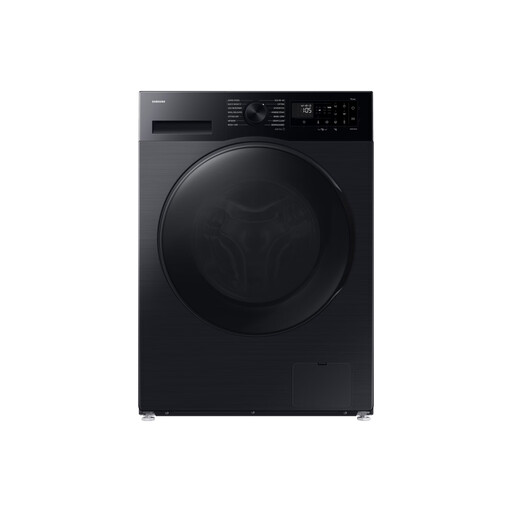 No image available
Samsung Series 5 AI Energy WD90DG5G34BBEU, 9 kg/6 kg, black
Consider this model if a 9 kg wash and stated 6 kg dry capacity matches your shared-house load planning. Check the capacity of the continuous programme you would use, the exact model’s energy information and the space needed for installation.
View on Joybuy
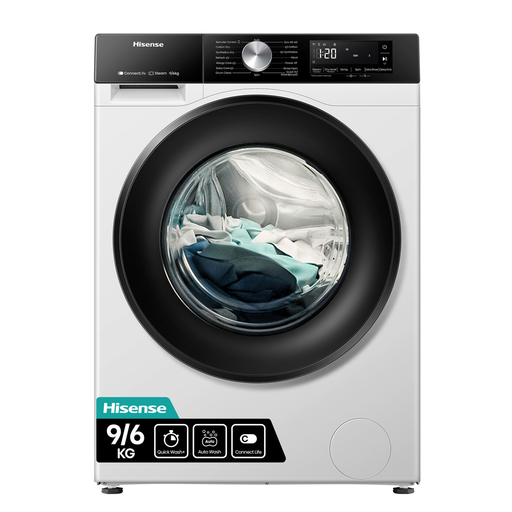 No image available
Hisense 3S Series WD3S9043BW3, 9 kg/6 kg, 1400 rpm
This model is relevant when housemates are comparing a stated 6 kg dry capacity with their usual loads. Its title also specifies a 1400 rpm spin speed; check the chosen wash-and-dry programme’s load limit and allow for connections when measuring the space.
View on Joybuy
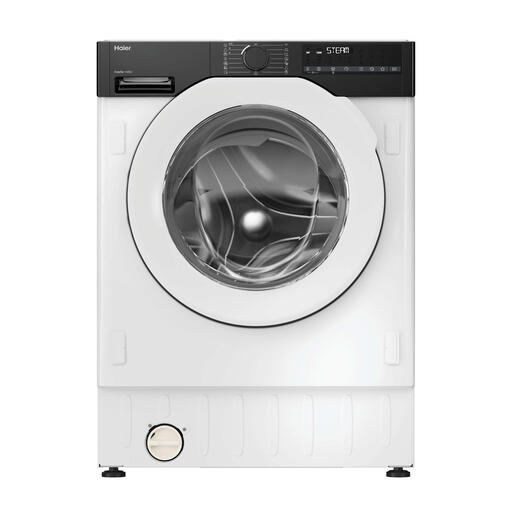 No image available
Haier Series 6 BHA6S696M6D9-80 integrated, 9 kg/6 kg, white
Consider this integrated model for a suitable fitted-kitchen installation rather than a freestanding gap. Its title states a 1600 rpm spin speed; check the cabinet, door and installation requirements, along with the intended continuous-cycle capacity.
View on Joybuy
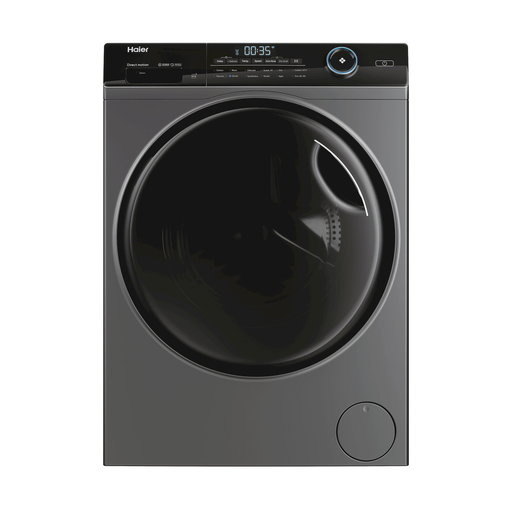 No image available
Haier I-Pro Series 5 HWD90B14959S8NUK, 9 kg/6 kg, graphite
This model gives housemates another stated 9 kg wash/6 kg dry option to compare. The title specifies a 1400 rpm spin; check the combined-cycle rating on the exact energy label, the selected programme’s load limit and the installed depth.
View on Joybuy
 No image available
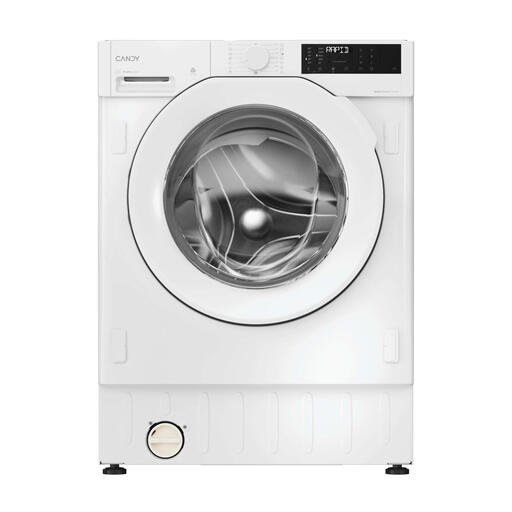
Candy BC4S496M6D8-80 integrated, 9 kg/6 kg, white
This integrated model is relevant to a shared fitted kitchen with a suitable cabinet and door. Its title specifies a 1400 rpm spin; check installation requirements, the intended programme’s load limit and the exact energy label before deciding.
View on Joybuy
Frequently asked questions
Can I dry the full wash load without taking anything out?
Not if it exceeds the selected wash-and-dry programme’s limit. Bosch lists its WNG254R1GB at 10.5 kg for washing but 6 kg for a wash-and-dry cycle, so a larger wash load would need to be reduced or divided before drying.
What should I measure before ordering a freestanding washer-dryer?
Measure the usable gap with pipes, plugs and door opening in mind, then compare it with the exact model’s dimensions. Allow around 25 mm at each side and roughly 50–150 mm behind a freestanding machine for ventilation and connections.
What energy information should I check on a UK listing?
Check the energy label and product information sheet for the exact washer-dryer and note which cycle the figures describe. UK government guidance sets point-of-sale labelling requirements for products in scope; labelling arrangements can differ between Great Britain and Northern Ireland.
Do all shared-house pillowcases need a high-temperature wash?
No single temperature suits every pillowcase: follow its textile care label and use a compatible programme. For laundry associated with a known infection, Oxford Health NHS Foundation Trust gives separate patient-laundry handling advice, including a wash at the highest temperature the clothing permits; that advice is not a routine requirement for every shared-house load.
Can a steam or allergy programme replace checking the care label?
No. Those are model-specific features, while the pillowcase’s care label determines which treatment is suitable for its fabric. Check the exact programme instructions rather than assuming a feature applies to every load.


