Households with room for one appliance
If a separate tumble dryer will not fit, start with the washer-dryer's installed depth, open-door clearance and whether your space calls for a freestanding or integrated model.


Choose a washer-dryer for school uniforms by checking whether it fits with the door open, then sizing regular wash-and-dry loads to its drying capacity rather than its larger washing capacity. A quick programme may help with individual items, but check its load limit and whether it includes drying; compare complete-cycle energy-label figures if you expect to use the dryer regularly.
If a separate tumble dryer will not fit, start with the washer-dryer's installed depth, open-door clearance and whether your space calls for a freestanding or integrated model.
A short programme could help during the school week, provided its stated load limit suits the items you need to clean and you know whether the programme also dries them.
If you want to load uniforms once and remove them dry, compare the load with the appliance's drying capacity. A larger wash rating alone does not establish what can stay in for drying.
Check the available space and installation type first, then the amount you need to dry in one cycle. Programme limits and complete-cycle label figures help narrow down models that pass those checks.
| Concern | What to check | Who this matters to |
|---|---|---|
| Physical fit | Measure width, height, depth with connection allowance, and space to open and load the door. For an integrated model, check the cabinet and door-panel requirements. | If the appliance sits in a narrow opening, I need to use the door without blocking access; around 36% of consumers put physical fit first. |
| Drying capacity | Compare wash capacity with the lower dry or complete-cycle capacity, and plan uninterrupted loads around the latter. | I want the uniforms I put in to come out dry without removing part of the wash midway. For around 29% of consumers, that dry-load workflow is the primary concern. |
| Uniform turnaround | Read the exact programme table for its load limit and whether a short or stain-focused cycle washes only or also dries; follow garment care labels. | When a uniform item is needed again soon, I care about a programme that accepts that particular load. Around 21% of consumers prioritise this turnaround. |
| Complete-cycle use | If you expect to dry frequently, compare complete-cycle capacity, energy class, weighted kWh per 100 cycles and water use on the same label basis. | I plan to use machine drying regularly, so wash-only figures would not describe my usual routine; complete-cycle comparison comes first for around 14% of consumers. |
A full wash load may exceed what the same machine can dry without unloading some items. LG UK explains that washer-dryers generally have a lower drying capacity because drying needs more room in the drum.
Use the dry or complete-cycle capacity when planning an uninterrupted uniform wash-and-dry load.
Depth and door swing can rule out a model that appears to fit across the front. Bosch UK lists its WNA134U8GB at 590 mm deep but 1,063 mm deep with the door open.
Check the chosen model's installation drawing against the available depth, connections and loading space.
Short wash-and-dry programmes can have much smaller load limits. Hotpoint UK describes Wash & Wear options for two shirts weighing 0.5 kg in 40 minutes or up to five shirts weighing 1 kg in 60 minutes on its cited model.
Check the programme's maximum load and whether it includes drying before relying on it for a school-day turnaround.
GOV.UK's washer-dryer label data distinguishes complete-cycle energy consumption and efficiency from washing-cycle values. Wash-only figures therefore do not provide a like-for-like comparison of regular wash-and-dry use.
Compare complete-cycle figures between models if machine drying will be part of your usual routine.
A reference point for freestanding models with published installation measurements.
Worth considering when a reduced-depth freestanding format is relevant.
Offers a 9 kg wash and 6 kg dry format for comparison.
Relevant if small-load wash-and-dry options are important for school clothing.
Relevant to shoppers planning an integrated installation in a fitted cabinet.
These integrated and freestanding washer-dryers offer one-appliance options for uniform washing. Compare their stated wash and dry capacities, then check the installation instructions and programme table for the model that fits your space and routine.
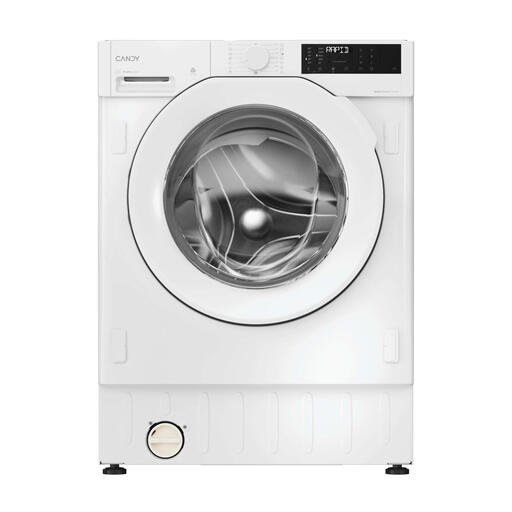 No image available
Consider this integrated model if the planned cabinet installation suits the appliance and you can keep uninterrupted drying loads within 6 kg.
The product name states 1,400 rpm and a D rating. Check the exact installation drawing, rapid-programme load limits and complete-cycle label figures before choosing it for your uniform routine.
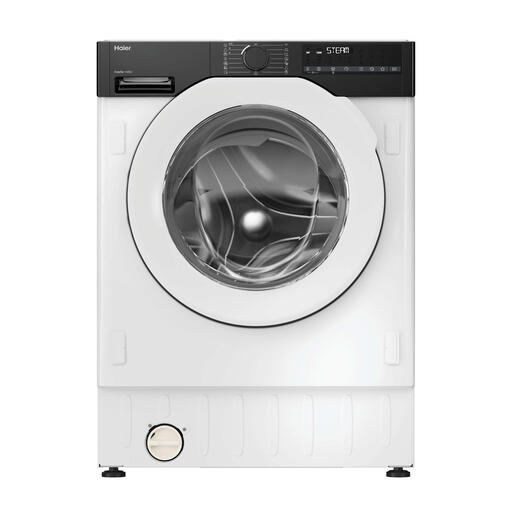 No image available
This integrated model is a candidate for a fitted space if its cabinet and door-panel requirements match your opening.
The product name states 1,600 rpm and an A-30%/D energy-class designation. Check the exact product information sheet for complete-cycle figures and the programme table for Quick Wash load and drying scope.
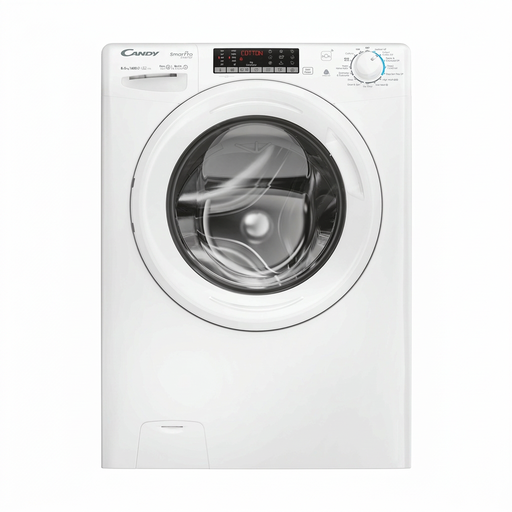 No image available
This freestanding model suits a one-appliance position if a 5 kg dry load covers the uniforms you intend to wash and dry together.
The product name states 1,400 rpm. Check installed depth and door clearance; its listed 14-minute option is a quick wash, so confirm its load limit rather than treating it as a wash-and-dry programme.
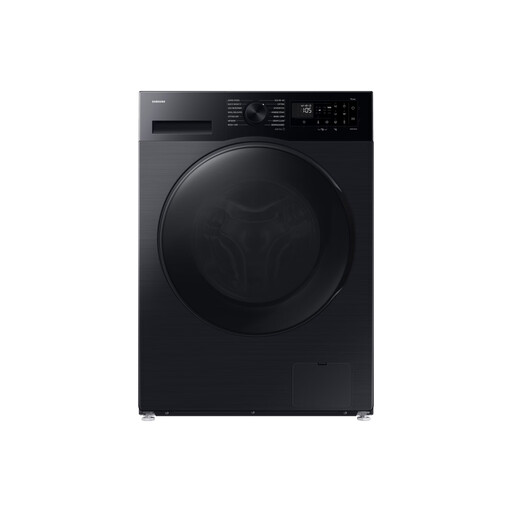 No image available
Consider this freestanding model if a 6 kg dry capacity suits your usual uninterrupted uniform load and the installed appliance fits your space.
The product name identifies an A/D rating. Check the load limit of its listed 15-minute Quick Wash, open-door clearance and complete-cycle energy and water figures for this exact model.
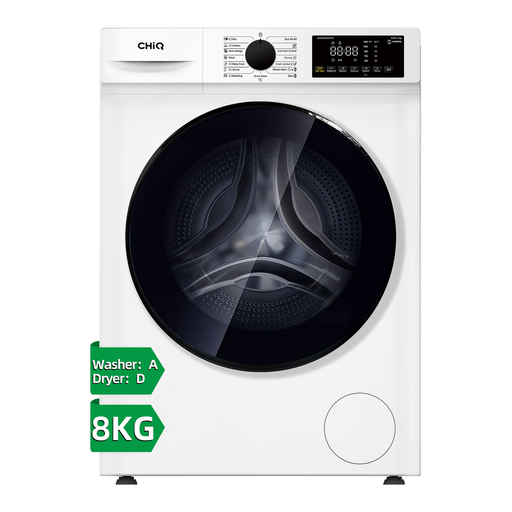 No image available
This freestanding option is relevant if one appliance and a 5 kg dry-load limit suit your laundry routine.
The product name states a 1,400 spin setting and an A/D rating. Check the installation instructions for connection and loading clearance, and the programme table before relying on it for rapid uniform turnaround.
Not necessarily: use the model's dry or complete-cycle capacity for an uninterrupted wash-and-dry load. LG UK notes that washer-dryers generally have a lower drying capacity than washing capacity because drying needs more drum space.
Measure the available width, height and depth, allowing for connections and space to open and load the door. Check the exact model's installation instructions: Bosch UK lists its WNA134U8GB at 590 mm deep when closed and 1,063 mm deep with the door open.
Check the chosen model's specified water, drainage and electrical requirements against the proposed position. Bosch UK's installation guidance describes water and drainage connections and warns that drainage must be secured to avoid leaks; the exact arrangement depends on the installation.
Compare complete-cycle figures, including capacity, energy class, weighted kWh per 100 complete cycles and water consumption. GOV.UK's washer-dryer label data records complete-cycle values separately from washing-cycle values, so a wash-only comparison does not describe frequent machine drying.