Students who need shirts ready quickly
For a few cotton shirts between classes, placements or shifts, the relevant figure is the short wash-and-dry programme’s shirt or load limit, not the machine’s maximum washing capacity.


Choose by drying capacity as well as washing capacity: an 8 kg wash / 5 kg dry machine cannot dry a full 8 kg wash in one continuous cycle. For frequent cotton shirts, check the load limit and garment suitability of any short combined programme, then compare complete wash-and-dry energy and water figures if the house will use drying regularly.
For a few cotton shirts between classes, placements or shifts, the relevant figure is the short wash-and-dry programme’s shirt or load limit, not the machine’s maximum washing capacity.
When several residents use one machine, separate wash and dry limits affect how loads are divided and how long the appliance stays occupied. Dimensions and the exact model’s noise information also matter for the available space.
If drying will be used often, compare the complete wash-and-dry figures on each product information sheet. A wash-only figure does not describe the combined cycle.
Start with the load the house actually needs to dry, then check shirt programmes and garment care. Compare complete-cycle consumption before choosing a machine for regular wash-and-dry use.
| Concern | What to check | Who this matters to |
|---|---|---|
| Shared-load capacity | Compare rated wash and dry capacities separately; measure the installation space against the exact model’s dimensions and required clearances. | When several people share a laundry queue, I need to know whether a washed load must be split before drying. Around 31% of consumers put shared-load capacity first. |
| Quick shirt turnaround | Check that a short programme includes both washing and drying, its stated shirt or load limit, and the shirts’ care labels. | If I need a clean, dry shirt before a shift or placement, a quick wash without drying will not solve the timing problem; around 25% of consumers prioritise small-load shirt turnaround. |
| Shirt care and creases | Check what the exact model’s automatic drying, steam or anti-crease programme does, and whether the garment label permits its use. | For shirts I wear frequently, I want to understand whether a care feature fits the garment rather than assume it will remove the need to iron. Shirt care comes first for around 25% of consumers. |
| Shared utility use | Compare like-for-like kWh and litres per complete wash-and-dry cycle at the stated capacity, alongside cycle duration. | With bills shared across the house, I need to judge the cycle we expect to run, not just washing on its own. Around 19% of consumers make complete-cycle use their primary concern. |
Bosch UK, Beko UK and AEG UK each list relevant models with 8 kg washing capacity but 5 kg drying capacity. A larger shared wash may therefore need to be split before drying.
Plan continuous wash-and-dry loads around the smaller rated drying limit.
AEG’s LWR7185M4B product information sheet declares separate consumption figures for washing and for washing and drying at rated capacity. The wash-only figure cannot stand in for the combined cycle.
Compare complete-cycle kWh and litres on the product information sheets for the models under consideration.
Beko UK states that the BMM5DFO851 can wash and dry up to five shirts in 60 minutes. That programme limit is distinct from the model’s 8 kg maximum washing capacity.
Check the programme’s stated load and fabric conditions before relying on it for an urgent batch of cotton shirts.
Replacing a supplied appliance or altering connections may require agreement with the landlord or property manager. The practical arrangements depend on the property.
Check the tenancy agreement, appliance ownership, available space, water and drain connections, electrical provision and delivery access before ordering.
The WNA134U8GB Series 4 is relevant where a small-load combined programme and automatic drying are priorities.
The BM3DT68342 and BMM5DFO851 offer distinct programme options worth checking when shirt turnaround is the main concern.
The LWR7185M4B is relevant to buyers comparing garment-care programmes and declared complete-cycle consumption.
These 8 kg wash / 5 kg dry models give a student house a starting point for planning shared loads. Check each model’s combined-cycle programmes and shirt-care instructions against the way the house will use it.
 No image available
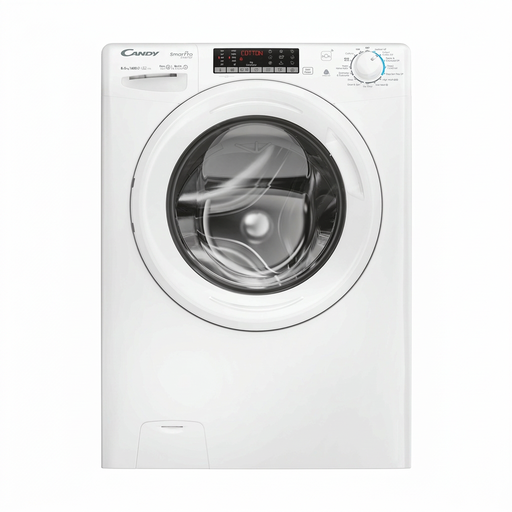
The separate 8 kg wash and 5 kg dry limits make this model relevant when planning shared laundry loads.
The product name specifies a 1400 RPM spin speed. For urgent shirts, check the combined wash-and-dry programme and its load limit rather than relying on a quick-wash time.
 No image available
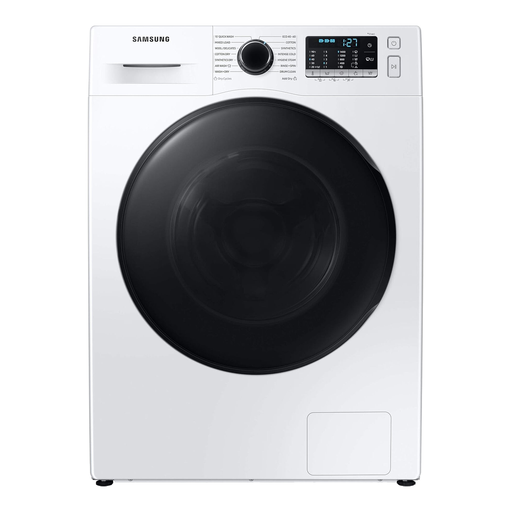
This model’s 8 kg wash and 5 kg dry capacities suit a house prepared to keep continuous wash-and-dry loads within the smaller limit.
Check the duration and load limit of a complete wash-and-dry programme, and use its product information sheet when comparing shared utility use.
 No image available
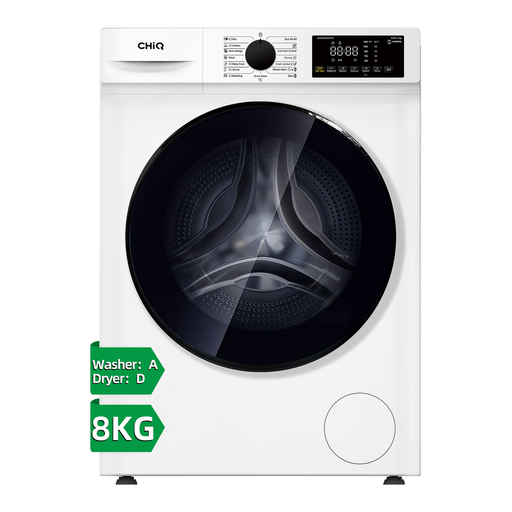
For shared laundry, its 8 kg wash and 5 kg dry capacities make the load-splitting decision clear.
The product name specifies a 1400 spin speed. Before choosing it for frequent cotton shirts, check the combined programmes, garment instructions and complete-cycle consumption figures.
No: on the Bosch WNA134U8GB, Beko BM3DT68342 and AEG LWR7185M4B, manufacturer specifications give an 8 kg washing limit but a 5 kg drying limit. Use a smaller load for a continuous cycle, or remove part of a larger washed load before drying.
Compare figures for the complete wash-and-dry cycle, including kWh and litres at the stated capacity, rather than relying on wash-only use. For instance, AEG’s LWR7185M4B product information sheet declares separate wash-only and wash-and-dry values; actual use depends on the programme and load.
Do not count on an iron-free result: the stated function differs by model and programme. Check whether it refreshes lightly worn garments or forms part of a wash programme, and follow each shirt’s care label.
Follow the exact model’s manual for cleaning, drainage and care after drying cycles. Residents sharing the appliance should use those model-specific instructions rather than assuming that maintenance steps are the same across machines.