Small-flat T-shirt households
You need one appliance for recurring cotton T-shirt loads, with enough room to install, open and access it in a constrained laundry or kitchen space.


For regular cotton T-shirt loads in a small flat, start with the space available and the amount you need to dry in one cycle, rather than the headline washing capacity. An 8 kg wash/5 kg dry washer-dryer suits a routine that stays within its drying limit; consider a larger wash-and-dry capacity if your loads regularly exceed that limit, while checking the space it needs and comparing wash-only with wash-and-dry running figures separately.
You need one appliance for recurring cotton T-shirt loads, with enough room to install, open and access it in a constrained laundry or kitchen space.
You want to put a modest load in once and take it out dry. The drying capacity and the chosen programme's load limit matter more to this routine than washing capacity alone.
You want a suitable programme for your T-shirts, control over drying and separate energy information for washing alone and washing followed by drying.
Check whether the appliance can be installed safely, then size it to the T-shirt load you actually want to wash and dry without interruption. Programme choices and running information help distinguish models that meet those requirements.
| Concern | What to check | Who this matters to |
|---|---|---|
| Fit and safe installation | Compare the exact model's maximum dimensions and installation instructions with the space, including access, hoses, door clearance and power connection. | I need the machine to fit where I can open and service it, with a suitable electrical connection. Around 33% of consumers put fit and electrical safety first. |
| Continuous wash-and-dry load | Use the drying or wash-and-dry capacity, not the higher wash capacity, and confirm the chosen programme's load limit. | If I want to load my T-shirts once and take them out dry, the whole batch must fit within the drying limit. Around 27% of consumers prioritise that one-cycle capacity. |
| Cotton care and turnaround | Check the Cottons programme against garment care labels; confirm the permitted load and whether any short programme includes drying. | Some days I need a suitable cycle for everyday T-shirts; on others, I may want a smaller load ready sooner. Around 20% of consumers put programme choice and turnaround first. |
| Running and upkeep | Compare wash-only with wash-only, and wash-and-dry with wash-and-dry energy and water figures; consider stated noise and model-specific cleaning instructions. | With frequent loads near my living space, I care about ongoing use, noise and cleaning as well as getting laundry done. Around 20% of consumers make those considerations their priority. |
A washer-dryer can wash more than it can dry in one continuous cycle. For example, AEG lists 8 kg washing and 5 kg drying capacities for the LWR7185M4B; Bosch lists 10.5 kg washing and 6 kg wash-and-dry capacities for the WNG25401GB.
Size the T-shirt load to the drying limit if you do not want to remove items between stages, and check the manual for the selected programme's limit.
Manufacturer dimensions describe the appliance, not all the space needed for connections, opening its door or reaching it for maintenance. AEG lists the LWR7185M4B at a maximum depth of 599 mm, while Bosch lists the WNG25401GB at 590 mm deep.
Measure the installation position and compare it with the exact model's maximum dimensions and fitting instructions before ordering.
The two modes can have markedly different declared consumption. AEG's product information sheet for the LWR7185M4B lists 0.590 kWh for its wash-only Eco 40-60 cycle and 3.255 kWh for its wash-and-dry Eco 40-60 cycle at rated capacity; actual consumption varies with use.
Compare the same operating mode across the models you are considering, based on the cycles you expect to run.
Electrical Safety First warns that a washing machine used with other large appliances on an extension lead could overload it. Filters and other cleaning points also vary by washer-dryer model.
Follow the chosen appliance's installation and electrical instructions, arrange competent fitting where needed, and use its manual to establish a cleaning routine.
These manufacturer examples show features worth checking on an exact model; they do not describe every washer-dryer from each brand.
AEG's LWR7185M4B is an 8 kg wash/5 kg dry example for comparing a Cottons programme, automatic drying controls and stated dimensions.
Bosch's WNG25401GB illustrates a larger, 10.5 kg wash/6 kg wash-and-dry capacity choice when the T-shirt loads you intend to dry are regularly larger.
Beko's BMND8545U is an 8 kg wash/5 kg dry example for buyers interested in documented short programmes and sensor drying.
These choices include three 8 kg wash/5 kg dry washer-dryers for moderate loads and one integrated 7 kg wash/4 kg dry model to consider if your flat has a compatible fitted installation. Check the complete fitting requirements and your intended cotton programme before choosing.
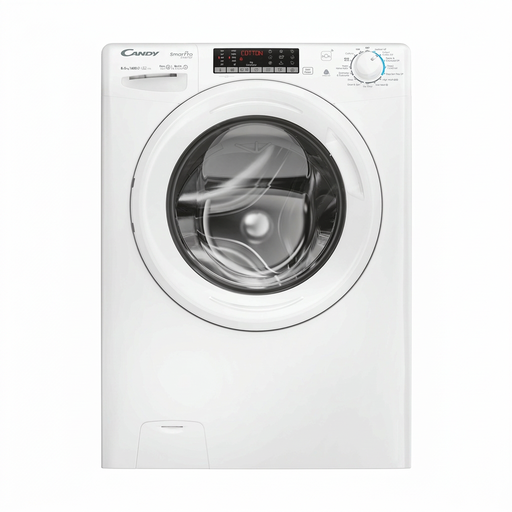 No image available
Consider this model if your T-shirt batch can stay within a 5 kg drying load. Its stated capacities are 8 kg for washing and 5 kg for drying, with a 1400 RPM spin specification.
Check the Cottons programme and its permitted load, as well as the complete installed space. Do not treat a short wash programme as the time for a full wash-and-dry cycle.
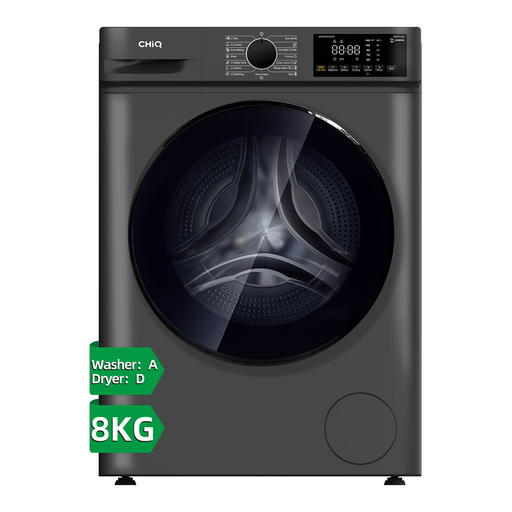 No image available
This freestanding model is worth considering for moderate T-shirt batches when a 5 kg drying capacity covers the load you want to complete in one cycle. Its stated washing capacity is 8 kg.
Confirm the Cottons programme and its load limit, then compare the full installation requirements with the space available. Consider where the appliance will run when assessing noise.
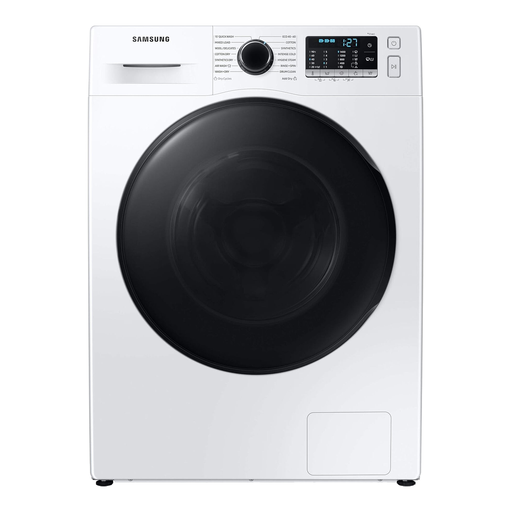 No image available
This model has an 8 kg washing capacity and a 5 kg drying capacity for a T-shirt routine that fits within the smaller figure.
Check the cotton-cycle load and garment instructions before planning a continuous cycle. Confirm its full installed depth and access space; a quick-wash time should not be read as a wash-and-dry time.
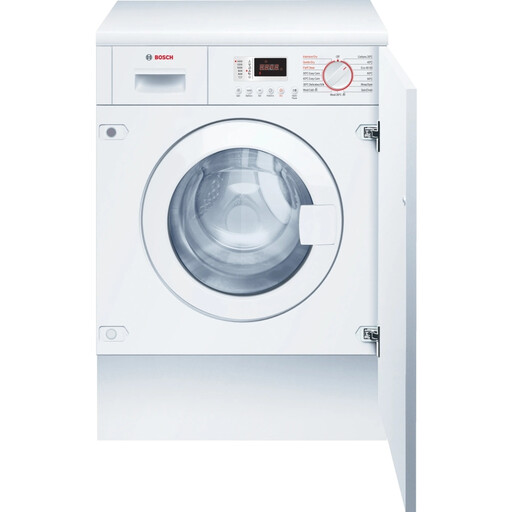 No image available
Consider this integrated model only if the flat has a compatible fitted position and a 4 kg drying limit suits your T-shirt loads. Its stated washing capacity is 7 kg.
Check the cabinet opening, door and fitting instructions for this exact model, along with the Cottons programme and its permitted load. Its integrated format is not a substitute for a freestanding installation.
Only if the selected programme permits that much washing and drying; an 8 kg washing rating alone does not. AEG, for example, lists its LWR7185M4B at 8 kg for washing but 5 kg for drying, so a continuous load needs to stay within the applicable drying and programme limits.
Look for a Cottons programme that suits the care labels on your T-shirts, then check its permitted load and drying settings. AEG lists a Cottons programme for the LWR7185M4B, but a programme name does not override an individual garment's instructions.
Compare wash-only figures with wash-only figures and complete wash-and-dry figures with the same mode on another model. AEG's LWR7185M4B product information sheet reports separate Eco 40-60 values for those cycles; choose the comparison that reflects how often you expect to dry T-shirts in the machine, recognising that actual consumption varies with use.
Do not assume an extension lead is a suitable installation arrangement. Electrical Safety First warns that a washing machine can overload an extension lead when plugged in with other large appliances; follow the washer-dryer manufacturer's connection instructions and seek competent fitting where needed.
Follow the cleaning instructions for the exact model, particularly for filters and areas that collect residue. AEG advises leaving the door and detergent drawer slightly open after use and carrying out regular cleaning; the applicable filter and maintenance steps depend on the appliance you choose.