Shared-house bedding washers
Students and housemates who wash cotton sheets regularly and need to plan drying turns around other people’s laundry.


Choose a washer-dryer for cotton sheets by its drying capacity, not just its larger washing capacity: a full wash may need splitting before drying. In a student house, an 8kg wash/5kg dry or 9kg wash/6kg dry format makes sense only if housemates can manage that difference and the appliance fits the available space and installation arrangements. Compare energy information for the cycles you expect to use, rather than relying on the wash-only rating.
Students and housemates who wash cotton sheets regularly and need to plan drying turns around other people’s laundry.
Renters considering one appliance for washing and drying, who need to check the available space and property arrangements before installation.
Housemates sharing household bills who want to compare the relevant cycle information and choose a capacity suited to their usual loads.
Start with the sheet load the machine can dry, then check installation fit. Programme times and energy information matter most when they describe the load and cycle the house will actually use.
| Concern | What to check | Who this matters to |
|---|---|---|
| Drying capacity | Compare the stated wash and wash-and-dry limits in kg. Decide whether a sheet wash that exceeds the drying limit can be split between turns. | If sheets need to be ready for the next housemate, I need to know how much bedding can finish in one drying cycle; around 31% of consumers put drying capacity first. |
| Space and installation | Measure usable depth and door clearance as well as height and width. Check connections, the installation type and the property arrangements. | When the appliance space is tight or the home is rented, I need to establish that the machine can be fitted before choosing its programmes; for around 31% of consumers, fit is the primary concern. |
| Energy and water use | Compare product information for the same operating mode, distinguishing wash-only from wash-and-dry cycles. Match capacity to typical loads. | If housemates share the bills, I want a machine whose usual loads make sense for its capacity; around 23% of consumers place running use ahead of the other concerns. |
| Shared-house turnaround | Check the load limit and conditions for any quick programme, including whether its time refers to washing or washing and drying. | With several people waiting to use one machine, I need programmes that work for the loads we actually wash; keeping laundry moving is the main concern for around 15% of consumers. |
Which? explains that washer-dryers have a lower drying capacity than washing capacity. An 8kg wash/5kg dry machine cannot dry every permitted wash load in one go.
Compare the combined wash-and-dry limit first, then plan how housemates will split larger sheet loads.
Splitting a load means another drying turn and its associated time and energy use.
LG lists a depth of 565mm for the FWY996WCTN4, while Bosch lists 622mm for the WNC254ARGB. Neither dimension establishes whether a particular appliance space or access route will accommodate the machine.
Measure the usable space and route into the room, allow for the required connections and door movement, and establish whether the bay takes a freestanding or integrated model.
A short programme can have its own load limit. LG’s stated 39-minute TurboWash programme for the FWY996WCTN4 applies to a 5kg load, while Beko’s quick-wash and combined wash-and-dry claims for the BMND8545U describe different programmes.
Check both the permitted load and whether the quoted time includes drying before scheduling a sheet wash around it.
A larger wash drum does not increase the drying limit by the same amount. Capacity also needs to suit the smaller loads housemates wash routinely.
Compare typical loads with the model’s wash and dry limits, rather than selecting on the largest occasional sheet wash alone.
These specific models illustrate different capacity and space trade-offs; their specifications should not be taken as applying to every machine from the brand.
The freestanding BMND8545U is an example of an 8kg wash/5kg dry format.
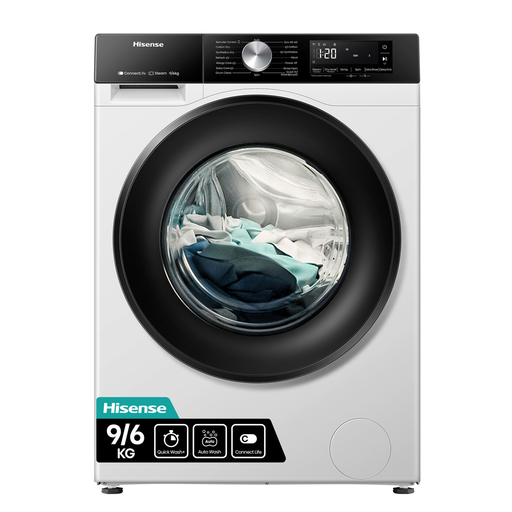
The FWY996WCTN4 pairs a stated 9kg wash/6kg dry capacity with a 565mm product depth.
The WNC254ARGB is an example for a house considering a larger stated wash capacity.
These washer-dryers offer stated 8kg/5kg or 9kg/6kg wash and dry formats for considering shared sheet loads. One is integrated; check that the property has a suitable built-in space before considering it.
 No image available
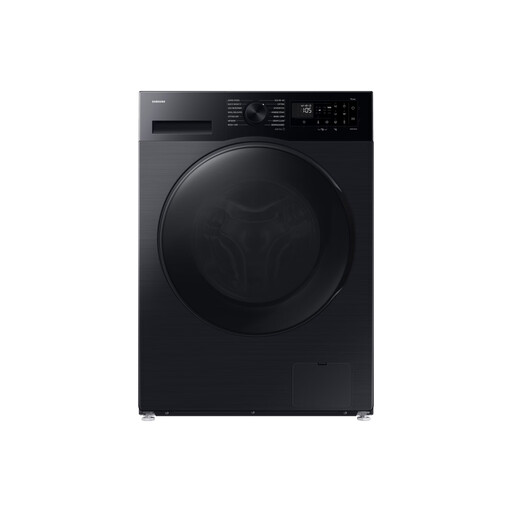
Consider this model if a 6kg drying limit suits the house’s sheet-washing routine; check how larger wash loads would be divided before drying.
The product name states 9kg washing and 6kg drying capacity, a black finish and A/D energy ratings. Compare the ratings against the cycle modes you intend to use.
 No image available
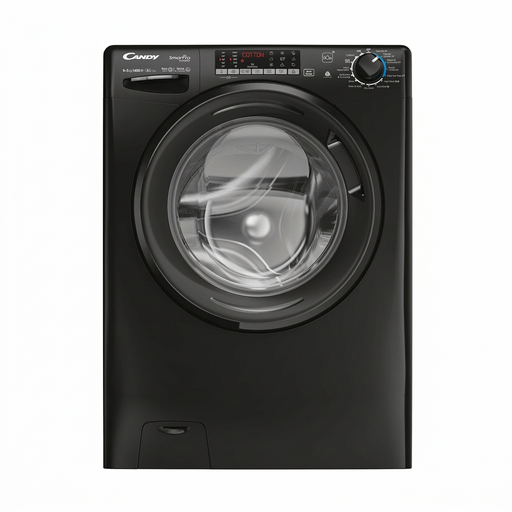
This freestanding format suits a house prepared to dry sheet loads in batches when they exceed 5kg.
The product name states 8kg washing and 5kg drying capacity, a 1400rpm spin speed and a black finish. Check the load conditions of any quick programme before planning a bedding turn around it.
 No image available
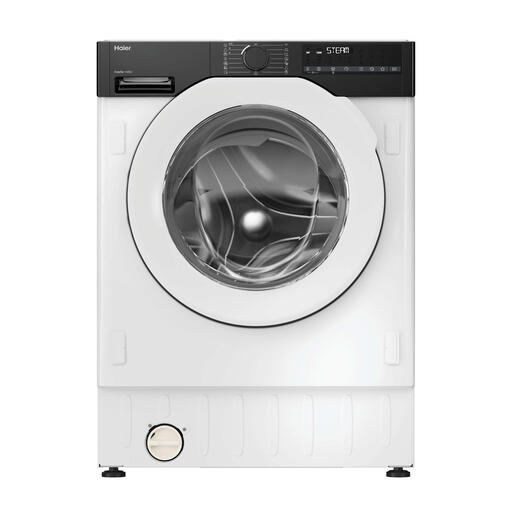
Consider an integrated model only if the student house has compatible built-in housing and the installation arrangements allow it.
The product name states 9kg washing and 6kg drying capacity, a 1600rpm spin speed and a white finish. A wash load above the drying limit still needs dividing before drying.
 No image available
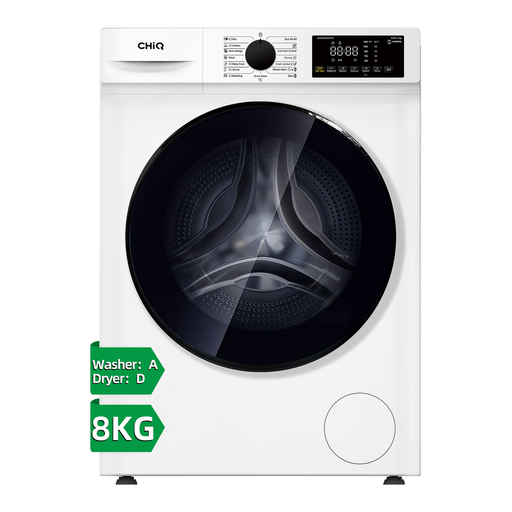
This is another freestanding 8kg/5kg option for housemates who can accommodate separate drying turns for larger sheet washes.
The product name states 8kg washing and 5kg drying capacity, a 1400rpm spin speed, a white finish and A/D energy ratings. Confirm the available space and connections before ordering.
 No image available
A 6kg drying limit may suit housemates who want to dry a larger batch than a 5kg format permits, provided their sheet load stays within that limit.
The product name states 9kg washing and 6kg drying capacity and a 1400rpm spin speed. Confirm whether the exact model needs a freestanding or integrated space before planning installation.
Not if the load exceeds the machine’s lower drying limit. Which? explains that washer-dryers wash more than they can dry, so check the exact model’s wash-and-dry capacity and divide the sheets before drying when necessary.
Check the tenancy agreement and property arrangements, measure the appliance space and access route, and establish whether the bay is freestanding or integrated. Confirm connections and any required landlord or managing-agent approval before arranging installation; GOV.UK’s guidance on caring for a rented property does not establish one permission rule for every tenancy.
Compare the same operating mode across models using their labels and product information. Energy Saving Trust describes the A-to-G rating scale, but a wash-only rating should not be treated as the rating for a combined wash-and-dry cycle.
Avoid overloading the wash drum so the sheets have room to move. Energy Saving Trust advises leaving a hand’s span at the top of the drum; also keep the load within the programme limit stated for the machine.