Dress-care-first consumers
You wash light or delicate summer dresses and want programmes that match their care labels. A machine-washable label alone does not tell you whether a dress can be tumble dried.


Choose a washer-dryer by checking each dress’s washing and tumble-drying symbols, then comparing the appliance’s separate washing and wash-and-dry capacities. For a utility room, allow for hoses, plugs and door opening as well as the appliance dimensions. One machine can wash and dry suitable smaller loads, but washable dresses marked not to be tumble dried will still need air-drying space.
You wash light or delicate summer dresses and want programmes that match their care labels. A machine-washable label alone does not tell you whether a dress can be tumble dried.
You want washing and drying in one appliance, but need to account for the installed depth, connections, ventilation space and room to open the door.
You would like to wash and dry suitable items without moving them to another machine. The load you can dry in one continuous cycle may be smaller than the load you can wash.
Start with the dresses’ care labels: they determine which washing and drying treatments are suitable. Then check whether the washer-dryer fits the room and whether its drying capacity suits the loads you intend to put through a continuous cycle.
| Concern | What to check | Who this matters to |
|---|---|---|
| Dress care | Read each dress’s wash and tumble-dry symbols separately; match permitted treatments to the exact model’s programmes and manual. | I want to wash delicate dresses without assuming they can go straight into a drying cycle. Roughly 31% of consumers put care-label compatibility first. |
| Utility-room fit | Measure the installed depth, including space for pipes and plugs, and check door clearance, drainage and the model’s installation instructions. | A tight appliance bay makes installation my main concern, even if the machine’s stated dimensions appear to fit. For roughly 25% of consumers, room fit is the primary need. |
| Continuous-cycle load | Compare the exact model’s wash-only and wash-and-dry capacities; plan the load around the smaller figure when drying. | I want to finish suitable mixed laundry in one run without having to remove part of the load before drying. Around 25% of consumers prioritise that capacity match. |
| Cycle energy information | Compare the exact model’s washing and complete wash-and-dry figures on its energy information and product sheet. | If I expect to use the dryer regularly, a washing-cycle rating alone will not help me compare complete cycles. Roughly 19% of consumers place that comparison first. |
GINETEX uses separate care symbols for washing and tumble drying, including a symbol meaning do not tumble dry. A continuous cycle could therefore apply an unsuitable drying treatment to a washable dress.
Sort dresses by their labels before loading. Air-dry any marked not to be tumble dried, and match any permitted drying treatment to the label.
A washer-dryer can wash more than it can dry in one continuous cycle. Bosch, for example, states 10.5 kg washing and 6 kg wash-and-dry capacities for the WNG25401GB.
Check both capacities for the model you are considering, using the load you expect to dry to judge whether an uninterrupted cycle is practical.
Pipes, plugs, ventilation space and an open door can all affect whether a washer-dryer fits and can be used in the utility room.
Measure the usable space in front of connections and check the exact model’s installation instructions before ordering.
Electrical Safety First warns that a washing machine can overload an extension lead when used with other large appliances, creating a fire risk.
Check the appliance’s electrical instructions and arrange a suitable fixed installation rather than treating an extension lead as a permanent solution.
These examples show features to check on individual models, not a reason to assume that every washer-dryer from a brand handles dresses in the same way.
Bosch has freestanding and integrated washer-dryers; its WNG25401GB illustrates why separate capacity and installation figures matter.
The freestanding LWX60966B is a reference point for checking named fabric programmes alongside separate washing and drying capacities.
LG’s FWY696WWLN1 provides an example of model-specific automated wash-motion selection.
Miele lists 8 kg washing and 5 kg drying washer-dryers for consumers considering a single-appliance footprint.
These integrated and freestanding washer-dryers offer one-appliance washing with drying for suitable loads. For summer dresses, choose a wash programme that matches the garment label and use the drying function only when that label permits it; check installation requirements for your utility room separately.
 No image available
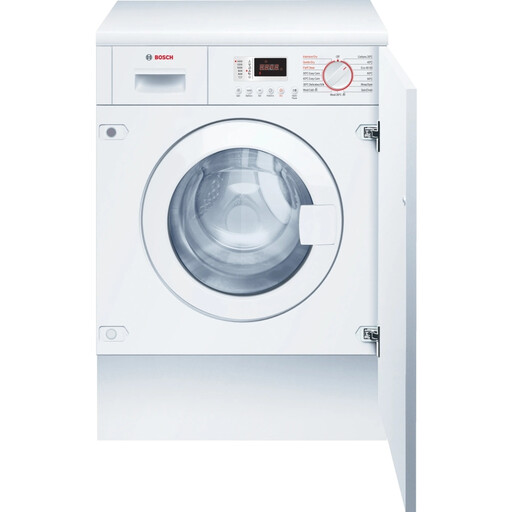
Consider this integrated model if the utility room has compatible cabinetry and dresses that need air drying can be removed after washing.
Its stated capacities are 7 kg for washing and 4 kg for drying. Check the installation instructions and match the selected wash programme to each dress’s label.
 No image available
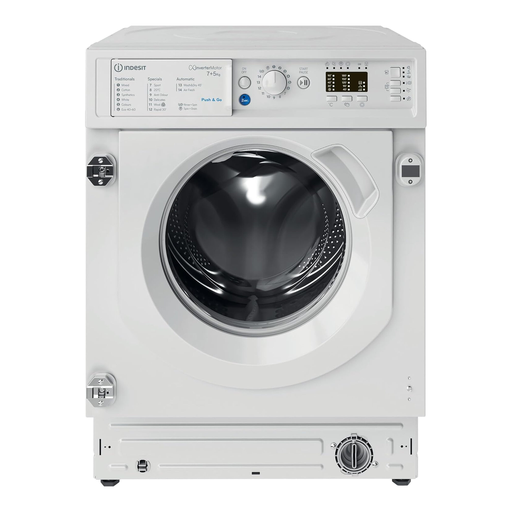
This integrated option suits a compatible utility-room installation where only dresses labelled for tumble drying will enter a drying cycle.
It states 7 kg washing and 5 kg drying capacities. Confirm cabinet and connection requirements, and check the manual against the care instructions for each garment.
 No image available
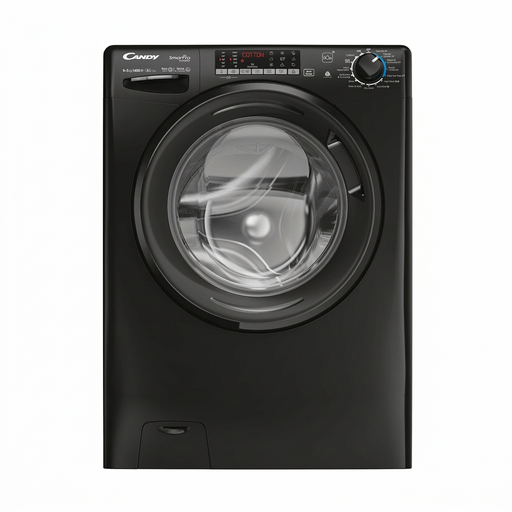
Consider this freestanding model for mixed laundry if you can keep suitable continuous-cycle loads within its drying capacity.
The name states 8 kg washing, 5 kg drying and a 1400 RPM spin speed. Before using it for dresses, check the full programme list and manual against their care labels; drying controls cannot make a no-tumble-dry dress suitable for the dryer.
 No image available
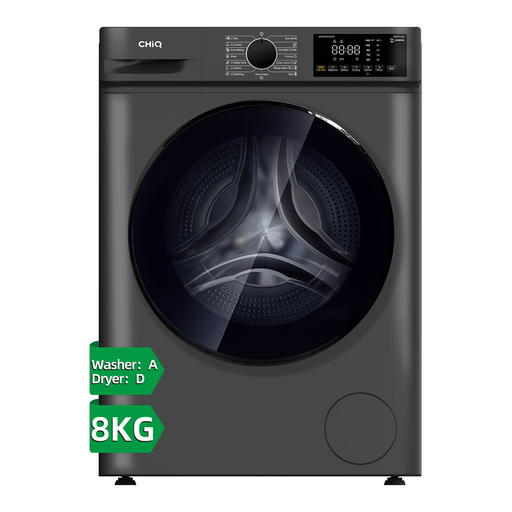
This freestanding model is worth comparing if the utility-room fit and the size of a suitable drying load are central to your choice.
Its name states 8 kg washing, 5 kg drying and a 1400 spin speed. Measure space for connections and door opening, and check the programme list before choosing a cycle for dresses.
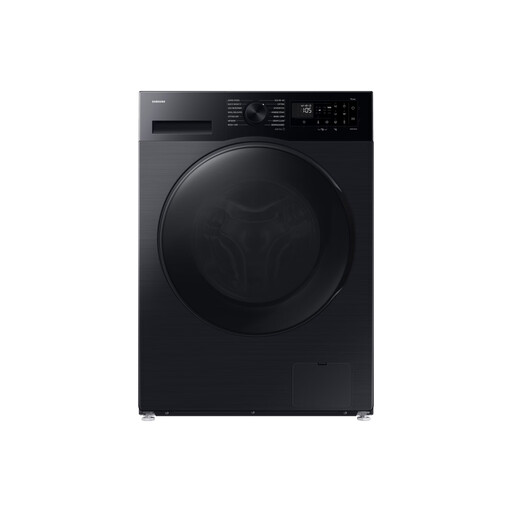 No image available
Consider its stated capacities if the appliance will also handle household laundry, while keeping dresses that cannot be tumble dried out of the drying cycle.
The name states 9 kg washing and 6 kg drying. Check its programmes, installed clearances and separate wash-only and wash-and-dry energy information for the exact model.
Not on that information alone: check the separate tumble-drying symbol. GINETEX identifies both a do-not-tumble-dry symbol and dots that indicate drying temperature, so the washing instruction does not establish that a continuous wash-and-dry cycle is suitable.
The drying capacity can be lower than the washing capacity. Bosch states 10.5 kg for washing but 6 kg for a wash-and-dry cycle on the WNG25401GB; compare both figures for the exact model and divide the load if necessary before drying.
Measure the usable height, width and depth with pipes and plugs accounted for, plus the access route and space to open the door. Allow around 25 mm at either side and roughly 50–150 mm behind a freestanding washer-dryer, but follow the exact model’s installation instructions for its required clearance.
Do not treat an extension lead as a permanent answer to an unsuitable socket arrangement. Electrical Safety First warns that a washing machine can overload an extension lead when used with other large appliances; check the appliance instructions and arrange a suitable fixed installation.
Compare complete wash-and-dry-cycle information as well as wash-only information for the exact model. A washing-cycle rating does not describe the full cycle; use the model’s energy information and product sheet to compare appliances on the type of cycle you expect to run.