Choose a washer-dryer by checking the care labels on the summer dresses you own, then finding a suitable fabric programme and its permitted load in the model manual. Treat drying separately: a washable dress is not necessarily suitable for tumble drying, and the machine’s wash-and-dry capacity may be lower than its wash-only capacity. If you expect to use both functions, compare their energy information separately.
Who is this for?
Dress-care-first owners
If your washable dresses have delicate fabrics, synthetics or trims, start with each garment’s label. AEG UK Support notes that fabric programmes can have different load and spin limits, so the relevant programme matters more than the machine’s maximum capacity alone.
Small-space wash-and-dry users
A single appliance may suit a space that cannot accommodate separate machines. Check whether it fits the intended location and whether its drying capacity covers the dress loads you would actually tumble-dry.
Mixed-laundry households
If you wash dresses alongside other household laundry, compare wash-only and combined-cycle capacities separately. AEG UK Support advises that a washer-dryer’s drying limit is usually lower than its washing limit.
What matters when choosing?
Start with garment care instructions. Once you know which dresses can be machine-washed and tumble-dried, compare programme limits, appliance fit, drying capacity and energy information.
| Concern |
What to check |
Who this matters to |
| Dress care |
Match the garment label to a Delicate or Synthetics programme where appropriate; check its temperature, spin and load limit in the manual. |
If my dresses need gentler washing, I want a programme that matches their labels rather than relying on a quick or cotton cycle. Around 31% of consumers put dress care first. |
| Fit and installation |
Measure the available space and check the exact model’s installation requirements, including clearance and whether it is integrated or freestanding. |
With a limited appliance space or a kitchen cabinet to fit, I need to know the machine will go where I intend. For around 25% of consumers, fit is the primary concern. |
| Drying capacity |
Compare the separate wash and wash-and-dry limits; use a drying cycle only when the garment label permits tumble drying. |
I want to finish suitable dress loads in one appliance without exceeding its drying limit. Around 25% of consumers prioritise that convenience. |
| Energy information |
Compare wash-only and wash-and-dry figures for the exact models, using like-for-like cycle information. |
If I expect to use the dryer regularly, I want to see what the combined cycle discloses, not just the wash-only rating. Energy information comes first for around 19% of consumers. |
Common buying mistakes
-
Using the washing limit for a combined cycle
A washer-dryer can wash more than it can dry in one uninterrupted cycle. AEG UK Support warns that overloading can restrict air circulation and leave laundry damp.
Use the model’s drying limit for a combined cycle, and check the programme table for any lower fabric-specific limit.
-
Choosing a quick cycle before checking dress labels
A washable dress may require different agitation, temperature or spin from a standard cotton load. Delicate programmes can also permit smaller loads.
Read the labels on your dresses, then check the shortlisted model’s fabric programmes and their settings in its manual.
-
Comparing only the wash-only energy class
Wash-only and wash-and-dry information describe different uses. For example, AEG lists its LWX60746B as A for washing and D for wash-and-dry; neither figure stands in for the other.
Compare the energy label and product information for the exact models and cycles you expect to use.
-
Assuming an integrated machine will fit any cabinet
Installation format and model dimensions matter independently of washing capacity. An integrated appliance also has to suit the intended cabinet and door arrangement.
Measure the opening and check the model’s installation instructions, including door and pipe clearances, before ordering.
Brands to consider for these requirements
Bosch
Bosch has cited integrated and freestanding models with separate washing and combined-cycle capacities.
- Bosch Home UK specifies 8 kg wash and 5 kg wash-and-dry capacity for the integrated WKD28260GB, and 10 kg and 6 kg respectively for the freestanding WDU8H541GB.
- Those figures describe the named models, not every Bosch washer-dryer. Check the chosen model’s fabric programmes and installation requirements separately.
AEG
AEG is relevant when comparing named fabric programmes and separately stated washing and drying limits.
- AEG lists Delicates, Synthetics and Wool programmes for the LWX60746B, alongside 7 kg washing and 4 kg drying capacities.
- AEG UK Support cautions that programme load limits differ by fabric. Check the exact model manual against each dress label.
CHiQ
A named compact freestanding model provides a point of reference for shoppers with limited appliance depth.
- Joybuy lists the CHiQ JKW85882HG at 520 mm deep, with 8 kg washing and 5 kg drying capacities.
- Those listing details do not establish which dress-care settings suit your garments; check the model’s programme table.
Joybuy product choices
These integrated washer-dryers are relevant if a built-in kitchen installation is part of your choice. Compare their stated capacities with your loads, then check the exact installation instructions and fabric programmes against your dresses.
 No image available
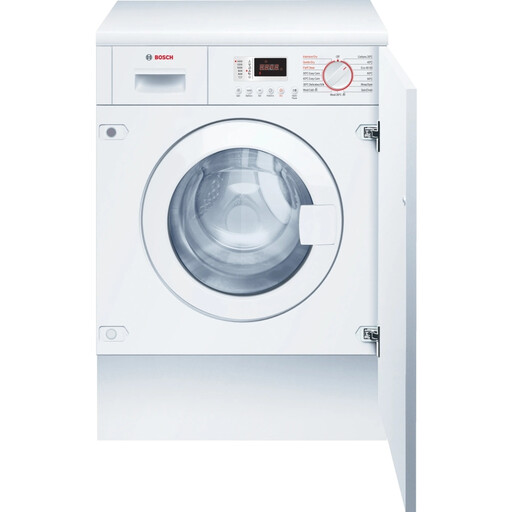
Bosch WKD28352GB Series 4 integrated washer-dryer, 7 kg/4 kg
Consider this model if you need an integrated appliance and its installation requirements suit your kitchen. Its listed capacities are 7 kg for washing and 4 kg for drying; check the model manual for a programme and permitted load that match each dress label.
View on Joybuy
 No image available
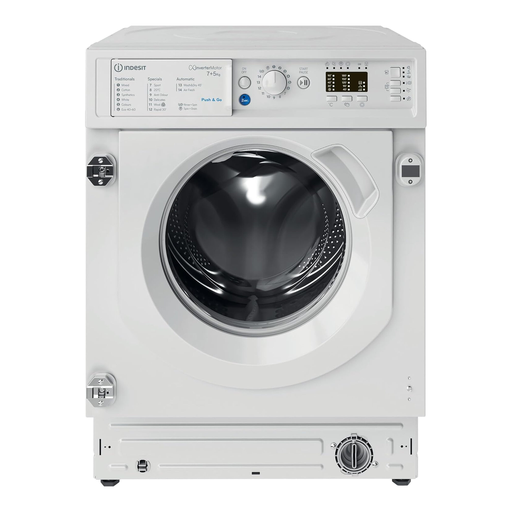
Hotpoint BI WDHG 75148 UK N integrated washer-dryer, 7 kg/5 kg
Consider this 59.5 cm-wide integrated model if its installation requirements suit your planned cabinet. Its listed capacities are 7 kg for washing and 5 kg for drying; check the manual for dress-appropriate programmes and follow each garment’s tumble-drying instructions.
View on Joybuy
Frequently asked questions
Can every washable summer dress go through a washer-dryer’s drying cycle?
No. Washing instructions do not automatically permit tumble drying. Follow the individual garment label and use a drying setting only if that label allows it; otherwise, dry the dress as directed.
Which capacity applies to a wash-and-dry cycle?
Use the model’s wash-and-dry or drying limit, which may be lower than its wash-only capacity. Also check the manual for any smaller limit on the fabric programme your dresses require.
Why might clothes remain damp after a combined cycle?
An overloaded drying load or unsuitable programme can leave clothes damp. AEG UK Support also advises checking the model’s instructions for other possible causes, such as filters or water-supply requirements, before treating the result as a fault.
How should I compare washer-dryer energy information?
Compare wash-only and wash-and-dry information separately for the exact models and cycles you are considering. A washing rating alone does not describe the combined cycle; use the product’s energy label and information sheet to make a like-for-like comparison.


