Regular tea-towel washers
If tea towels go into the wash frequently, check for a cotton programme that suits their care labels and a maintenance routine you can follow. An extra-rinse option may matter if detergent residue concerns you.


Choose a washer-dryer with a cotton programme suitable for your tea towels, enough drying capacity for the batch you want dry in one cycle, and dimensions that fit the utility room. Check the towels’ care labels and the model’s programme guide before relying on a stated temperature or hygiene feature; compare energy information for the wash-only and wash-and-dry cycles you expect to use.
If tea towels go into the wash frequently, check for a cotton programme that suits their care labels and a maintenance routine you can follow. An extra-rinse option may matter if detergent residue concerns you.
If the appliance must fit a particular opening, measure the space and decide whether you need a freestanding machine or one designed for a compatible cabinet door. Allow room for connections and for the appliance door to open.
If you want tea towels dry without transferring them to another appliance, compare the batch with the washer-dryer’s lower drying capacity, not just its wash capacity. Which? explains that the two ratings differ.
Start with the wash programme and the batch you want dry, then check the installation space and compare information for the cycles you expect to use.
Choose when: The utility room has a measured appliance space and you do not need to conceal the machine behind a matching cabinet door.
Bear in mind: The appliance remains visible, and its exact depth still needs checking against the available space.
Choose when: The utility-room furniture is designed for an appliance behind a compatible cabinet door.
Bear in mind: Cabinet and door compatibility must be checked for the exact model; an integrated machine’s wash rating is not its continuous drying capacity.
| Concern | What to check | Who this matters to |
|---|---|---|
| Cotton washing and rinsing | Check the programme guide for a cotton cycle at a care-label-permitted temperature and whether that cycle allows an extra rinse. | If I wash frequently used tea towels, I want a suitable cotton cycle and the option to address detergent residue. Around 29% of consumers put washing and rinsing first. |
| Batch size for drying | Compare the separate wash and drying capacities in kg with the load you want to wash and dry continuously. | When I need a batch dry in one run, the smaller drying rating determines how much I can put in. For around 29% of consumers, drying capacity is the primary concern. |
| Fit and spin noise | Measure the opening, connections and door clearance; check the installation type and stated spin noise in dB. | If the utility room has a tight recess or sits near occupied rooms, fit and spin noise shape my choice. They come first for around 24% of consumers. |
| Energy and water information | Read the applicable energy label and product information sheet for the exact model, distinguishing wash-only from wash-and-dry information. | If I expect to use the dryer regularly, I want to compare information for the complete cycle rather than the wash cycle alone. Around 18% of consumers prioritise this comparison. |
A full wash load may be too large to dry in the same continuous cycle. Which? notes that washer-dryers have a lower drying capacity than washing capacity.
Size the batch you want dry against the rated drying capacity, and follow the load instructions for the selected programme.
Which? notes that larger washer-dryers can use more water when under-filled, while a full larger load can reduce resources used per item. Capacity alone does not settle the choice for small tea-towel batches.
Compare capacities with the loads you actually expect to wash and dry.
A machine can have the right installation type but still be too deep for its opening or leave too little room for connections and door movement.
Measure the full space and check the exact model’s dimensions and cabinet-door requirements before ordering.
An unsuitable integrated fit may also require changes to the surrounding cabinetry.
A named feature does not establish which cotton temperature or load is available for your tea towels. The textile care label and the selected programme still matter.
Check the programme guide and care labels. For laundry associated with a known infection, follow the relevant healthcare advice rather than treating an appliance feature as a substitute.
Bosch offers washer-dryers with different wash and drying capacities, including integrated and freestanding examples relevant to this choice.
LG’s washer-dryer range includes freestanding models with separate wash and drying capacities.
Miele’s WT1 washer-dryer examples include models rated for 8 kg washing and 5 kg drying.
These freestanding and integrated washer-dryers offer different stated wash and drying capacities for utility-room laundry. Choose the installation type first, then check whether the exact model’s cotton programmes and drying capacity suit your tea-towel batches.
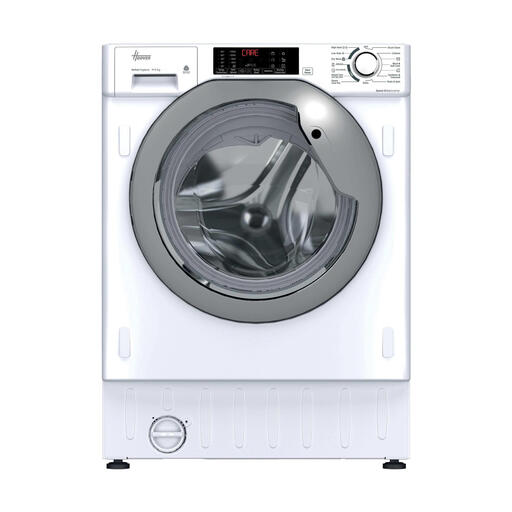 No image available
Consider this integrated model if the utility-room cabinetry is designed for a compatible appliance and a 5 kg drying load suits your batches.
The product name states 9 kg washing and 5 kg drying capacity. Check cabinet fit, the cotton programme’s temperature options and whether extra rinse is available on your intended cycle.
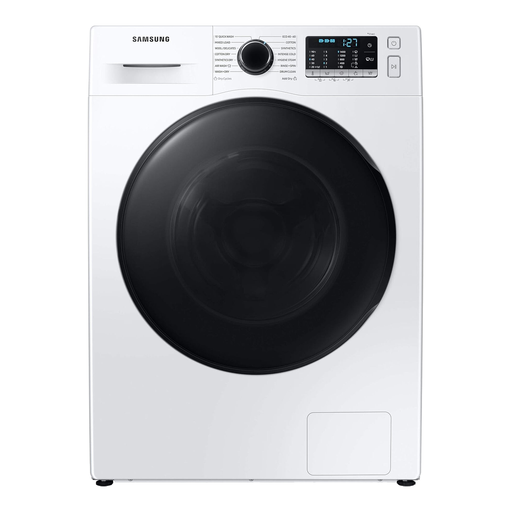 No image available
Consider this freestanding model if you do not need a cabinet-door installation and a 5 kg drying load covers the batch you want dry.
The product name states 8 kg washing and 5 kg drying capacity. Check its exact dimensions, cotton temperature options and extra-rinse availability; a feature named Hygiene Steam does not answer those programme questions.
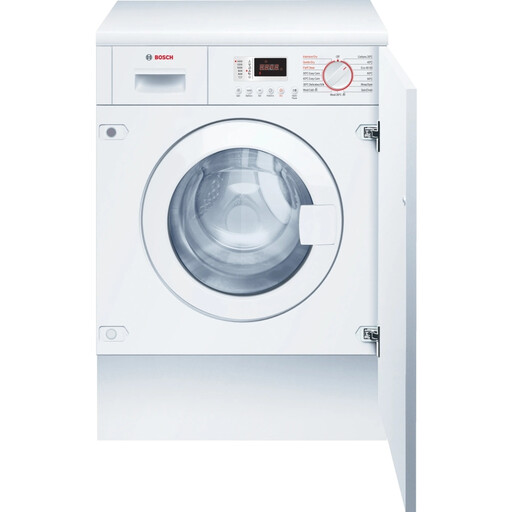 No image available
Consider this integrated model when the fitted space is compatible and you plan to dry smaller batches in one cycle.
Bosch lists 7 kg washing and 4 kg continuous wash-and-dry capacity for the WKD28352GB. Check cabinet and door fit, plus the cotton programme and extra-rinse options needed for your tea towels.
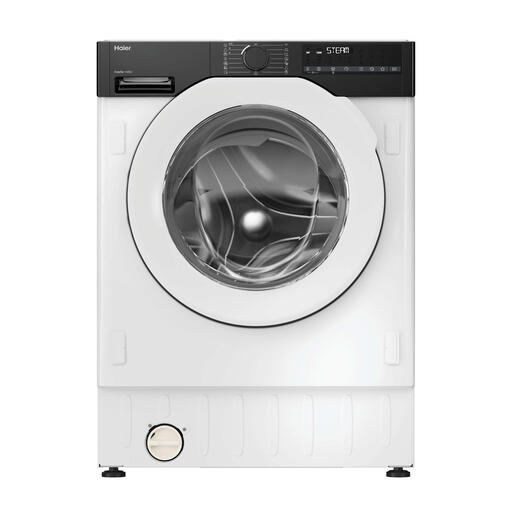 No image available
Consider this integrated model if you need a cabinet-door installation and expect to dry batches within its stated 6 kg rating.
The product name states 9 kg washing, 6 kg drying and 1600 rpm. Confirm installation requirements and check the cotton programme and extra-rinse options against your intended loads.
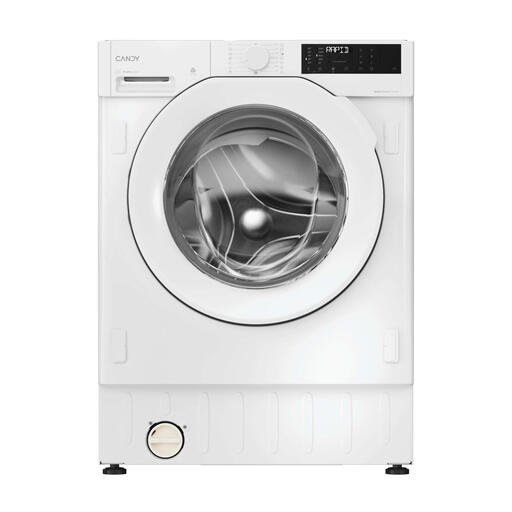 No image available
Consider this integrated model if compatible cabinetry is available and a stated 6 kg drying capacity suits the batch you want dry.
The product name states 9 kg washing and 6 kg drying capacity. Confirm the installation dimensions, suitable cotton and extra-rinse options, and the applicable wash-and-dry energy information for your delivery location.
Not every household tea towel requires a 60°C wash: choose a cotton programme appropriate to the towel’s care label and the cleaning needed. Royal United Hospital Bath NHS Trust specifies a 60°C wash in its guidance for patient laundry associated with infection-control concerns; that is a particular healthcare context, not a blanket instruction for ordinary tea towels.
Plan a continuous wash-and-dry cycle around the lower drying capacity, not the full wash rating. Which? explains the distinction; Bosch, for example, lists the WKD28352GB at 7 kg wash and 4 kg wash-and-dry capacity. Follow the chosen programme’s load instructions.
Choose freestanding if you do not need a matching cabinet door; choose integrated only if the furniture and door arrangement are compatible with the exact appliance. In either case, measure the opening and allow practical room for connections and door movement.
Compare the exact model’s information for the complete wash-and-dry cycle as well as its wash-only cycle. UK government energy-information guidance covers in-scope washer-dryers and notes differences in how requirements apply in Great Britain and Northern Ireland, so check the label and product information sheet applicable to your delivery location.
Follow the cleaning and maintenance instructions for your exact model, including any specified drum-cleaning routine. Advice written for patient laundry, such as Royal United Hospital Bath NHS Trust’s infection-control guidance, should not replace the appliance manufacturer’s maintenance schedule for ordinary household use.