Households short on space
You want one appliance for washing and drying T-shirts, but the available depth, pipe connections or room to open the door may restrict what fits.


Choose a washer-dryer only after checking the installed space, including room for connections and the open door. A shallow freestanding model suits an exposed space where depth is the main restriction; an integrated model suits a compatible kitchen cabinet. For T-shirts you want washed and dried without unloading, compare the smaller drying capacity as well as the wash capacity, then check the Cotton programme and energy information for the cycles you expect to use.
You want one appliance for washing and drying T-shirts, but the available depth, pipe connections or room to open the door may restrict what fits.
You want a modest T-shirt load washed and dried without transferring it elsewhere. The drying limit matters more to that plan than the larger wash-only capacity.
You want the appliance behind a furniture door and need to check the cabinet, door fixings and installation space against an integrated model.
Choose when: The machine will stand in an exposed space and appliance depth is the main restriction.
Allow for: Pipes, ventilation and door opening still add to the space needed around a shallow chassis.
Choose when: The room can accommodate a deeper appliance and its installation clearance.
Allow for: A model such as Bosch’s 616 mm-deep WDU8H541GB may not fit a shallow alcove, even before connections are considered.
Choose when: You have a compatible kitchen cabinet and want the appliance behind a furniture door.
Allow for: Cabinet and door compatibility must be checked; an integrated model is not automatically the easier fit in a tight room.
| Concern | What to check | Who this matters to |
|---|---|---|
| Installed fit | Measure usable depth from the connections, then check the model’s side clearance and open-door space. General freestanding guidance suggests around 25 mm at each side and 50–150 mm at the rear; follow the exact model’s instructions. | If the machine faces a narrow walkway, I need to be able to connect it and open the door, not merely fit its closed chassis into the gap. Roughly 36% of consumers would put installed fit first. |
| Continuous drying load | Check the dry or wash-and-dry capacity in kg, which can be lower than the wash-only capacity. Plan a continuous cycle around the lower figure. | I want to wash and dry my T-shirts without unloading part of the wash in between. Around 29% of consumers would make that uninterrupted load their primary concern. |
| Cotton and quick cycles | Confirm the exact model’s Cotton programme and its load instructions. For any quick option, check its kg limit and whether it washes only or also dries. | For regular cotton T-shirt loads, I need a programme I can use with the garments’ care labels; a short wash alone will not dry them. About 21% of consumers would put programme and load suitability first. |
| Energy information | Compare the exact model’s wash-only and complete wash-and-dry label information on the same cycle basis. | If I expect to use the drying function often, I want to judge the complete cycle rather than the wash rating alone. Approximately 14% of consumers would prioritise that comparison. |
A washer-dryer can fit an alcove on paper yet leave too little room for hoses, ventilation or loading.
Measure the usable space around pipes and plugs, including the door-swing area, and check the exact installation instructions before ordering.
On an 8/5 kg or 9/6 kg machine, the second figure is the smaller drying capacity. A wash filled to the first figure may need to be split before drying.
Plan any uninterrupted T-shirt load using the model’s stated dry or wash-and-dry limit.
The class for a complete wash-and-dry cycle can differ from the wash-only class. LG, for example, lists B for washing and E for wash-and-dry on its FWV696WSE.
Read the information for the cycle you expect to use most, rather than treating the two ratings as interchangeable.
An integrated machine needs compatible cabinetry and a furniture door; its stated depth alone does not establish that it will fit your kitchen.
Check cabinet dimensions, door fixings and service clearance before choosing an integrated model. Otherwise, compare the installed depth of freestanding options.
A reference point for comparing a freestanding model with a stated Cotton programme.
Worth examining if the load limits and cycle types of quick programmes affect your choice.
Offers documented examples of both integrated and freestanding 9/6 kg configurations.
A reference for comparing wash and dry capacities against available depth.
A model-specific example to examine when shallow freestanding depth is the first filter.
These models cover freestanding and integrated ways to fit washing and drying into one appliance. Compare each one against your available installation space and the size of the T-shirt load you want to dry without unloading.
 No image available
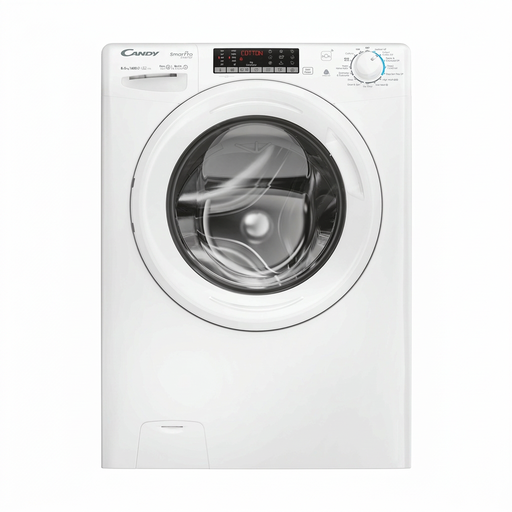
Consider this model if a freestanding machine with a 5 kg drying limit suits your usual T-shirt load.
Its stated capacities are 8 kg for washing and 5 kg for drying, with a 1400 rpm spin. Check the Cotton programme, installed clearance and quick-cycle load limits against your needs.
 No image available
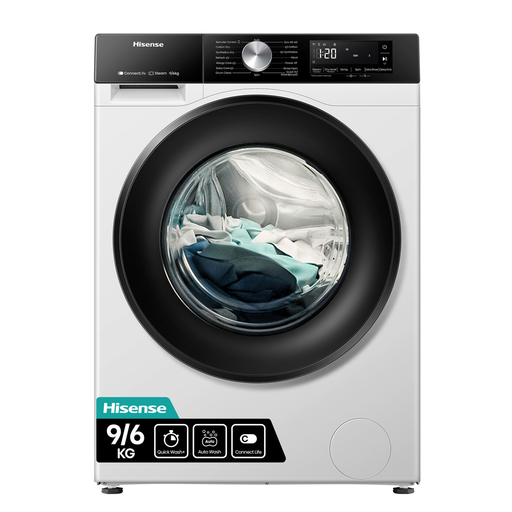
Consider the 6 kg drying capacity if you expect to wash and dry a larger T-shirt load without unloading than a 5 kg dry limit permits.
The product name states 9 kg wash, 6 kg dry and 1400 rpm spin. Check the Cotton programme and the room needed for installation and door opening.
 No image available
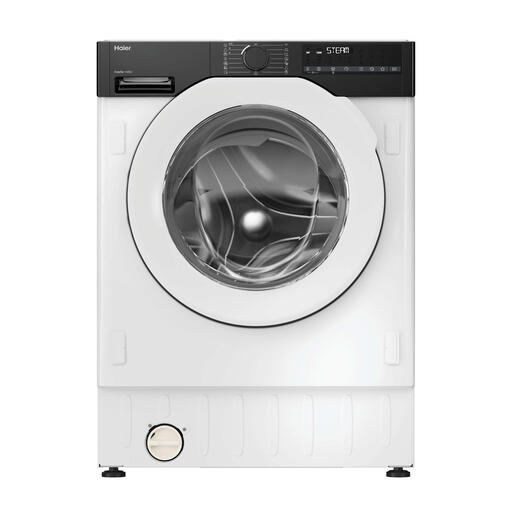
This integrated model is a candidate if you have a compatible appliance cabinet and want to dry T-shirt loads within its 6 kg limit.
The product name states 9 kg wash, 6 kg dry and 1600 rpm spin. Confirm furniture-door fixings, service clearance and the Cotton programme for this exact model.
 No image available
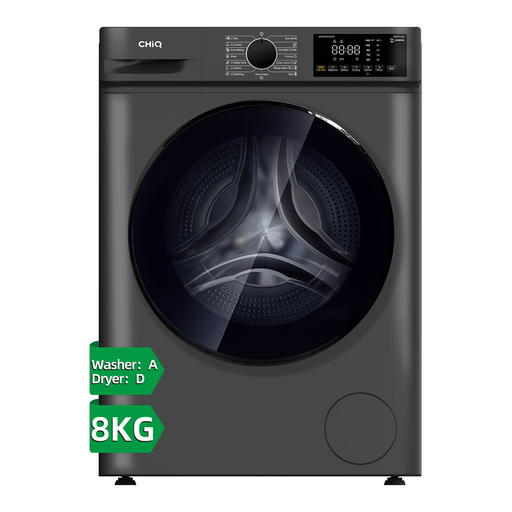
The stated 520 mm chassis depth makes this model worth measuring against an exposed space where depth is restrictive.
Its Joybuy listing states 8 kg wash and 5 kg dry capacity, with a 1400 rpm spin. Allow additional room for connections and the door, and check its programmes against the T-shirts’ care labels.
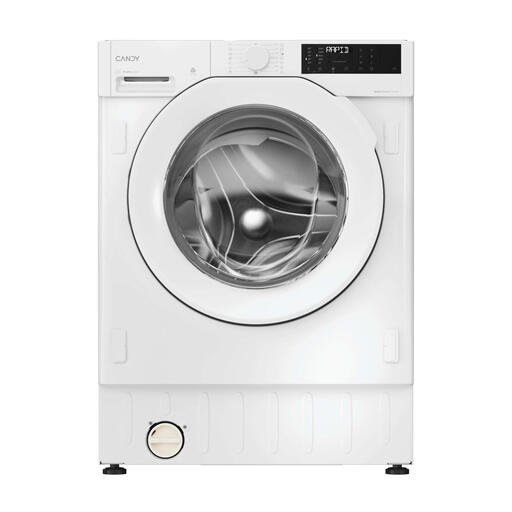 No image available
Consider this integrated model for a compatible kitchen cabinet if its 6 kg drying limit covers the T-shirt load you want to complete in one cycle.
The product name states 9 kg wash, 6 kg dry and 1400 rpm spin. Check the cabinet and furniture-door requirements, Cotton and rapid-programme details, and the exact wash-and-dry energy label.
Not if the load exceeds the model’s smaller drying capacity. A 9/6 kg washer-dryer can wash up to its stated 9 kg limit, but its stated drying limit is 6 kg; plan a continuous wash-and-dry cycle around the latter and follow its programme instructions.
Measure the usable width, height and depth with pipes and plugs accounted for, then check whether the door can open fully. General guidance suggests around 25 mm on either side and 50–150 mm behind a freestanding machine, but use the clearance requirements for the exact model you choose.
Only if the programme includes drying, permits your load size and is suitable under the garments’ care labels. For Beko’s BM3DT68342, the manufacturer distinguishes its stated 28-minute wash for 8 kg from its wash-and-dry option for 5 kg in under three hours; do not treat a quick-wash time as a complete-cycle time.
Compare the complete wash-and-dry information for the exact model, alongside its separate wash-only information. The two classes can differ: LG lists B for washing and E for wash-and-dry on its FWV696WSE, so a wash-only rating does not describe both uses.
No. An integrated model needs a compatible cabinet, furniture-door arrangement and installation clearance; a shallow stated depth does not establish that the whole installation will fit. Compare those requirements with the available space before choosing it over a freestanding model.