Residents with a tight appliance recess
A single appliance may save space, but its width, depth and height still need to work with the plumbing, door access and a level floor.


Choose a washer-dryer only after checking that it fits the available space, connections and door access. If you want aprons washed and dried in one cycle, compare the wash-and-dry capacity rather than the larger wash-only figure; then check which programmes suit the aprons’ care labels and how the machine’s noise and energy information fit your routine.
A single appliance may save space, but its width, depth and height still need to work with the plumbing, door access and a level floor.
If you wash cooking, craft or work aprons often, compare programmes for the loads you actually run. Check each apron’s care label and avoid overloading the drum.
When outdoor drying space is limited, the amount a machine can wash and dry in one cycle matters more than its wash-only capacity.
Decide whether the machine must be freestanding or fit existing cabinetry, then measure the space before comparing drying capacity and programmes.
Consider when: Available depth limits your choice and you mainly run modest apron loads.
Trade-off: A shallow cabinet still needs space for connections and access; its wash capacity does not tell you how much it can dry in one cycle.
Consider when: You regularly wash aprons with other laundry and have room for a larger drying load.
Trade-off: Check that the deeper footprint still permits connections, levelling and access.
Consider when: Your flat has compatible fitted cabinetry and a suitable cabinet-door arrangement.
Trade-off: Built-in installation requirements make cabinet compatibility decisive; an integrated format does not by itself mean a smaller appliance.
| Concern | What to check | Who this matters to |
|---|---|---|
| Fit and installation | Measure the recess and check the model’s dimensions, connection space and installation instructions. | If my kitchen recess is tight, I need the machine to fit with room for its connections and to stand level; around 36% of consumers put installation fit first. |
| Wash-and-dry capacity | Compare the separate wash and wash-and-dry limits in kilograms against the load you want dry at once. | When I want aprons and other laundry dry without splitting the load, the continuous-cycle limit governs my choice; roughly 29% of consumers prioritise drying capacity. |
| Apron-care programmes | Check permitted fabrics and load sizes for rapid or stain-focused programmes against the apron care label. | For frequent apron washes, I want a suitable cycle that works with the fabric and degree of soiling; around 21% of consumers put apron-care convenience first. |
| Energy and noise | Compare the exact models’ energy information and stated noise figures, including their declared programme conditions. | In a compact home, I want to understand energy use and potential disturbance before choosing; roughly 14% of consumers make these checks their primary concern. |
The amount a washer-dryer can wash may exceed what it can wash and dry continuously, leaving part of a load to be dried separately.
Match the exact model’s wash-and-dry capacity to the aprons and other items you intend to dry together.
Cabinet depth is only part of the installation check. Bosch UK warns that incorrect levelling can cause intense noise and vibration.
Measure the space, allow for connections and door access, and follow the model’s installation instructions for a level position.
A short programme may have fabric, soil-level or load-size conditions that do not suit a particular apron.
Read the apron care label and programme instructions before selecting a quick wash or wash-and-dry cycle.
Removing a replaced machine takes planning, and electrical appliances need an appropriate recycling route rather than general-waste disposal.
Check the seller’s removal options and your local authority’s arrangements before ordering.
Indesit UK lists both freestanding and built-in washer-dryers relevant to different space constraints. Its freestanding EWDE 761483 W UK is listed at 59.5 cm wide, 53.5 cm deep and 85 cm high.
The Bosch UK WNA144V9GB is a model to compare where a 590 mm-deep appliance can be accommodated.
Hotpoint UK describes the freestanding HBD 9681 ANTI STAIN UK for buyers comparing a larger drying load and stain-oriented programmes.
These freestanding and integrated washer-dryers offer ways to wash aprons and dry suitable loads in one appliance. For the integrated models, confirm cabinet and door compatibility; for every model, check connection space and access before choosing.
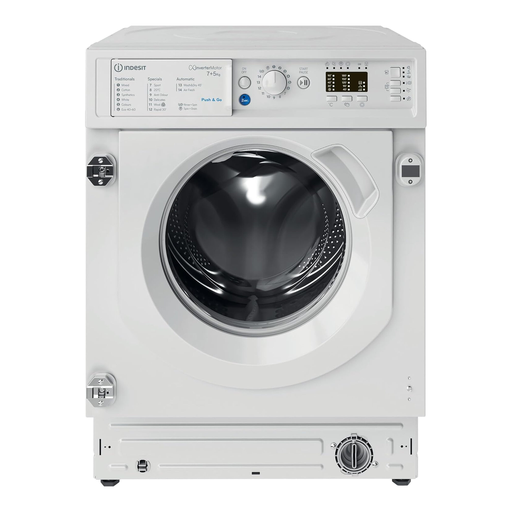 Image unavailable
Consider this model for apron laundry if you have compatible fitted cabinetry. The title states a 59.5 cm width, 7 kg wash capacity and 5 kg dry capacity; check cabinet-door fit and programme conditions against your aprons.
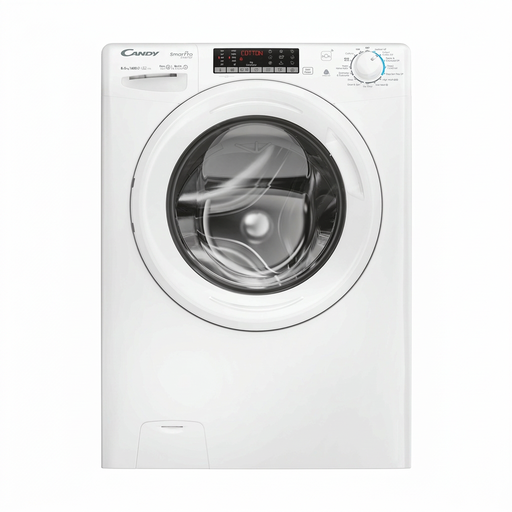 Image unavailable
Consider this freestanding option if a fitted cabinet is not part of your plan. Its stated capacities are 8 kg wash and 5 kg dry, with a 1400 RPM spin speed; check installation clearance and do not assume a quick-wash option also dries the load.
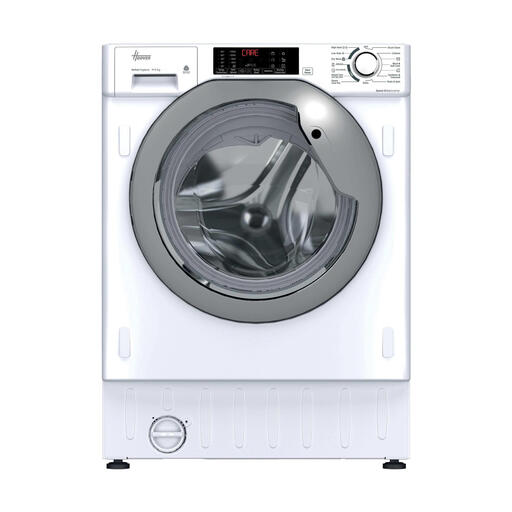 Image unavailable
This integrated model may suit a flat with compatible cabinetry and regular apron loads. It states 9 kg wash and 5 kg dry capacity; check the cabinet-door arrangement and whether any short wash programme suits the aprons’ fabric and soil level.
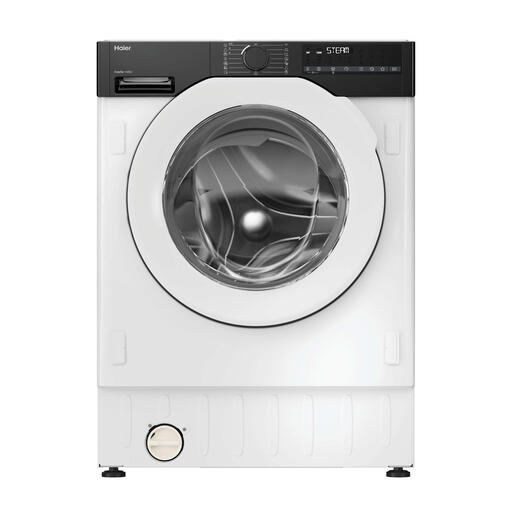 Image unavailable
Consider this built-in model if a 6 kg stated dry capacity better matches the load you want to finish in one cycle. The title also states 9 kg wash capacity and a 1600 rpm spin speed; confirm cabinet, door and installation requirements.
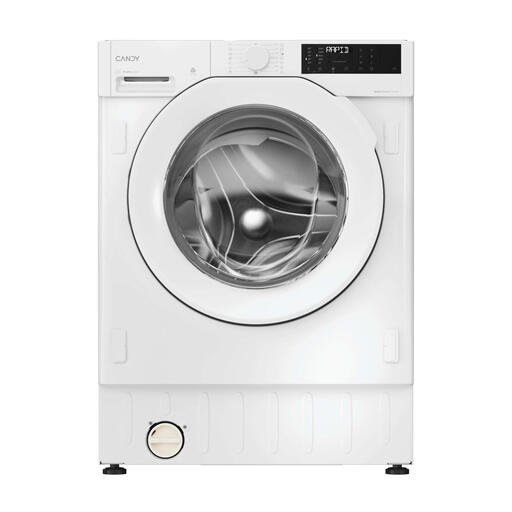 Image unavailable
This integrated model is another option to consider when drying capacity matters and fitted cabinetry is available. It states 9 kg wash and 6 kg dry capacity with a 1400 spin rating; verify installation dimensions and the conditions for any short programme.
Not necessarily: compare the separate wash-and-dry limit with the wash-only limit. Bosch UK specifies 5 kg for a wash-and-dry cycle on the WNA144V9GB, while Indesit UK lists 7 kg washing and 5 kg drying for the IDMA 75624 MY TIME UK.
Measure the available width, depth and height, then check connection space, door access and the exact model’s installation instructions. The appliance also needs to be level: Bosch UK notes that incorrect levelling can cause intense noise and vibration.
Start with each apron’s care label, then choose a programme suitable for its fabric, soil level and load size. Energy Saving Trust advises against overloading a washing-machine drum because it can reduce efficiency and damage the machine.
Compare the energy label and product information for the exact new washer-dryer models you are considering, rather than relying on programme names. GOV.UK guidance requires accurate energy labels for products within the scope of UK energy-information rules.
Arrange an appropriate electrical-appliance recycling route rather than putting it in general waste. Check the seller’s removal service and your local authority’s options; Oxfordshire County Council, for example, directs households to its electrical-equipment recycling arrangements.