Frequent sheet washers with bulky loads
If you regularly wash cotton sheets and want to avoid splitting loads, compare the rated wash-and-dry capacity with your usual load rather than relying on the wash figure alone.


For cotton sheets, choose a washer-dryer by the load it can wash and dry continuously, not its larger wash capacity alone. A full wash load may need splitting before drying; then check the appliance’s fit, the sheets’ care instructions and the energy-label figures for a complete wash-and-dry cycle.
If you regularly wash cotton sheets and want to avoid splitting loads, compare the rated wash-and-dry capacity with your usual load rather than relying on the wash figure alone.
If a separate tumble dryer is impractical, measure the available space and decide whether you need a freestanding or integrated machine before comparing extra features.
If you plan to dry sheets in the machine, compare complete-cycle energy and water figures. Check the exact model’s programmes against the sheets’ care label.
For cotton sheets, establish the usable wash-and-dry load first, then check the installation space, care controls and complete-cycle label figures.
| Concern | What to check | Who this matters to |
|---|---|---|
| Sheet-load capacity | Compare the wash and wash-and-dry ratings in kg; use the lower figure when planning a continuous cycle. | If I want to wash and dry a bulky sheet load without dividing it, the drying limit is my starting point. Around 33% of consumers put sheet-load capacity first. |
| Fit and installation | Check height, width, depth, door clearance and whether the appliance is freestanding or integrated. | When cabinetry or a shallow utility space determines what I can install, physical fit comes before features. For around 20% of consumers, fit is the primary concern. |
| Cotton care and convenience | Check the exact model’s cotton programme, selectable spin and drying controls against the sheets’ care label. | If I want more control over drying or the finishing work afterwards, I need suitable settings on the model I choose. Around 20% of consumers prioritise those care controls. |
| Complete-cycle resource use | Compare the complete-cycle rating, kWh per 100 complete cycles and water use per complete cycle at a relevant load. | If I regularly machine-dry sheets, washing-only figures do not cover the cycle I expect to use. Complete-cycle resource use comes first for around 27% of consumers. |
A washer-dryer can wash more than it can dry in one continuous cycle. Bosch, for example, lists a model with a 10 kg wash rating and a 6 kg wash-and-dry rating.
Plan sheet loads around the lower rating, or divide a larger wash load before drying.
Washing-only figures do not describe the complete cycle used when sheets are also machine-dried.
Use the complete wash-and-dry figures on the energy label or product information sheet, including energy and water consumption. GOV.UK lists energy use per 100 complete cycles among the washer-dryer label information.
A suitable load rating will not help if the appliance does not fit its intended position or installation type.
Compare the exact model dimensions with the space, allow for door opening and follow its installation requirements.
Drying controls, steam functions and connected features vary between models; their presence does not establish how well a particular machine will clean sheets.
Check the exact model’s programme list and controls, then follow the sheets’ care label.
These model examples illustrate capacities and installation choices; features and dimensions need checking on the particular appliance.
Bosch Home UK lists a washer-dryer example rated at 10 kg for washing and 6 kg for washing and drying.
LG UK lists the W2X5095TLB at 9 kg wash/5 kg dry and the WHX9016TBC heat-pump model at 11 kg wash/6 kg dry.
Haier UK lists the built-in Series 8 HWDB10B14858U1UK with 10 kg wash and 6 kg dry ratings.
These freestanding and integrated washer-dryers provide stated wash and dry capacities to compare with your usual sheet load. Check the exact model’s dimensions, programmes and complete-cycle label figures before choosing.
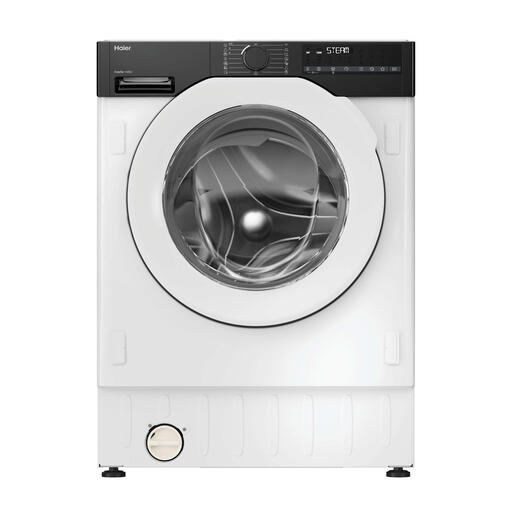 No image available
Consider this integrated model if cabinetry fit and a stated 6 kg drying capacity both matter for your sheet loads.
Rated 9 kg for washing and 6 kg for drying, with a 1600 rpm spin rating. A wash load above the drying limit would need dividing before machine drying.
Confirm cabinet compatibility and the exact cotton programme; compare its complete-cycle energy and water figures for running costs.
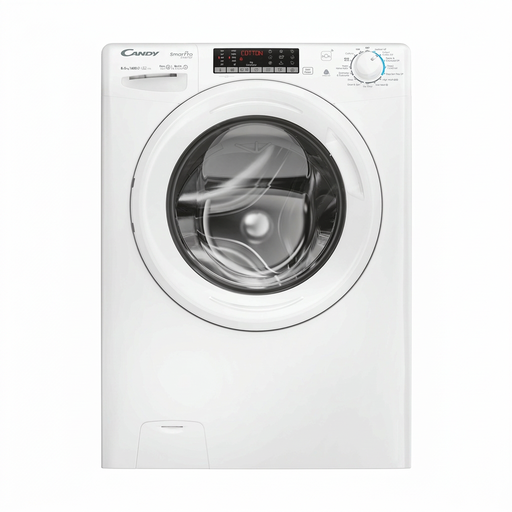 No image available
This freestanding model is an option if a 5 kg continuous drying load meets your sheet-washing needs.
Rated 8 kg for washing and 5 kg for drying, with a 1400 rpm spin rating. The larger wash load cannot all be dried in one rated continuous cycle.
Check the cotton programme against your sheets’ care label and the appliance dimensions against its intended space.
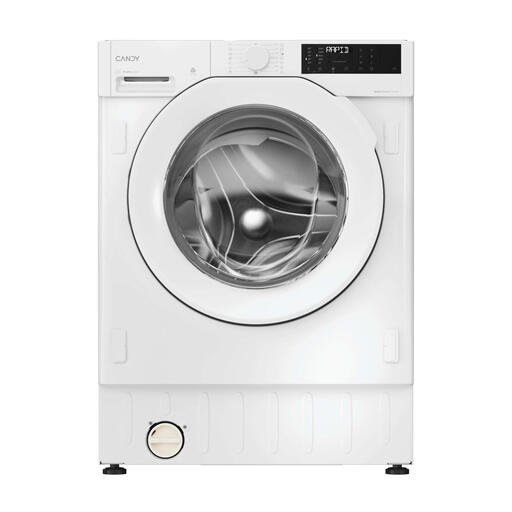 No image available
Consider this integrated model if your cabinetry can accommodate it and you need a stated 6 kg drying limit.
Rated 9 kg for washing and 6 kg for drying, with a 1400 rpm spin rating. Divide a larger wash load before drying.
Check cabinet compatibility, the cotton programme and the complete-cycle energy-label figures for the exact model.
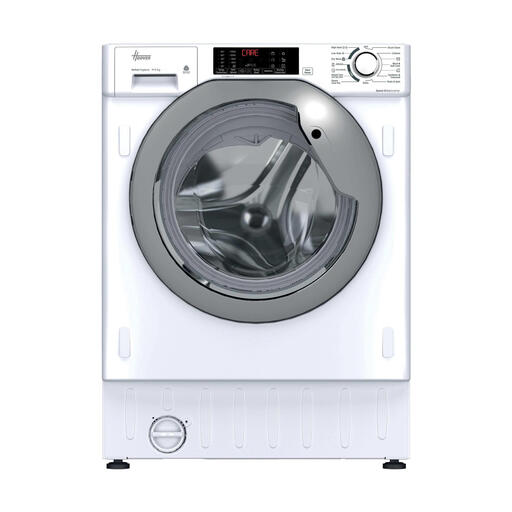 No image available
This integrated model suits a space planned for a fitted appliance if a 5 kg drying load covers your sheets.
Rated 9 kg for washing and 5 kg for drying, with a 1400 rpm spin rating. Sheets washed as a larger load may need splitting before drying.
The listing specifies professional installation. Confirm cabinet fit, the cotton programme and complete-cycle energy and water figures.
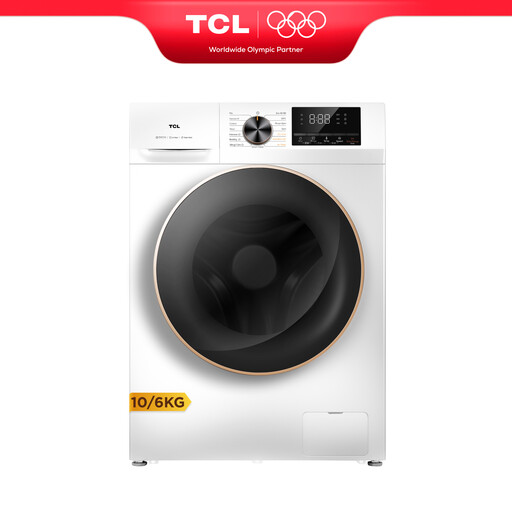 No image available
Consider this freestanding model if you want a stated 6 kg continuous drying capacity alongside a larger wash rating.
Rated 10 kg for washing and 6 kg for drying, with a 1400 rpm spin rating. A full 10 kg wash load exceeds its rated drying capacity.
Check its dimensions, cotton programme and complete-cycle energy and water figures before deciding.
Yes, if that load is within the machine’s rated wash-and-dry capacity. Check the drying figure separately: Bosch lists an example rated at 10 kg for washing but 6 kg for washing and drying.
Compare the complete wash-and-dry cycle rather than the washing cycle alone. GOV.UK’s washer-dryer label guidance includes energy use per 100 complete cycles; also check the complete-cycle capacity and water figure when comparing models.
Follow the sheets’ care label rather than automatically selecting the highest setting. Faster spinning removes more water, but you should check the spin options on the exact machine and use a setting suitable for the fabric.