Utility-room fit-first buyers
You need one appliance in a limited space, so its dimensions, door opening and installation arrangement matter more than optional programmes.


For a utility-room washer-dryer used mainly for cotton socks, check the exact model’s installation requirements before choosing a capacity, then size any combined wash-and-dry load by its lower drying limit. Look for a cotton programme and, if detergent residue matters to you, an extra-rinse option; compare wash-and-dry energy information rather than relying on a wash-only rating.
You need one appliance in a limited space, so its dimensions, door opening and installation arrangement matter more than optional programmes.
You want socks and other everyday laundry washed and dried in one appliance, while allowing for a drying capacity lower than the washing capacity.
You mainly wash cotton socks and want to check the cotton programme and, where detergent residue is a concern, the availability of an extra rinse.
For a utility-room washer-dryer used mainly for cotton socks, settle the space and installation question first; then decide how often socks will need to dry alongside other laundry.
| Concern | What to check | Who this matters to |
|---|---|---|
| Fit and installation | Compare the model’s installation dimensions with the opening, door path and space needed for connections and access. | If the utility-room space is tight, I need to know the appliance can be installed and loaded there. Around 40% of consumers put fit and installation first. |
| Drying capacity | Check wash and dry capacities separately; use the dry limit for a combined load of socks and other laundry. | When I dry socks with a larger load, I want to avoid splitting it after washing. Drying throughput is the main concern for around 30% of consumers. |
| Energy and water information | Compare the exact model’s wash-and-dry information and programme conditions, not just its wash-only rating. | If I regularly use the drying function, I want figures that reflect the cycle I will run. Around 20% of consumers prioritise that comparison. |
| Cotton care and rinsing | Check for a cotton programme and, if needed, an extra-rinse option; follow the socks’ care labels. | If detergent residue concerns me, I want to choose a suitable cycle for my socks. Cotton care and rinsing come first for around 10% of consumers. |
A washer-dryer can wash more than it can dry. Which? notes that the drying capacity is lower, so a full wash load may need to be reduced before the drying stage.
Size the load you intend to wash and dry together by the selected model’s dry capacity, particularly when socks share the drum with bulkier items.
Splitting a load means another drying cycle or another way to dry the remaining items.
Models do not have identical dimensions. AEG lists its LWR7185M4B at 847 × 597 × 599 mm maximum, but that measurement cannot establish whether it fits your utility room.
Measure the intended space and door path, then check the chosen model’s installation instructions for connections, access and any cabinetry requirements.
Wash-only information does not describe the same use as a wash-and-dry cycle. An individual model’s combined-cycle information may differ from its wash-only information.
Use the exact model’s energy label and product information sheet to compare the mode and programme you expect to use.
Maintenance instructions and safety notices can affect how an appliance should be used after installation. A notice for one model should not be assumed to apply to every washer-dryer.
Register the appliance, keep its model and serial number, follow its maintenance instructions and check whether any safety notice applies to that exact model.
Bosch Home UK lists washer-dryers with different wash and dry capacities, including 7 kg wash/4 kg dry and 10 kg wash/6 kg dry examples.
Beko UK lists freestanding and integrated washer-dryers in a range of capacities.
AEG UK’s LWR7185M4B is an 8 kg wash/5 kg dry example with a cotton programme and a stated maximum spin speed of 1400 rpm.
LG UK lists its FWY696GBLN1 with 9 kg wash and 6 kg dry capacities and dimensions of 600 × 850 × 565 mm.
These freestanding and integrated washer-dryers offer different stated wash and dry capacities. Choose the installation format that suits your utility room, then check the exact model’s dimensions, cotton-cycle options and combined-cycle information.
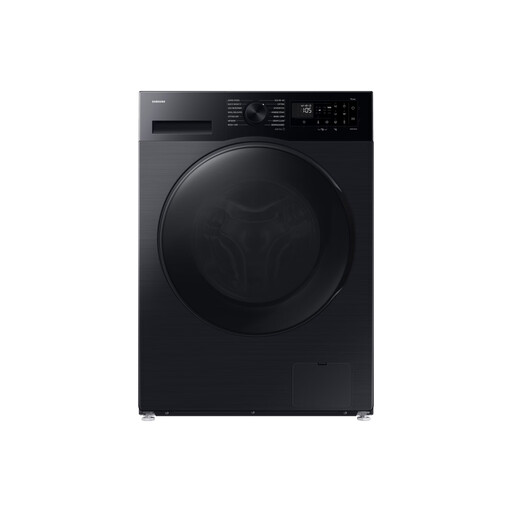 No image available
Consider this model if you want to dry socks alongside other laundry in one appliance; keep a combined load within its stated 6 kg dry capacity.
The product name states 9 kg wash and 6 kg dry capacities and A/D ratings. Check the exact model’s cotton and extra-rinse options, installation instructions and energy information before ordering.
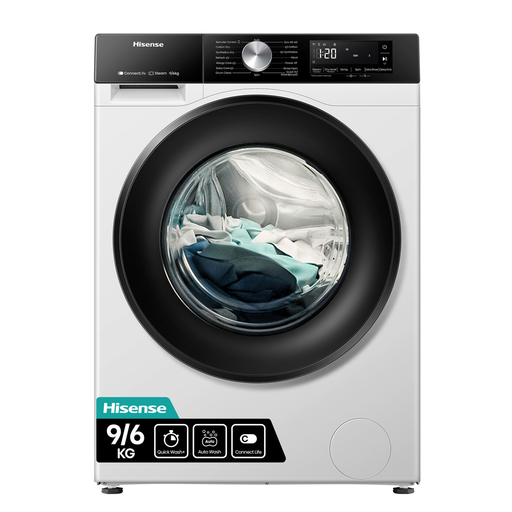 No image available
This is another option for washing socks and drying a mixed load in the same machine, provided the load stays within the stated 6 kg dry capacity.
The product name states a 9 kg wash capacity, 6 kg dry capacity and 1400 rpm spin speed. Compare its installation instructions with your space and check its cotton, rinsing and wash-and-dry information.
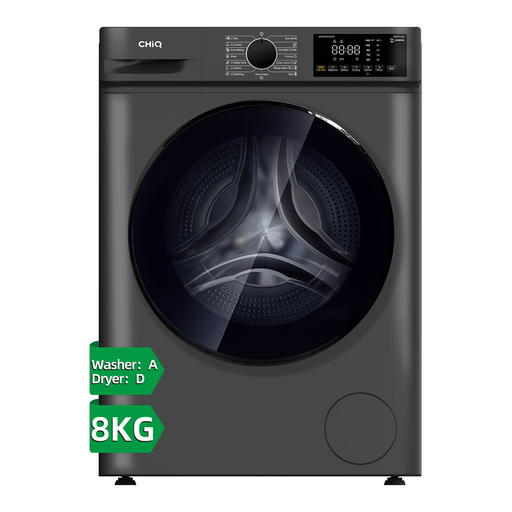 No image available
Consider this freestanding model if a 5 kg drying limit covers the socks and other items you expect to dry together.
The product name states 8 kg wash and 5 kg dry capacities, 1400 spin and A/D ratings. Check the model’s installation dimensions, cotton and extra-rinse options, and energy information.
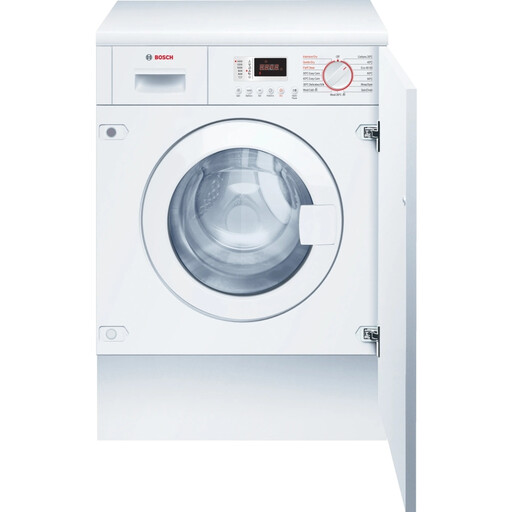 No image available
This integrated model is relevant if your utility room has a suitable fitted space and a 4 kg combined-cycle drying limit meets your needs.
The product name states 7 kg wash and 4 kg dry capacities and an E rating. Confirm the cabinet and connection requirements, cotton and rinsing options, and the exact wash-and-dry energy information.
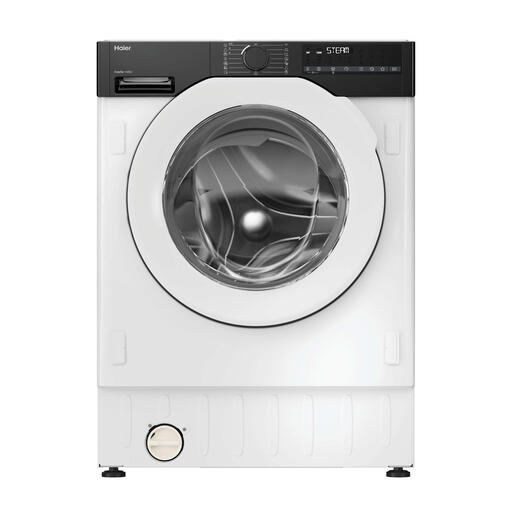 No image available
Consider this model if you have cabinetry suitable for an integrated appliance and want a stated 6 kg dry capacity for combined loads.
The product name states 9 kg wash and 6 kg dry capacities and 1600 rpm spin. Check the cabinet and installation requirements, cotton and extra-rinse options, and the exact model’s combined-cycle information.
Use the washer-dryer’s rated drying capacity as the limit for the combined load. Which? explains that washer-dryers have a higher wash capacity than dry capacity, so check both figures for the exact model and programme.
Compare wash-and-dry information if you expect to use a combined cycle; a wash-only rating describes different use. Check the exact product’s energy label and information sheet for the market where you are buying, as GOV.UK notes that energy-information arrangements differ between Great Britain and Northern Ireland.
Start with the socks’ sewn-in care label and the selected machine’s cotton programme. Which? describes cotton settings among standard washer-dryer programmes; if detergent residue concerns you, check whether the exact model offers an extra rinse.
Cornwall Council’s fire-safety guidance advises against leaving laundry appliances running overnight or unattended. Follow the appliance instructions, avoid overloading it and carry out the maintenance specified for your model.
Use the precise model and serial number to check any notice, and register the appliance so the manufacturer can contact you about safety issues. Safety notices can be model-specific; do not assume that a notice for another appliance applies to your washer-dryer.