Families combining workwear with everyday laundry
If you wash both together, plan around the smaller drying load as well as the wash capacity. This matters most when workwear needs to be ready for the next day.


Choose by the amount you need to dry in one run, not just the larger wash capacity: a full family wash may need splitting before drying. For ordinary washable workwear, match stain, rinse and quick-cycle options to the garment labels; if clothing may be contaminated at work, follow the employer’s laundering procedure rather than assuming a household machine is suitable.
If you wash both together, plan around the smaller drying load as well as the wash capacity. This matters most when workwear needs to be ready for the next day.
A documented small-load programme may help between shifts, provided the garments can use it. A rapid wash claim does not necessarily include drying.
Look for programmes appropriate to the workwear’s care labels. Extra rinsing may also matter if detergent residue is a concern; Which? identifies it as a feature to consider.
Start with the load you expect to dry, then check garment-compatible programmes and whether the appliance fits its intended space.
| Concern | What to check | Who this matters to |
|---|---|---|
| Usable capacity | Compare wash and dry capacities separately; decide how much you need dry without splitting a load. | If family laundry and workwear often fill the drum together, I want the drying limit to fit the amount I need ready. Around 36% of consumers put usable capacity first. |
| Stains and fabric care | Check documented stain and rinse options against each garment’s temperature, spin and drying instructions. | When ordinary workday stains need attention, I do not want an intensive cycle that conflicts with the fabric label; around 29% of consumers prioritise stain and fabric care. |
| Next-shift turnaround | Read the rapid programme’s load limit and establish whether it washes only or washes and dries. | If I have a small set of workwear to prepare between shifts, the programme must cover the steps I need. Around 21% of consumers make turnaround their primary concern. |
| Running information and fit | Compare the exact model’s energy information and measure the installation space, including door clearance. | When the machine must fit a particular space, I need its dimensions and running information before choosing; roughly 14% of consumers put these considerations first. |
Which? explains that washer-dryers have a smaller drying capacity than washing capacity. Washing a full drum may therefore leave items to remove before a combined drying cycle.
Compare the dry capacity with the load you actually want ready at once, especially when workwear and family laundry share a wash.
LG describes its TurboWash 360 time for a 5kg wash load, while Bosch describes Wash & Dry 60 for small loads. Neither claim establishes a quick full-family wash-and-dry cycle.
Check the stated load and whether the programme includes drying before relying on it for next-shift workwear.
A programme for ordinary stains does not establish that a household washer-dryer can decontaminate occupational clothing. The Health and Safety Executive says laundering and handling must account for cross-infection risks where relevant.
If workwear may be contaminated with blood or body fluids, follow the employer’s risk-assessed procedure rather than mixing it with ordinary household laundry.
Which? notes that a larger washer-dryer can be less efficient when underfilled, even though a full larger load can use less energy, water and time per item.
Choose a capacity that matches your usual loads and compare energy information for the exact models under consideration.
The Series 8 WDU8H541GB is a freestanding 10kg wash/6kg dry option for households comparing family-load capacity with a small-load wash-and-dry programme.
The FWY706WWTN1 offers a 10kg wash/6kg dry format for buyers also considering a rapid wash for limited loads.
Haier lists integrated and freestanding washer-dryers in different wash and dry capacities, making installation format a useful starting point for comparison.
The HBD 1781 ANTI STAIN UK is a 10kg wash/7kg dry model to consider when ordinary workwear stains and drying-load size are priorities.
Samsung’s cited 10kg wash/6kg dry model provides a reference point for buyers considering connected and fabric-sensing features.
These freestanding and integrated washer-dryers offer different installation choices for family laundry and ordinary washable workwear. Compare each model’s dry capacity with your usual load, then check its programmes against the garment labels.
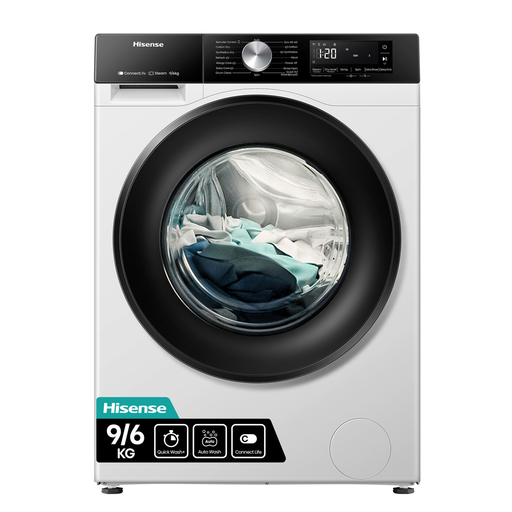 Image unavailable
A freestanding option for family washing when a 6kg drying limit fits the load you need ready at once.
9kg wash capacity; 6kg dry capacity; 1400rpm spin. A larger wash load may need splitting before drying. Check the programme list for the workwear settings you need.
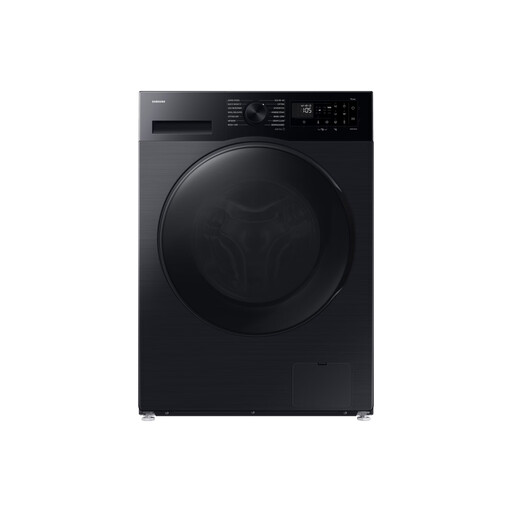 Image unavailable
Consider this freestanding model if a 9kg wash load and 6kg drying limit suit your household routine.
Black variant. Check the exact model’s programme details and energy information, and plan to split a wash load that exceeds the dry limit.
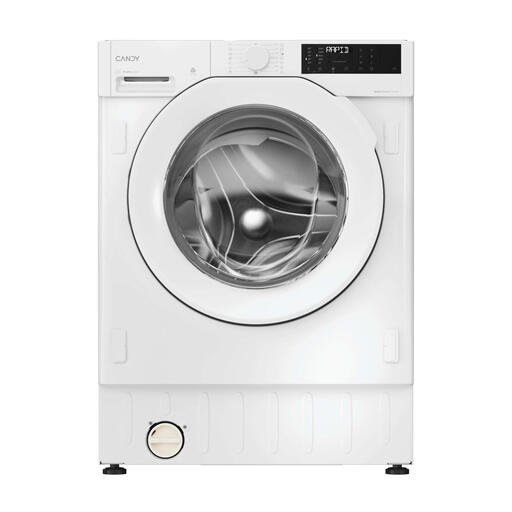 Image unavailable
An integrated option where a cabinet-front installation is required and a 6kg drying load meets the household’s needs.
9kg wash capacity; 6kg dry capacity; white variant. Confirm the housing and door requirements, garment-compatible programmes and exact model’s energy information before ordering.
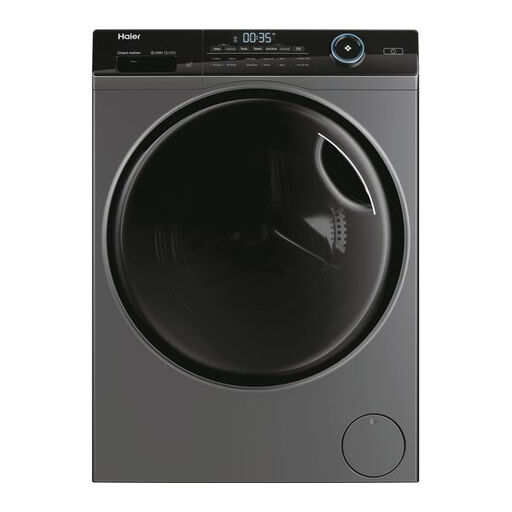 Image unavailable
Its 10kg wash capacity may suit larger family washes, but the 6kg dry capacity still governs a combined load.
Freestanding anthracite variant. If you expect to dry a full wash, allow for splitting it; check the workwear programme options separately.
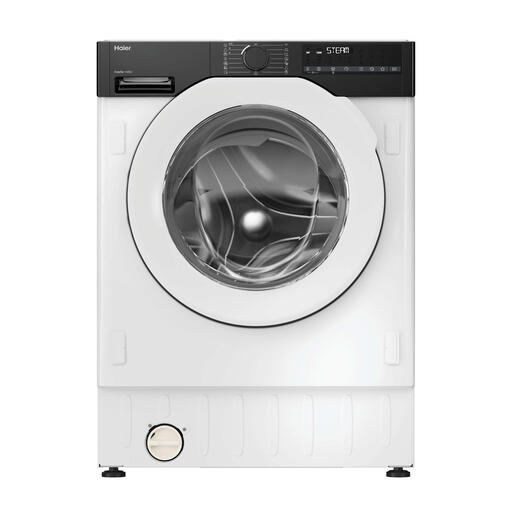 Image unavailable
This integrated model is relevant when the machine must sit behind a cabinet door and a 6kg drying load is workable.
9kg wash capacity; 6kg dry capacity; 1600rpm spin; white variant. Confirm cabinet fit and compare the exact model’s energy label and product information sheet.
No: a washable label alone does not settle how potentially contaminated clothing should be handled. For ordinary workwear, follow the care label; where blood or body-fluid contamination is possible, the Health and Safety Executive advises that laundering and handling account for cross-infection risk, so follow the employer’s procedure.
The wash figure and dry figure are different limits, so a full wash may need dividing before drying. Which? explains that washer-dryers have a smaller drying capacity; compare the dry figure with the amount of workwear and family laundry you want ready in one run.
Compare the energy label and product information sheet for each exact model, including wash-only and combined-cycle information where shown. GOV.UK provides guidance on energy information for products in scope; check the information supplied for your destination within the UK rather than relying on a model name or a headline efficiency claim.
Contact the seller and keep the order, delivery and fault records. GOV.UK’s Consumer Rights Act guidance describes repair or replacement remedies for faulty goods in applicable circumstances; these are distinct from a retailer’s voluntary change-of-mind returns policy.