Choose between a freestanding and an integrated washer-dryer by checking the installation space first, then size workwear loads against the smaller drying capacity rather than the wash-only capacity. A combined appliance addresses the space constraint, but workwear that may be contaminated needs an employer-led laundering decision; a domestic programme is not proof of safe decontamination. Once those conditions are settled, compare the exact model’s complete-cycle information, noise and suitable programmes.
Who needs to consider what?
Small-flat workwear buyers
If one appliance must fit a limited space, compare its actual height, width and depth with the installation area and access route. Plan continuous wash-and-dry loads using its drying capacity, which may be lower than its washing capacity.
Workwear-care and safety checkers
If clothing may carry workplace contamination, check the garment instructions and your employer’s laundering arrangements before choosing a home machine. The Health and Safety Executive says laundering and handling methods need to account for preventing cross-infection.
Shared-flat routine planners
If laundry runs close to living or sleeping areas, compare declared spin noise and think about when you can run a complete cycle. A full wash load may need to be divided before drying.
What matters when choosing?
For washable workwear in a small flat, decide whether the space calls for a freestanding or integrated machine before comparing capacities and cycle information.
Freestanding
Consider it when: You have a suitable open appliance position and want to retain flexibility to move or replace the machine.
Allow for: Model depths vary, so check the full installation space rather than relying on a nominal width. The Bosch WDU8H541GB, for example, is listed with a 616 mm depth by Bosch Home UK.
Integrated
Consider it when: Your fitted kitchen has a compatible appliance cavity and door arrangement.
Allow for: Cabinet compatibility limits placement flexibility. Haier UK lists its built-in Series 8 HWDB10B14858U1UK at H 825 × W 597 × D 550 mm; its 10 kg wash capacity still exceeds its 6 kg drying capacity.
| Concern |
What to check |
Who this matters to |
| Fit and drying load |
Measure the appliance space and access route, including room for connections. Use the rated drying capacity for a continuous wash-and-dry load. |
If my workwear load washes in one go but cannot be dried together, I will need time and space to split it; roughly 36% of consumers put fit and usable drying load first. |
| Workwear care |
Check garment labels and workplace laundering instructions. If contamination is possible, follow the employer’s risk assessment rather than a programme name. |
I need to know whether home laundering is appropriate for my work clothes before choosing a machine; about 29% of consumers make care and safety their primary concern. |
| Complete-cycle information |
Compare the exact models’ wash-and-dry energy and water figures on the same cycle basis, not a washing-only rating against a combined-cycle rating. |
When I expect to dry most loads in the machine, the complete cycle matters more to my comparison; around 21% of consumers prioritise that information. |
| Noise and timing |
Compare declared spin-noise figures and choose spin settings permitted by the fabric label. Plan cycles for times when you can supervise the appliance. |
In a shared flat, I need a laundry routine that does not disrupt the space around me; roughly 14% of consumers put noise and timing first. |
Mistakes to avoid
-
Assuming wash capacity is also dry capacity
A 10 kg wash/6 kg dry washer-dryer may wash a load that cannot all go straight into the drying stage. Bosch Home UK and Haier UK list that capacity split for the models discussed here.
Plan uninterrupted wash-and-dry loads around the 6 kg drying limit; otherwise, allow for a separate drying batch.
-
Relying on a hygiene or refresh programme for contaminated workwear
A programme name does not establish a safe laundering method for clothing that may carry workplace hazards. The Health and Safety Executive says decontamination and handling need to account for preventing cross-infection.
Follow your employer’s risk assessment and the garment or PPE instructions before considering domestic laundering.
-
Comparing washing ratings when you intend to dry as well
Washing-only and complete wash-and-dry information describe different uses. Haier UK presents the combined-cycle class separately for the cited X5 and integrated Series 8 models.
Compare complete-cycle figures with complete-cycle figures for the exact models you are considering.
-
Using an extension lead to reach a tight installation space
Electrical Safety First warns that a washing appliance can overload an extension lead and create a fire risk.
Confirm a suitable fixed position, socket and installation arrangement before ordering; do not use an extension lead.
Brands and model ranges to consider
Bosch
The freestanding WDU8H541GB is a reference point when you need stated dimensions and a 10 kg wash/6 kg dry capacity. These details concern this model, not every Bosch washer-dryer.
- Bosch Home UK lists a 616 mm depth, 1400 rpm maximum spin, Auto Dry and a declared 70 dB(A) noise figure.
- A full 10 kg wash load exceeds its stated 6 kg drying capacity.
Haier
Haier UK lists both the freestanding X5 HWD100-BP16357U1 and built-in Series 8 HWDB10B14858U1UK, making installation format the useful distinction between these examples.
- Haier UK lists the X5 at 595 × 598 × 850 mm and the built-in Series 8 at H 825 × W 597 × D 550 mm; both are listed with 10 kg wash/6 kg dry capacity.
- Both examples list a D class for the complete wash-and-dry cycle. Compare that cycle separately from washing-only information.
CHiQ
The freestanding JKW85882HB is a smaller-capacity reference for workwear loads that fit within a 5 kg drying limit.
- Joybuy lists this model with 8 kg wash/5 kg dry capacity and a 1400-spin specification.
- The 5 kg drying limit calls for smaller continuous loads or a separate drying batch when the wash load is larger.
Freestanding washer-dryers on Joybuy
These freestanding models address the one-appliance space constraint, with different wash and dry capacities. Check each machine’s dimensions against your flat and use its drying limit to plan workwear loads; the products below do not establish whether particular workwear is suitable for home laundering.
 No image available
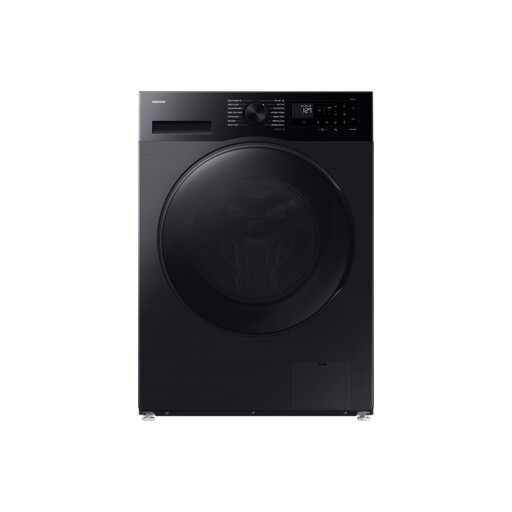
Samsung Series 5 AI Energy WD11DG5B15BBEU, 11 kg/6 kg, Black
Consider this freestanding model if an 11 kg washing capacity is useful and your continuous drying loads will fit its 6 kg limit.
The listing gives dimensions of 85.0 × 60.0 × 60.0 cm, a 1400 rpm maximum spin and 72 dB(A) spin noise. Check connection and access clearances in addition to the appliance dimensions.
Joybuy
 No image available
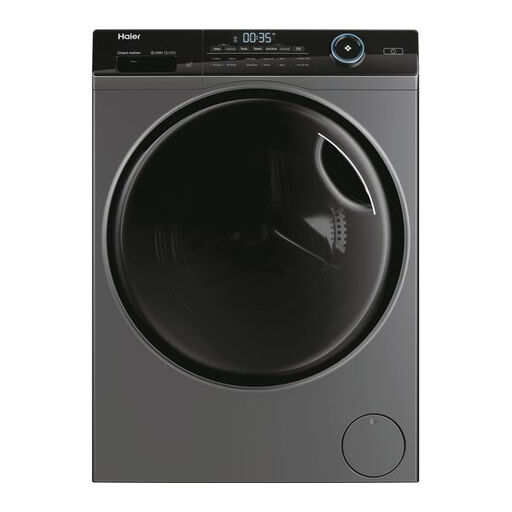
Haier I-Pro Series 5 HWD100-B14959S8NU1, 10 kg/6 kg, Anthracite
This freestanding model suits workwear loads planned around a 6 kg drying limit, even though its stated washing capacity is 10 kg.
The listing states a 1400 rpm maximum spin and 72 dB(A) spin noise. Confirm its dimensions and the required access clearances before choosing an installation position.
Joybuy
 No image available
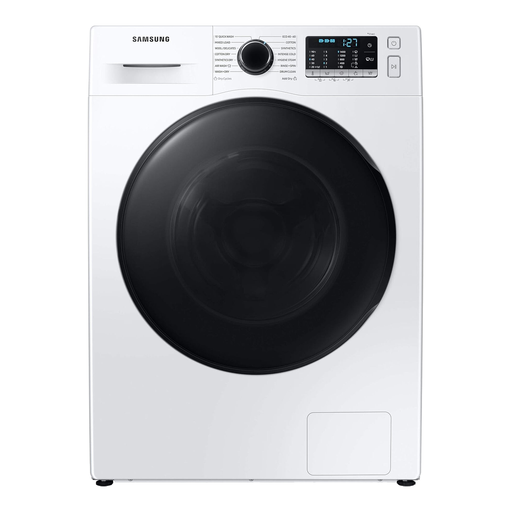
Samsung Series 5 Ecobubble™ WD80TA046BE/EU, 8 kg/5 kg, White
Consider this freestanding model for smaller workwear loads that stay within its 5 kg drying capacity.
The listing states 8 kg washing capacity, dimensions of 850 × 600 × 600 mm, a 1400 rpm maximum spin and 72 dB spin noise. Allow separately for connections and the access route.
Joybuy
 No image available
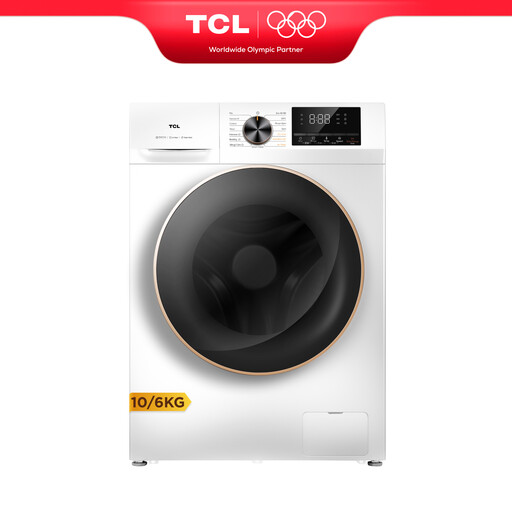
TCL CP1210WA0, 10 kg/6 kg, White
This freestanding model is an option when a 10 kg wash capacity is useful but continuous wash-and-dry loads can stay within 6 kg.
Its listing states a 1400 rpm maximum spin. Check the model’s dimensions and declared spin noise for your flat, and use its energy label to identify the complete wash-and-dry figures.
Joybuy
Frequently asked questions
Can all washable workwear go in a domestic washer-dryer?
No: a washable care label alone does not settle whether home laundering is appropriate for potentially contaminated workwear. Follow the garment instructions and employer’s risk assessment; the Health and Safety Executive says laundering and handling need to prevent cross-infection where contamination is a concern.
Why is drying capacity lower than washing capacity?
A washer-dryer can have separate rated limits for washing and for washing followed by drying. Bosch Home UK and Haier UK list examples with 10 kg washing capacity but 6 kg drying capacity, so a full wash load may need to be divided before drying.
Which energy figures matter if I usually wash and dry?
Compare the complete wash-and-dry information for the exact models, rather than using their washing-only ratings as a substitute. Check the energy label and product information sheet on a like-for-like cycle basis.
Can I use an extension lead for a washer-dryer?
Do not use an extension lead to work around an inconvenient socket position. Electrical Safety First warns that a washing appliance can overload a lead and create a fire risk; confirm a suitable fixed installation arrangement before ordering.


