Families seeking a one-appliance routine
You want to wash and dry cotton pyjamas without moving them to a second appliance, and can plan around a drying limit that is lower than the washing limit.


Choose a washer-dryer with a suitable cotton programme, enough washing capacity for your usual family load and enough drying capacity for the portion you need dry straight away. Which? explains that washer-dryers have a lower drying capacity than washing capacity, so a full wash load may need splitting before drying. Compare wash-only and complete wash-and-dry energy information separately, and check cabinet fit if you need an integrated model.
You want to wash and dry cotton pyjamas without moving them to a second appliance, and can plan around a drying limit that is lower than the washing limit.
You regularly wash pyjamas alongside other household laundry and want room for a larger wash load, even if the portion going straight into the drying cycle needs dividing.
You need the appliance behind a cabinet door and must match its dimensions, door arrangement and installation requirements to the available space.
Start with the amount you normally wash and the amount you need dry in one cycle. Then check garment-care settings, complete-cycle energy information and whether the machine must fit behind a kitchen door.
| Concern | Buying checks | Who this matters to |
|---|---|---|
| One-step washing and drying | Compare the separate wash and dry capacities in kilograms, and check the cotton and wash-and-dry programme lists. | If I want pyjamas finished without transferring them to another appliance, the amount that can go straight through matters most; around 33% of consumers put that one-step routine first. |
| Family wash-load size | Match the wash capacity to your usual load, then check how much of it fits within the dry rating. | When laundry builds up across the family, I would rather fit more into a wash cycle, even if drying takes batches. Roughly 27% of consumers prioritise wash-load capacity. |
| Cotton-care controls | Check for a cotton programme and adjustable temperature and spin; consider an extra-rinse option if detergent residue concerns you. Follow each garment’s care label. | I need settings that suit the particular pyjamas in the load, rather than treating every cotton garment alike; about 20% of consumers make programme control their main concern. |
| Energy and routine planning | Compare the UK energy label and product information sheet, keeping wash-only figures separate from complete wash-and-dry figures. | If drying is a regular part of my laundry routine, I want to judge the complete cycle rather than the wash rating alone. Around 20% of consumers place that comparison first. |
Which? explains that a washer-dryer’s rated drying capacity is lower than its washing capacity. A load that fits the wash drum may therefore be too large to dry in one continuous cycle.
Choose around the amount you need machine-dried at once, and compare both kilogram ratings before ordering.
A larger wash load may mean another drying batch or air-drying some items.
A wash-only rating does not describe the complete wash-and-dry cycle. LG’s FWV696WSE, for instance, lists different classes for those two uses.
Read the energy label and product information sheet, checking which cycle each figure describes.
Extra wash capacity is useful only if it fits your normal laundry pattern; Which? notes that larger machines can be less efficient when routinely under-filled.
Compare your usual load with the wash rating, while checking the dry rating separately.
An integrated washer-dryer needs a compatible cabinet opening and door arrangement. A similar-looking front width does not establish that the appliance will fit.
Measure the available height, width and depth, then check the exact model’s installation and hinge requirements.
An incompatible opening may require changes to the cabinet or installation plan.
LG’s freestanding FWV696WSE illustrates a 9 kg wash / 6 kg dry option for households considering an all-in-one routine.
Samsung’s WD90HG6U94BEU1 is another 9 kg wash / 6 kg dry example for buyers considering connected controls and automatic detergent-management features.
Haier’s cited built-in Series 8 model illustrates a 10 kg wash / 6 kg dry route for a fitted kitchen.
These washer-dryers cover integrated and freestanding formats, with 9 kg or 10 kg wash capacities and a 6 kg dry capacity. For cotton pyjamas, confirm the exact model’s cotton programme and follow the garments’ care labels before choosing a cycle.
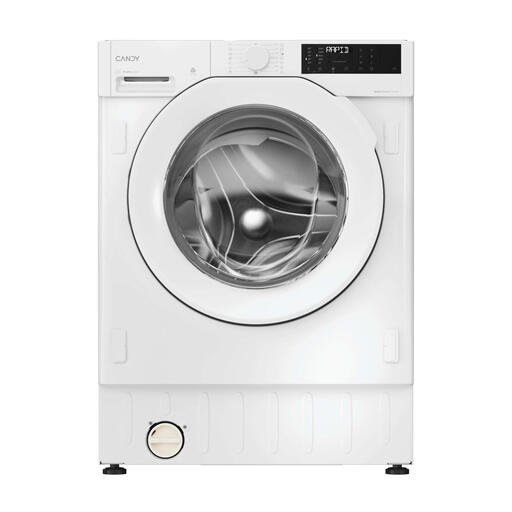 No image available
Consider this integrated model if the washer-dryer needs to sit behind a compatible kitchen door.
Rated for 9 kg washing and 6 kg drying, with a stated 1400 rpm spin speed. Check cabinet and hinge requirements, the cotton programme list and the complete-cycle energy information.
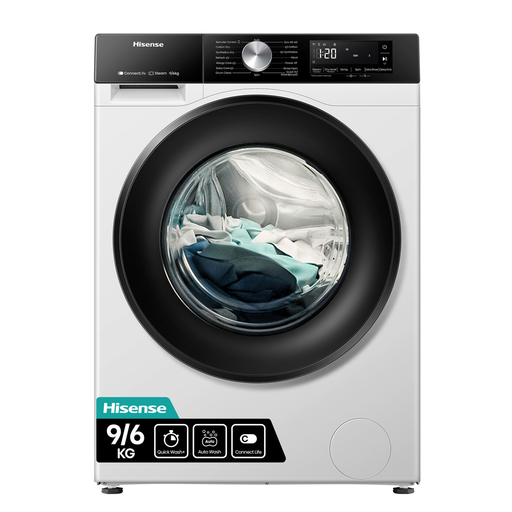 No image available
This freestanding option suits a household seeking washing and drying in one appliance without an integrated cabinet installation.
Its stated capacities are 9 kg for washing and 6 kg for drying, with a 1400 rpm spin speed. Check the cotton programme list and allow for separate drying batches if a wash load exceeds 6 kg.
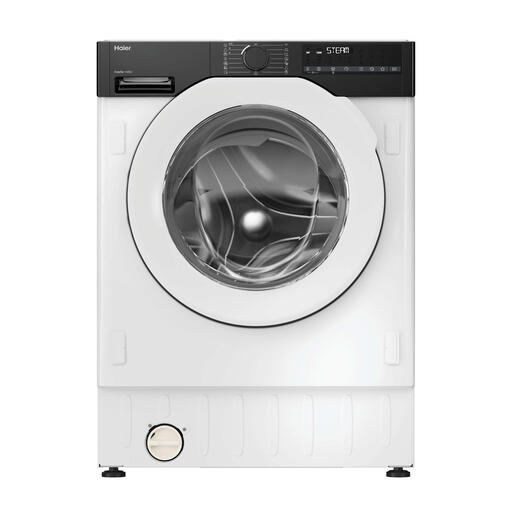 No image available
Consider this model when a concealed kitchen installation is part of the decision.
It has stated 9 kg wash and 6 kg dry capacities and a 1600 rpm spin speed. Confirm the cabinet door, hinges and installation requirements, as well as the cotton programme list.
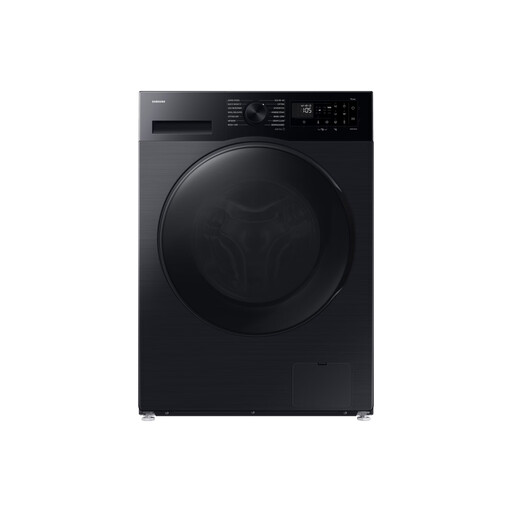 No image available
This freestanding model is an option if a 9 kg wash load suits the family but no more than 6 kg needs drying at once.
Check its cotton programme and product information sheet before choosing settings or comparing complete-cycle energy figures.
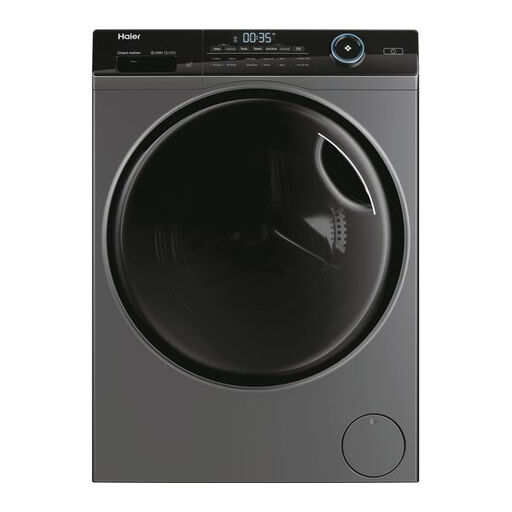 No image available
Consider the larger wash capacity if fitting family laundry into wash cycles is the main difficulty, rather than the amount needing immediate drying.
This freestanding model is rated for 10 kg washing and 6 kg drying. A full wash load may need dividing for drying; check the cotton programme and complete-cycle information.
Yes, if the load is within the model’s rated wash-and-dry capacity and the garments permit tumble drying. Which? explains that washer-dryers dry less than they wash: LG’s FWV696WSE, for example, is rated for 9 kg washing but 6 kg drying, so a larger wash load would need splitting before drying.
Look for a cotton programme, then choose temperature, spin and drying settings according to each garment’s care label. A wash-and-dry programme or extra-rinse option may also matter to your routine, but neither overrides garment-specific instructions.
Compare figures for the complete wash-and-dry cycle as well as those for washing alone. The UK Department for Energy Security and Net Zero and Office for Product Safety and Standards say in-scope products must have an energy label and product information sheet; check which use each stated figure covers.
No; fit depends on the exact cabinet opening, door, hinges and installation requirements. Haier lists one built-in Series 8 model at 825 × 597 × 550 mm, but those dimensions cannot establish whether another model fits your kitchen.