Small-kitchen buyers with a tight installation space
If one appliance must handle both jobs, check the recess, pipes, plug, ventilation clearance and room to open the door before comparing capacities. Space is needed around freestanding machines.


Choose a washer-dryer if washing and drying in one appliance matters more than drying a full wash load at once. Measure the space needed for the machine, connections and open door, then choose by its lower drying capacity. For cotton shorts, follow the garment care label when selecting a programme; an integrated model also needs compatible cabinetry.
If one appliance must handle both jobs, check the recess, pipes, plug, ventilation clearance and room to open the door before comparing capacities. Space is needed around freestanding machines.
If cotton shorts and similar clothes need machine drying, plan loads around the drying limit, not just the wash capacity. Which? notes that washer-dryers have a lower drying than washing capacity; the garment care label determines whether and how each item should be dried.
If you have few alternatives to machine drying, compare the exact models’ energy information for wash-and-dry use as well as washing alone. Energy Saving Trust explains that appliance energy labels include information beyond the efficiency class.
Choose the installation type that fits your kitchen before comparing dry-load capacity. A cabinet-front installation calls for a different fit check from a freestanding one.
Consider it when: A smaller-kitchen installation is the priority and a 5kg drying limit suits your usual loads; Beko describes its BMM5DFO5741 as a slim 7kg-wash/5kg-dry model.
Trade-off: A full 7kg wash cannot all go straight into a 5kg dry load.
Consider it when: You need a larger dry load and the measured space accommodates the exact model; LG and Samsung list 9kg-wash/6kg-dry examples.
Trade-off: Capacity does not establish fit. LG says depth varies across its standard machines, so check the model’s full dimensions.
Consider it when: The machine must sit behind a compatible fitted-kitchen door; Bosch lists its WKD28260GB as an 8kg-wash/5kg-dry built-in model.
Trade-off: Cabinet, hinge and installation requirements still need checking, and its 5kg drying limit remains lower than its wash capacity.
| Concern | What to check | Who this matters to |
|---|---|---|
| Physical fit | Compare the exact model’s dimensions and installation instructions with the space available for connections, clearance and door opening. | If the recess is tight, I need to know the machine can be installed and loaded, not merely pushed into place. Around 33% of consumers put physical fit first. |
| Dry-load capacity | Compare the wash and drying limits separately; keep a combined load within the stated drying capacity. | When I wash several loads of everyday clothes, I want to avoid splitting each wash before drying. Roughly 27% of consumers prioritise dry-load capacity. |
| Cotton care and convenience | Check the exact model’s programme list and any small-load limits against the shorts’ care label. | For cotton shorts I need regularly, a suitable cycle matters more than choosing a quick setting by name alone. About 20% of consumers make garment care and convenience their primary concern. |
| Energy use | Compare exact-model energy labels and product information sheets on a like-for-like wash-and-dry basis. | If I rely on machine drying, I want to understand its energy use as well as its washing result. Around 20% of consumers put that comparison first. |
A machine that fits the recess on paper may still obstruct its connections or lack room for ventilation and door opening.
Measure the usable space around pipes and plugs, then follow the exact model’s installation instructions. Allow around 25mm at each side and roughly 50–150mm behind a freestanding machine, but model requirements take priority.
A 7kg-wash/5kg-dry machine can wash more than it can dry in one load, so a full wash may need dividing before drying.
Choose the drying capacity around the load you normally want to finish without splitting it.
Wash-only figures do not describe a combined wash-and-dry cycle.
Compare the exact models’ energy labels and product information sheets using the same wash-and-dry basis and the relevant capacities.
A short cycle may have a small-load limit, while prints, stretch fibres or finishes can change how a garment should be cared for.
Read the shorts’ care label before choosing the programme, temperature, spin and drying settings.
Beko lists freestanding options relevant to smaller kitchens, including the slim BMM5DFO5741.
Bosch’s built-in WKD28260GB illustrates the integrated route for a compatible fitted kitchen.
LG’s FWY696WWLN1 provides a 9kg-wash/6kg-dry example for buyers with room for a standard freestanding machine.
Samsung’s WD90HG5U34BBEU is another documented 9kg-wash/6kg-dry configuration.
These models offer freestanding or integrated ways to wash and dry in one appliance. Compare their stated drying limits, then check the installation space and a suitable programme for your shorts before ordering.
 No image available
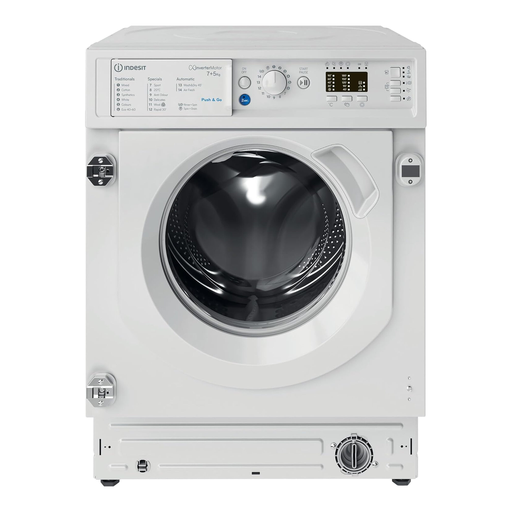
Consider this model if a washer-dryer must fit compatible kitchen cabinetry. Its stated capacities are 7kg for washing and 5kg for drying, and its title specifies a 59.5cm width. Confirm cabinet, hinge and installation fit, along with a programme suitable for the shorts’ care label.
 No image available
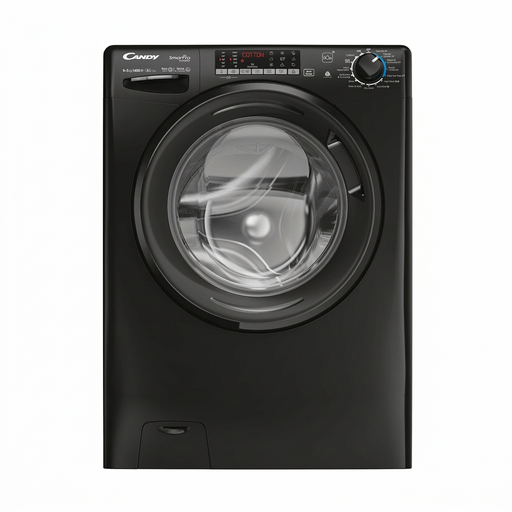
This freestanding model is worth checking if you need one appliance rather than separate washing and drying machines. Its title states 8kg washing, 5kg drying and a 1400 RPM spin speed. Check its full installation dimensions and clearances, plus the programme list for cotton shorts.
 No image available
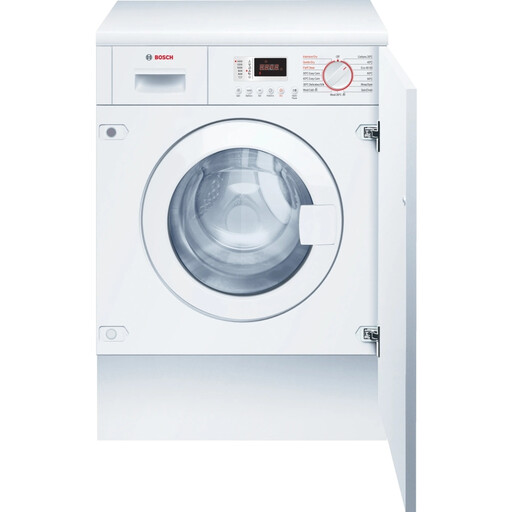
Consider this integrated model where a compatible cabinet-front installation is planned. It has stated limits of 7kg for washing and 4kg for drying, so plan combined loads around 4kg. Check cabinet and hinge compatibility, installation clearances and the programme list before choosing it for cotton shorts.
 No image available
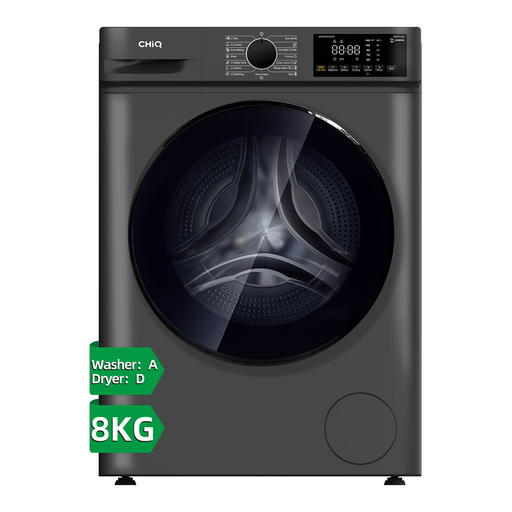
This freestanding 8kg-wash/5kg-dry model is another option when one machine must handle both tasks. Allow for the lower drying limit, and check the full dimensions, installation clearances and programme list against your space and the shorts’ care labels.
Measure the usable space with pipes and plugs accounted for, then check door-opening room and the exact model’s installation instructions. For freestanding machines, allow around 25mm at each side and roughly 50–150mm at the back, but the appliance’s own requirements take priority.
Only if the load stays within the machine’s lower drying capacity and the garments’ care labels permit tumble drying. A model marked 7kg wash and 5kg dry needs part of a wash above 5kg removed before drying.
Start with the shorts’ care label, then choose a matching programme and settings on the exact machine. Stretch fibres, prints or special finishes may call for different treatment from an ordinary cotton load.
Compare the exact models’ energy labels and product information sheets on a like-for-like wash-and-dry basis, including their rated capacities. Energy Saving Trust explains that labels provide information beyond the efficiency class; a wash-only result should not stand in for combined-cycle use.