
24/7 全天候客户支持

免费退货

当日/次日达

品质保障

开启新人专享福利: 全场免邮 | 低至 2 折 | 免费试用 30 天 JoyPlus 会员
下载 Joybuy
Washer dryers can simplify laundry by washing and drying clothes in one appliance, which is especially useful in flats, rented homes and kitchens without room for two machines. However, the headline specification is not always the whole story. A machine advertised as an 8kg washer dryer, for example, may only dry 5kg in the same cycle.
Before choosing between an integrated washer dryer, freestanding washer dryer or smart washer dryer, check the details that affect everyday use. Capacity, installation requirements, energy consumption, noise and cycle times can make a bigger difference than a long list of branded features.
A washer dryer machine normally has separate wash and dry limits. An appliance rated at 9kg wash / 6kg dry can wash a 9kg load, but the drum may need to be partially emptied before drying. Overloading the drying cycle can leave clothing damp, increase creasing and extend the programme.
For households that usually wash bedding, towels or family-sized loads, compare both figures rather than focusing only on the larger wash capacity.
UK appliances display separate information for washing and combined washing-and-drying performance. A model may have an A-rated wash cycle but a D or E-rated complete cycle. This is not necessarily a defect; drying generally uses more energy than washing.
If you mainly air-dry clothing and use the dryer occasionally, the wash-cycle rating and annual consumption may matter most. If you regularly run complete wash-and-dry programmes, inspect the combined-cycle energy use and water consumption on the product label.
An integrated or built-in washer dryer is designed to sit behind a cabinet door, but dimensions and door fittings still need checking. Cabinet depth, plinth height, hinge position, ventilation and access to plumbing can all affect installation.
A freestanding model is easier to place in a utility room or rented property, but it needs visible floor space and sufficient clearance around the door and hoses.
Use the following as a practical starting point:
Remember that drying capacity is the more restrictive figure when using a continuous programme.
A 1400rpm washer dryer is a common choice in the UK. Higher spin speeds can remove more water before drying, although the actual result also depends on the programme, fabric and spin efficiency class. Less moisture entering the dryer can help reduce drying time.
A 1600rpm model may be useful for frequent drying, but it can cost more and may not be necessary for households that mostly use a washing-only cycle or a clothes airer.
Measure the space, including the depth with the door and hoses accounted for. Check:
Integrated appliances should be installed by a suitably qualified technician. Do not use an extension lead or multi-plug adaptor, and follow the manufacturer’s electrical, plumbing and ventilation instructions.
Noise figures are usually stated separately for washing, drying and spinning. A spin rating around 72–77dB may be acceptable in a utility room but more noticeable in an open-plan kitchen.
Wi-Fi and app connectivity can provide remote monitoring, delay start, notifications and additional programmes. These features are convenient, but they should not replace checking the basic cycle options, physical controls and manual instructions.
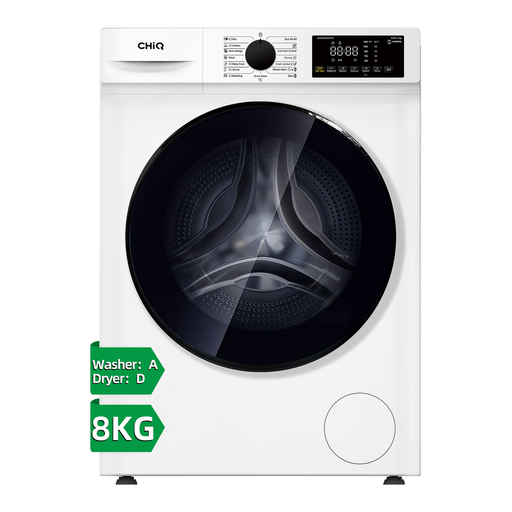
Why This Fits Their Persona: A freestanding design with a 52cm depth can suit renters, couples and smaller utility spaces where straightforward installation is important.
The wash and dry capacities are clearly stated as 8kg and 5kg, while the A/D energy classifications distinguish washing from combined use.
1400rpm spin, load detection, 15 programmes and a compact 520mm depth.
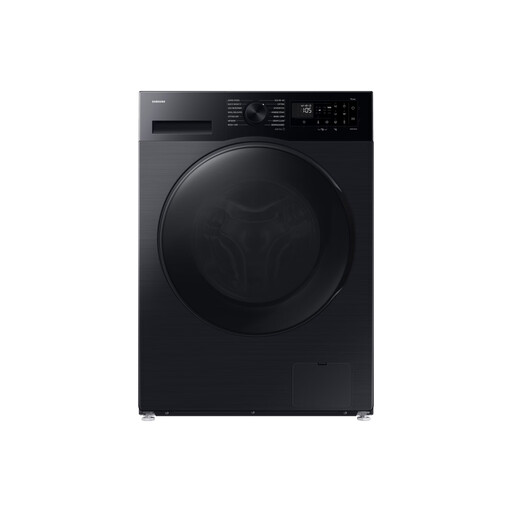
Why This Fits Their Persona: Suitable for homeowners wanting a larger freestanding appliance with app controls and a 600mm-wide cabinet footprint.
Its A wash and D combined-cycle ratings are presented separately, helping buyers assess running patterns rather than relying on one headline letter.
9kg wash and 6kg dry capacity, 1400rpm spin, Wi-Fi and a stated 72dB spin noise level.
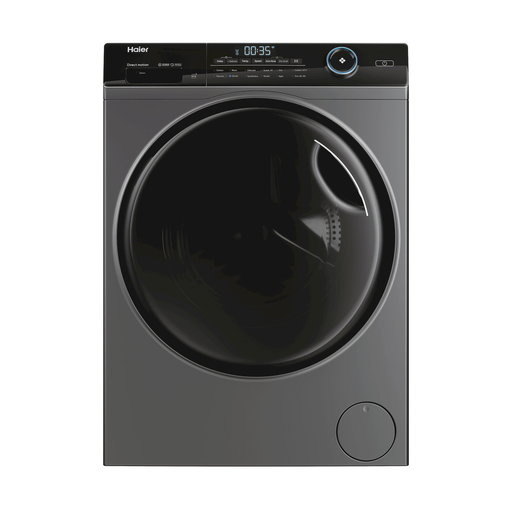
Why This Fits Their Persona: The 9kg/6kg capacity suits larger weekly loads, towels and bedding, while connected controls support frequent laundry routines.
The 6kg drying limit is stated alongside the 9kg wash limit, and its dimensions should be checked before purchase rather than assumed from the standard width.
1400rpm spin, Wi-Fi connectivity, steam refresh and a Direct Motion motor.
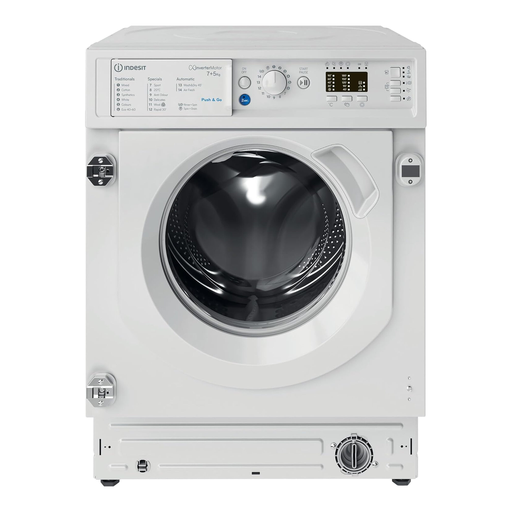
Why This Fits Their Persona: A fully integrated format can keep a fitted kitchen visually consistent while combining washing and drying in one 60cm-unit footprint.
The listed 59.5cm width and 54.5cm depth provide specific measurements to compare with the cabinet opening, while the 7kg/5kg limits clarify practical load planning.
1400rpm spin, 46dB washing noise, steam refresh and dedicated wool care programme.
We have compiled a complete, real-time list of products that fully satisfy these strict selection criteria and UK safety regulations.
Running cost depends on how often you use the drying function, the selected programme, load size and the appliance’s energy and water consumption. Compare the figures for both washing and complete wash-and-dry cycles. Using lower-temperature wash programmes and drying only suitable loads can also help manage consumption.
No. The appliance must match the cabinet aperture and allow safe access to water, drainage and electricity. A suitable furniture door and correct hinge fittings may also be required. Professional installation is recommended for an integrated or built-in washer dryer.
Lifespan varies with build, usage, maintenance and installation. Regularly clean the detergent drawer, door seal and drum, avoid exceeding the stated wash or dry capacity, and follow the maintenance schedule in the manual. Check the supplied warranty terms carefully, including any registration requirements for extended parts or motor cover.