Families washing bulky bedding often
If duvet covers share the drum with other family laundry, consider space for the load to move as well as its weight. Hotpoint advises that overloading can interfere with washing and rinsing.


For a family regularly washing duvet covers, start by comparing washer-dryers with around 10 kg or more of wash capacity, then check whether the bedding fits with room to move. Judge drying separately: the Bosch, Samsung and LG models described by their manufacturers pair wash ratings of 10.5–11 kg with 6 kg drying ratings, so a full wash load cannot automatically go straight through a combined cycle. Check the care label, programme limit and installation space before choosing.
If duvet covers share the drum with other family laundry, consider space for the load to move as well as its weight. Hotpoint advises that overloading can interfere with washing and rinsing.
A washer-dryer can put washing and drying in one appliance, but the available recess must also accommodate connections, ventilation space and the open door. Measure the delivery route as well as the final position.
If hanging a washed duvet cover is inconvenient, compare the combined-cycle limit with the wash limit. A load that fits for washing may need dividing before machine drying.
Check whether your bedding can move freely in the drum, then assess the drying load, installation space and energy information as separate decisions.
| Concern | What to check when buying | Who this matters to |
|---|---|---|
| Wash capacity and drum room | Compare the rated wash load and the bedding programme’s load limit. Check that your largest duvet-cover set fits loosely enough to move. | If I regularly wash family duvet covers, I need the load to move rather than simply fit by weight; around 36% of consumers put wash capacity and drum room first. |
| Drying capacity | Compare the wash and combined-cycle limits separately, and check the drying limit for the programme you intend to use. | When I need bedding dry without hanging it up, a smaller drying limit could mean splitting the washed load; around 29% of consumers prioritise drying capacity. |
| Fit and connections | Measure the recess, door clearance and delivery route. Allow around 25 mm at either side and roughly 50–150 mm behind a freestanding machine for ventilation, pipes and plugs. | If the appliance must fit an existing kitchen or utility-room space, I need room for its connections as well as its cabinet; around 21% of consumers put installation fit first. |
| Energy information | Compare the exact model’s energy label and product information sheet, distinguishing washing from the combined wash-and-dry cycle. | With frequent bedding loads, I want to understand the energy information for the cycle I will use; around 14% of consumers make that their primary concern. |
Bosch lists its WNC25410GB at 10.5 kg for washing but 6 kg for a wash-and-dry cycle. A larger washed load may therefore need another drying arrangement.
Write down both limits for each model, then check the manual’s limit for the bedding or combined programme you plan to use.
Hotpoint’s bedding guidance says overloading can prevent laundry from moving freely and reduce washing and rinsing effectiveness. A capacity figure alone cannot establish that a particular duvet or cover set fits.
Follow the textile care label and programme instructions, and leave enough space for the load to move. If an item cannot be accommodated, use another suitable washing arrangement.
A quoted depth does not account for rear pipes and plugs, while an opening that fits the cabinet may still obstruct the door. Clearance guidance also allows space for ventilation.
Measure from the connections to the usable front of the recess, check door swing and confirm that the appliance can pass through the delivery route.
Electrical Safety First warns that a high-power laundry appliance can overload an extension lead when used with other large appliances, creating a fire risk. Correct levelling and connections also matter during installation.
Follow the manufacturer’s fitting instructions, use an appropriate fixed socket rather than an extension lead, and have the connections, transit bolts, leaks and levelling checked before the first load.
The WNC25410GB is a full-size option for comparing a large wash rating with a separate drying limit.
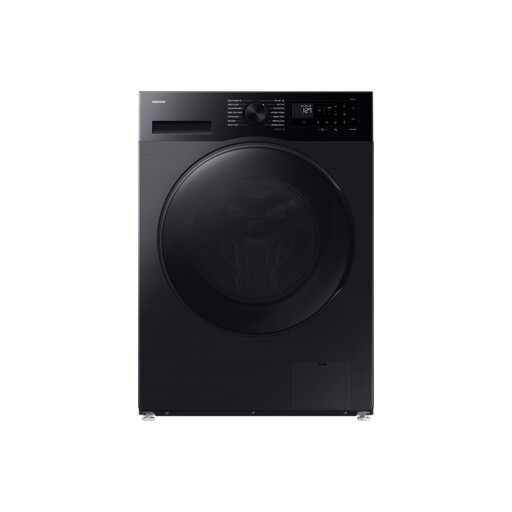
The WD11DB7B85GWU1 combines an 11 kg wash rating and 6 kg drying rating with connected features.
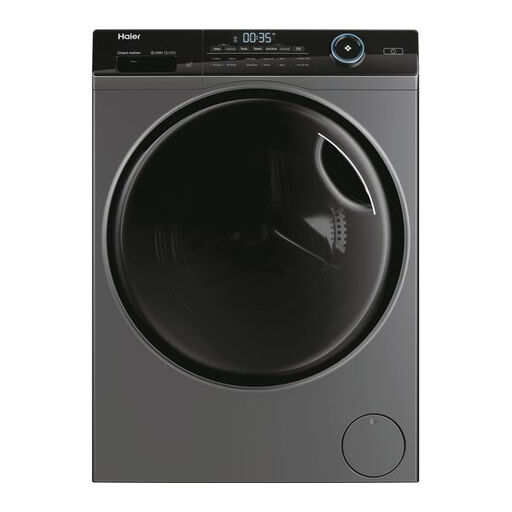
The FWY916BBTN1 offers an 11 kg wash rating and a separate 6 kg drying rating.
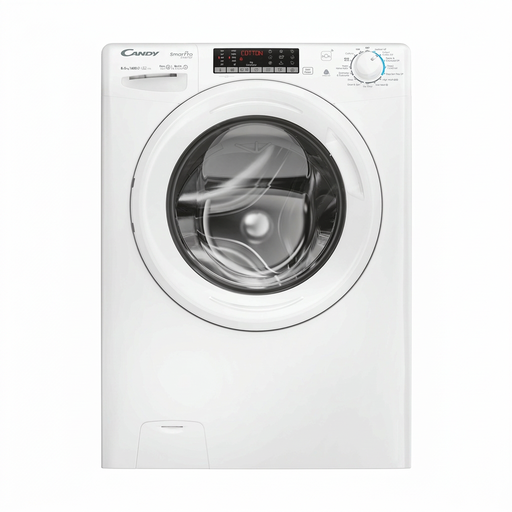
The NDD 10748 DA UK is worth examining if a named bedding programme matters to your choice.
These washer-dryers have stated wash ratings from 8 kg to 11 kg and separate drying ratings of 5 kg or 6 kg. For routine bulky bedding, check the fit of your own duvet covers and the programme limit rather than assuming every model will handle the same load.
 No image available
Consider this model if you want to compare an 11 kg wash rating with a separate 6 kg drying limit for family bedding.
Check the care label, bedding-programme limit and available drum room before relying on a combined cycle; an 11 kg wash load cannot all be dried at the 6 kg limit.
 No image available
Its 10 kg wash rating is relevant if you regularly wash duvet covers, provided your load fits with room to move.
The stated drying rating is 6 kg, so check the selected programme’s limit and plan to divide a larger washed load before drying.
 No image available
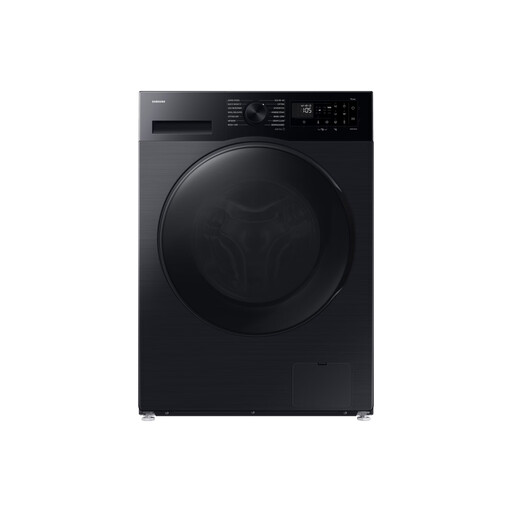
Consider its 9 kg wash rating if your usual duvet-cover load fits comfortably, rather than assuming it offers the same bedding room as an 11 kg model.
The stated drying rating is 6 kg; check the care label and programme limits if you intend to dry bedding in the machine.
 No image available
This 8 kg wash model is a choice to assess when your family bedding load fits within a smaller wash rating.
Its stated wash-and-dry limit is 5 kg, below the wash rating; check whether your duvet-cover load needs separate drying. The product name specifies a 1400 RPM spin rating.
 No image available
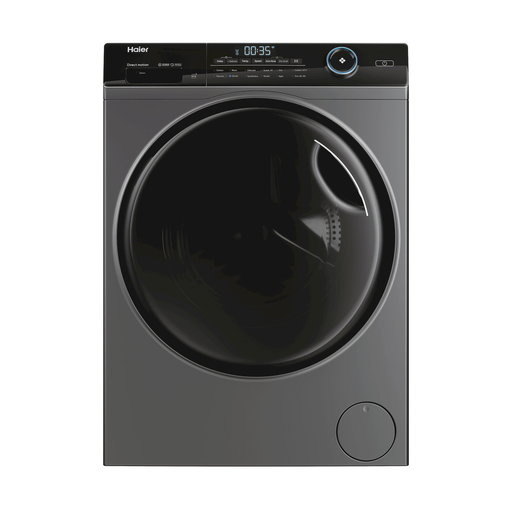
Its 9 kg wash rating may suit your duvet covers if they fit loosely and meet the programme’s load limit.
The stated drying rating is 6 kg and the product name specifies a 1400 spin rating. Check the exact model’s energy label for its combined-cycle rating before comparing energy use.
Only if the load also meets the selected drying programme’s limit. For example, Bosch rates the WNC25410GB for 10.5 kg washing but 6 kg wash-and-dry; divide a larger washed load or use another drying method.
No: check each item’s care label and the appliance programme limit before loading it. Hotpoint advises leaving bulky bedding enough room to move, and a filled duvet may have different care instructions from its removable cover.
Allow for connections, ventilation and the open door, not just the quoted cabinet dimensions. For freestanding washer-dryers, allow around 25 mm at either side and roughly 50–150 mm behind for pipes and plugs; check the appliance’s own installation instructions too.
Compare the exact washer-dryer model’s energy label and product information sheet, paying attention to the wash cycle and combined wash-and-dry cycle separately. GOV.UK says in-scope products must be supplied with an accurate printed energy label and a product information sheet; a washing-cycle rating alone does not describe drying.
Avoid using one. Electrical Safety First warns that a high-power laundry appliance can overload an extension lead when used with other large appliances, creating a fire risk; follow the manufacturer’s electrical and fitting instructions.