Residents coordinating shared laundry
When several people use one machine, the smaller drying capacity can determine how many loads can be finished in turn. Beko UK advises reducing a washed load to fit the appliance’s drying limit.


Choose a washer-dryer by the amount of laundry it can wash and dry in one cycle, rather than its larger wash-only capacity. In a shared house, check whether that drying limit and the full programme duration suit residents’ laundry routine, then compare garment-care options, energy information, noise and the space needed for installation.
When several people use one machine, the smaller drying capacity can determine how many loads can be finished in turn. Beko UK advises reducing a washed load to fit the appliance’s drying limit.
A combined appliance may suit a home without room for separate machines, but its full depth, door clearance and connections still need checking. Space is also needed around freestanding machines for pipes and plugs.
For everyday cotton pyjamas, garment labels and suitable wash settings matter alongside energy information for the way the machine will actually be used. Energy Saving Trust notes that lower-temperature washing uses less energy.
For a shared-house washer-dryer, start with the load that needs to come out dry together. Then check how the machine will handle the pyjamas themselves, what a complete cycle involves and whether the appliance fits the home.
| Concern | Buying checks | Who this matters to |
|---|---|---|
| Drying turnaround | Compare the rated wash-and-dry capacity in kg and the duration of the complete programme, not just the wash-only rating. | If several residents need clothes ready in turn, I need to know whether each batch can finish without being split after washing. Around 36% of consumers would put drying turnaround first. |
| Cotton-pyjama care | Check the exact model’s programme and temperature choices against each garment’s care label, and follow its load guidance. | For lightly soiled pyjamas, I want a suitable routine wash without assuming that cotton fibre alone determines the settings. Roughly 29% of consumers would make appropriate garment care their primary concern. |
| Energy and water use | Read the exact model’s energy, water and duration figures for complete wash-and-dry use as well as washing alone. | When the machine runs regularly, I want to compare the figures for the cycles we expect to use, rather than rely on an energy letter alone. About 21% of consumers would prioritise running-cost comparisons. |
| Fit, noise and installation | Measure appliance and service space; check door opening, connections, declared spin noise and the tenancy arrangements before ordering. | If the machine will sit near shared rooms or require a change to a rented home, I need to know it can be installed and used there. Around 14% of consumers would put these practicalities first. |
The wash rating can be substantially larger than the continuous wash-and-dry rating. Bosch lists 10.5kg for washing but 6kg for washing and drying on its WNG25401GB.
Shortlist by the drying capacity needed for a finished batch, and plan to split any larger wash load before drying.
Splitting a load means another drying turn before the next resident can finish theirs.
Energy Saving Trust notes that appliance size can affect energy use even when ratings match. Wash-only information also does not describe a complete wash-and-dry cycle.
Compare the exact models’ capacity, energy, water and duration information for the cycle the household intends to use.
A washer-dryer needs room for its door and the services behind it. Allow space for pipes and plugs around freestanding appliances.
Measure the usable depth with those connections in place and check the exact model’s installation instructions before ordering.
Energy Saving Trust advises against overloading because restricted circulation can leave clothes less clean.
Follow the programme’s load guidance and leave room for garments to move. Use a half-load option for a smaller load if the model provides one.
A poorly washed load may need another cycle, keeping the shared machine occupied longer.
The Bosch WNG25401GB illustrates a larger wash drum paired with a smaller continuous drying limit.
Beko UK lists freestanding washer-dryers with different wash and dry capacities, including a 12kg wash / 8kg dry model.
LG’s FWY606WWLN1 is a 10kg wash / 6kg dry option for comparing shared-house load sizes.
Miele’s WTD165 WPM provides an 8kg wash / 5kg dry format to consider where laundry loads are smaller.
These freestanding 10kg wash / 6kg dry models suit a shortlist built around shared-house wash throughput, provided a 6kg continuous drying load works for the residents. Check each model’s complete-cycle details and installation requirements before deciding.
 No image available
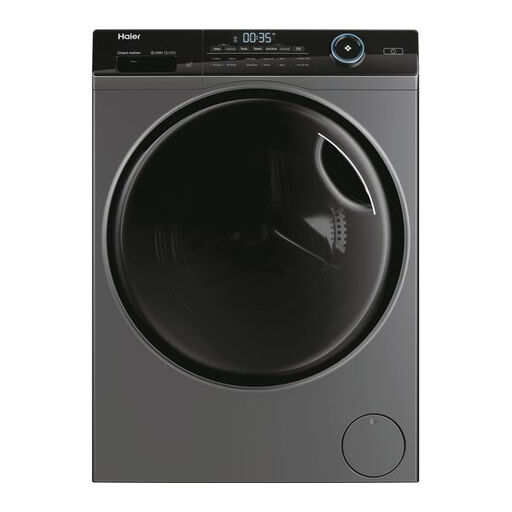
Consider this model if residents can organise finished loads around its 6kg drying limit rather than filling it to its wash-only capacity.
The stated capacities are 10kg wash and 6kg dry; its listed ratings are A for washing and D for washing and drying. Check the full-cycle duration and consumption figures for the exact model, along with its required installation clearances.
 No image available
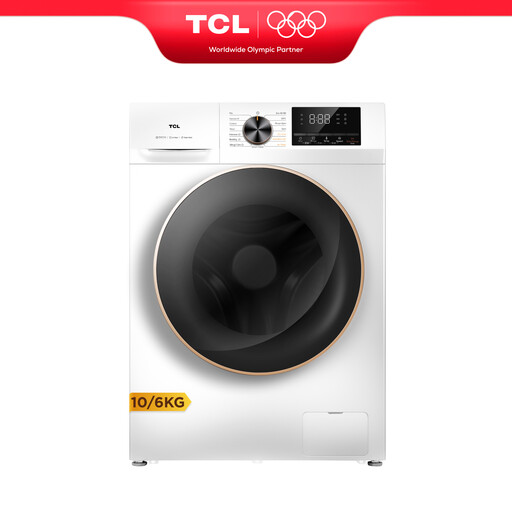
Consider this freestanding model for shared loads that can stay within a 6kg continuous drying limit.
The stated capacities are 10kg wash and 6kg dry; its listed ratings are A for washing and E for washing and drying. Check the exact model’s dimensions, declared noise, full-cycle duration and consumption figures before choosing a location for it.
Only if the entire load is within the washer-dryer’s smaller wash-and-dry capacity. Bosch, for example, specifies a 10.5kg wash limit but a 6kg continuous wash-and-dry limit for the WNG25401GB; check both ratings on any model you consider.
No: follow each garment’s care label and the exact machine’s programme guidance, including any limits for drying. Energy Saving Trust notes that lower-temperature washing uses less energy, making it worth considering for lightly soiled garments when their care instructions permit it.
Check the full appliance space, door opening, water supply, waste outlet, suitable power outlet and flooring. Allow space at the sides and behind a freestanding machine for pipes and plugs; follow the clearances in the chosen model’s installation instructions.
Check the tenancy agreement and agree any changes to the supplied appliance arrangement, plumbing or cabinetry with the landlord or managing agent before proceeding. GOV.UK describes landlords’ responsibilities for property electrical systems, but those responsibilities alone do not establish permission for a particular appliance change.
Compare complete wash-and-dry energy and water information for the exact models, alongside their capacities and programme durations, rather than relying on wash-only figures or the rating letter. Energy Saving Trust notes that appliances with the same rating can still differ in energy use.