Small-flat towel washers
Consumers fitting a washer-dryer into a shallow kitchen or utility space who still need access to connections and room to open the door.


Choose a washer-dryer for a small flat only if it fits with its connections and door in use, and its drying capacity covers the hand towels you intend to machine-dry. Allow clearance around a freestanding machine, while Which? notes that washer-dryers have a lower drying capacity than washing capacity. A shallow freestanding model may address restricted depth; an integrated model needs a compatible cabinet space.
Consumers fitting a washer-dryer into a shallow kitchen or utility space who still need access to connections and room to open the door.
Consumers who wash hand towels regularly but have limited air-drying space. The amount they can machine-dry matters more than the headline wash capacity.
Consumers handling small towel loads who want to check whether short-load programmes, drying controls or noise levels suit their routine.
For hand towels in a small flat, establish usable installation space before comparing the loads you can wash and dry. Then check the programmes and combined-cycle information you expect to use.
| Concern | What to check | Who this matters to |
|---|---|---|
| Physical fit | Measure usable space in front of pipes and plugs and allow for the open door. Allow around 25 mm at each side and roughly 50–150 mm behind a freestanding machine. | I have a shallow recess and cannot use a machine whose connections or door extend beyond the available space. Around 42% of consumers put physical fit first. |
| Drying capacity | Compare wash and dry ratings separately, then check whether the intended towel load fits the dry rating for a continuous cycle. | When I need towels dry indoors, splitting every wash into several drying loads would disrupt my routine; roughly 25% of consumers prioritise drying capacity. |
| Energy and water | Compare figures for the same wash-and-dry cycle, rather than using a wash-only rating as a substitute. The two functions can have different energy classes. | If I use the drying function regularly, I want to understand its energy and water figures before choosing. Around 17% of consumers make this comparison their primary concern. |
| Programmes and noise | Check a quick programme’s stated load and whether it washes only or also dries. Compare declared noise figures and confirm any drying controls on the exact model. | I wash small loads often and need a programme that fits them without assuming a short wash is a short wash-and-dry cycle; roughly 16% of consumers put these controls first. |
Which? explains that a washer-dryer’s drying capacity is lower than its washing capacity. A towel load that fits the wash drum may need splitting before machine drying.
Use the exact model’s dry rating and programme instructions when planning a continuous wash-and-dry load.
A machine’s stated dimensions do not account for every connection or the space needed to open its door.
Measure usable depth in front of pipes and plugs. For a freestanding machine, allow around 25 mm at each side and roughly 50–150 mm behind; check the model’s installation instructions too.
Wash-only and wash-and-dry operation can have different energy classes. The wash-only class therefore does not describe the combined cycle.
Compare the exact models’ wash-and-dry energy and water figures on the same cycle basis, particularly if you expect to dry towels regularly.
Short-cycle times are tied to their stated loads and programmes. Beko describes a short wash-and-dry programme for a small load, not a full drum of towels.
Read the exact model’s programme table for its load limit and whether the quoted time includes drying.
LG’s FWY385WWLN1 is a freestanding, depth-conscious example for a flat where installation space is the main constraint.
Beko has documented freestanding and integrated 8 kg wash / 5 kg dry models for comparing installation formats.
Bosch’s integrated WKD28543GB illustrates the cabinet-fit and capacity checks that matter for this format.
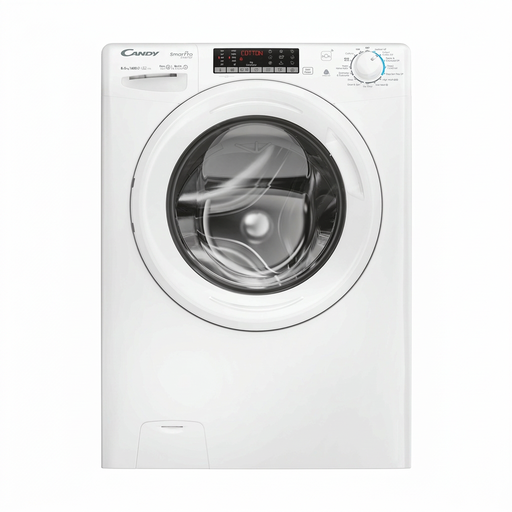
These freestanding washer-dryers offer one-appliance washing and drying for hand towels. Compare each model’s separate wash and dry ratings, then check its full installation dimensions against your space; this selection does not establish a fit for any particular flat.
 No image available
For towel loads you intend to wash and dry in one run, plan around the 5 kg dry rating rather than the 8 kg wash rating.
The product name states a 1400 RPM spin. Check installation clearance, the programme table and the exact model’s wash-and-dry energy information before choosing.
 No image available
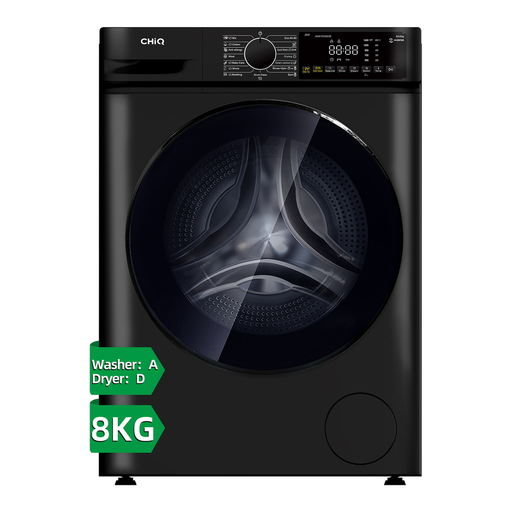
This freestanding option has a 5 kg dry rating to consider if hand towels will occasionally be machine-dried after washing.
The product name also states 1400 Spin. Check its installation dimensions and declared noise figure if the machine will sit near your living space.
 No image available
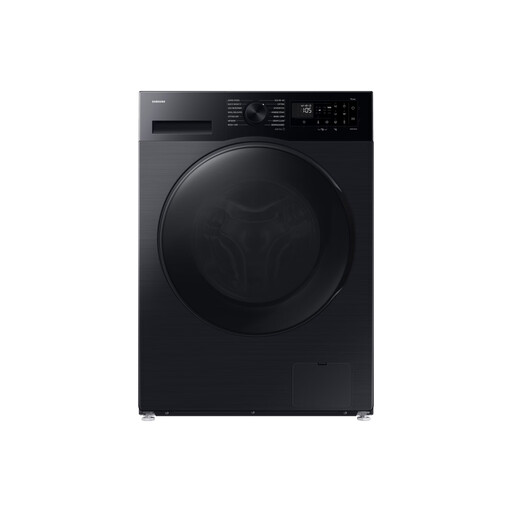
Consider the 6 kg dry rating if your towel loads need that capacity, rather than choosing by the 9 kg wash figure alone.
Check the full installation space and the exact model’s wash-and-dry energy information before deciding whether it suits the flat.
 No image available
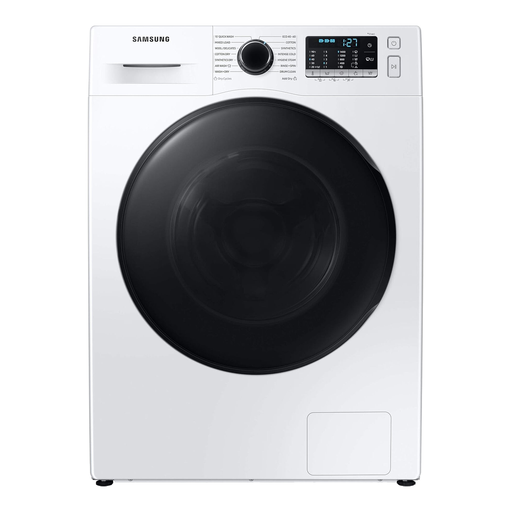
For a continuous towel cycle, compare the load with the 5 kg dry rating, not just the 8 kg wash rating.
Check the model’s dimensions and programme table. If a quick wash is relevant to your routine, confirm separately how long washing and drying the intended load takes.
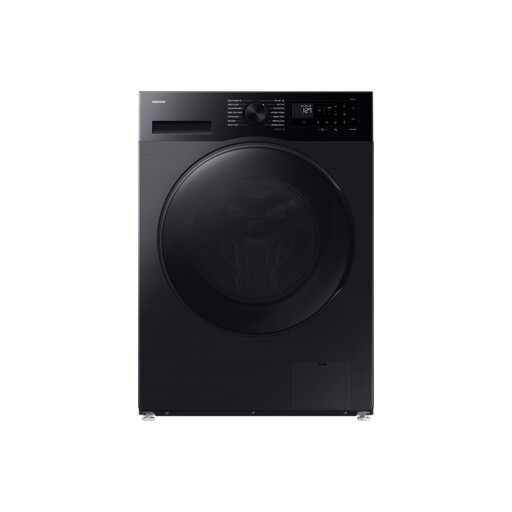 No image available
Choose according to the towel load you will actually dry: this model’s 6 kg dry rating is separate from its 11 kg wash rating.
Check whether its installation dimensions fit your flat and compare the exact wash-and-dry energy information with other models under consideration.
Measure the usable recess in front of pipes and plugs, as well as the space needed to open the door. For a freestanding machine, allow around 25 mm at each side and roughly 50–150 mm behind; follow the exact model’s installation instructions.
Do not assume that a full wash load can also be dried in one continuous cycle. Which? notes that washer-dryers have a lower drying capacity than washing capacity, so assess the towel batch against the model’s dry rating.
No: a shallow appliance still needs suitable water, drainage and power connections, as well as space for hoses and its open door. Check the full installation requirements in the exact model’s manual before deciding it fits.
Compare wash-and-dry figures for the exact models you are considering, rather than relying on their wash-only energy classes. The two functions can have different ratings; compare energy and water figures using the same cycle basis.