What matters when choosing
Decide whether the property can take a freestanding or integrated machine before comparing load sizes. If air drying or separate appliances are practical, weigh those arrangements against how often the house would actually use a washer-dryer’s drying cycle.
| Concern |
What to check |
Who this matters to |
| Fit and installation |
Measure the appliance space and access route; check whether an integrated model needs a compatible cabinet door and whether installation is permitted. |
If the kitchen space or tenancy limits what we can install, fit has to come before programmes. Around 25% of consumers put property compatibility and installation first. |
| Shared-load capacity |
Compare the rated wash and dry capacities separately against the usual pillowcase, sheet and towel load. |
When we wash bedding together, I want to know whether the load can go straight into one drying cycle. Around 31% of consumers prioritise getting shared loads through without splitting them. |
| Running costs |
Compare the exact model’s combined wash-and-dry energy information with its wash-only information, taking likely drying frequency into account. |
If our house will machine-dry laundry often, I need to understand the electricity use we will share. Around 25% of consumers make running costs their primary concern. |
| Pillowcase care |
Check each care label against the available programmes and spin settings; do not assume a delicate fabric can be tumble-dried. |
With silk or other delicate pillowcases, I would rather choose a suitable cycle than use the fastest setting. Around 19% of consumers put fabric care first. |
Washer-dryer brands to compare
These model examples illustrate different capacity and installation choices; check the specifications of any particular appliance before treating it as an equivalent.
Bosch
The Bosch WNA144V9GB illustrates a freestanding 9 kg wash and 5 kg dry configuration for shared laundry.
- Bosch specifies a maximum spin speed of 1400 rpm for this model.
- Its 5 kg drying limit means a full 9 kg wash load cannot automatically move into one drying cycle.
LG
The LG FWY696WWLN1 provides a 9 kg wash and 6 kg dry capacity example.
- The stated capacities help households compare the load they can wash with the smaller load they can dry.
- Choose pillowcase settings by the textile care label rather than assuming a named fabric-care feature applies to every item or programme.
Haier
Haier’s BHA6SD696M6DB980 illustrates the integrated route where a kitchen has compatible cabinetry.
- Haier specifies 9 kg wash and 6 kg dry capacities, a 1600 rpm maximum spin and dimensions of 600 × 525 × 820 mm for this model.
- Its integrated format requires a suitable installation space and cabinet arrangement; those dimensions do not establish fit in a particular house.
Hotpoint
The Hotpoint WDPG 8640P illustrates an 8 kg wash and 6 kg dry freestanding capacity format.
- Hotpoint specifies separate 8 kg washing and 6 kg drying capacities for the model.
- Hotpoint states that this model is no longer in its catalogue, so use it as a capacity comparison rather than assuming it is a current purchase option.
Joybuy washer-dryers for shared laundry
These integrated and freestanding models offer different ways to fit washing and drying into a student house. Compare their stated wash and dry capacities against your shared loads, then check property fit and pillowcase care requirements before choosing.
 No image available
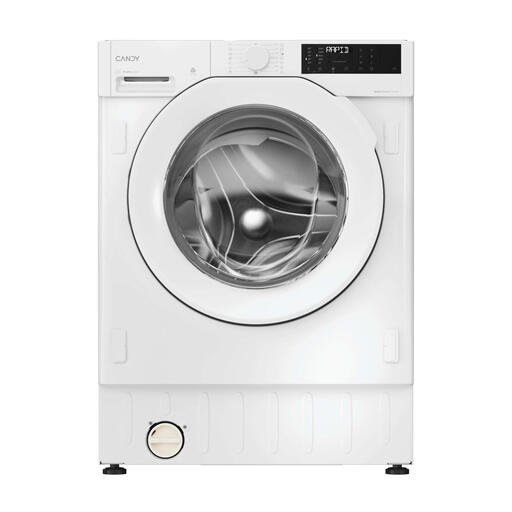
Candy BC4S496M6D8-80 integrated washer-dryer, 9 kg/6 kg
Consider this integrated model only if the house has a compatible appliance cavity and cabinet door, and installation is permitted.
Its stated capacities are 9 kg for washing and 6 kg for drying, so a full wash load may need reducing before drying.
Check the exact model’s combined-cycle energy information and match its available settings to each pillowcase’s care label.
View on Joybuy
 No image available
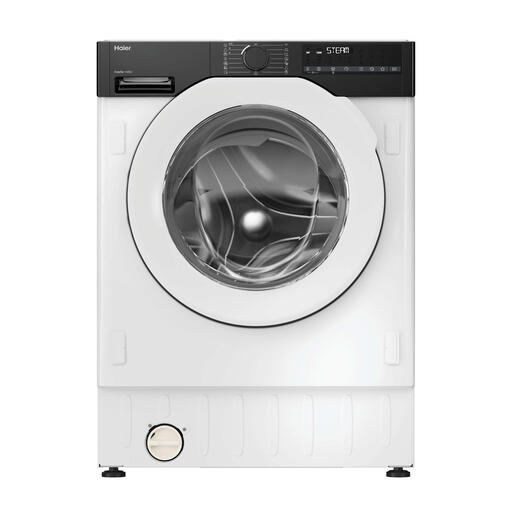
Haier Series 6 BHA6S696M6D9-80 integrated washer-dryer, 9 kg/6 kg
This built-in option is for a house with a compatible cavity and cabinet door where the necessary installation is permitted.
It is stated as 9 kg wash, 6 kg dry and 1600 rpm; larger wash loads may need splitting before drying.
Confirm the fitting requirements for this exact model and use the pillowcase care label to select a suitable programme.
View on Joybuy
 No image available
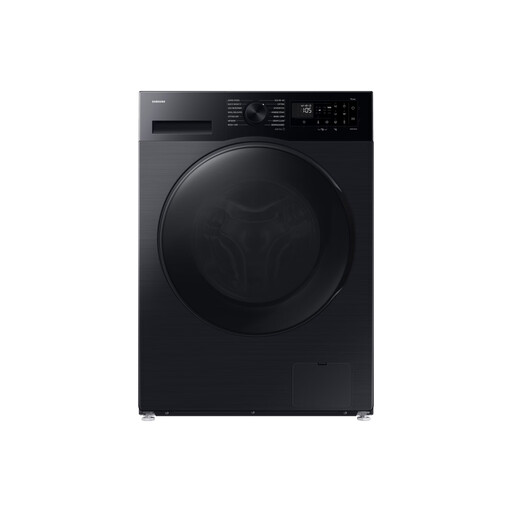
Samsung Series 5 AI Energy WD90DG5G34BBEU washer-dryer, 9 kg/6 kg
This freestanding model is a choice to assess where the house has a suitable standalone appliance space.
Its stated 9 kg washing and 6 kg drying capacities need to be considered separately for shared bedding loads.
Measure the space and access route, and check the available programmes against any delicate pillowcase care labels.
View on Joybuy
 No image available
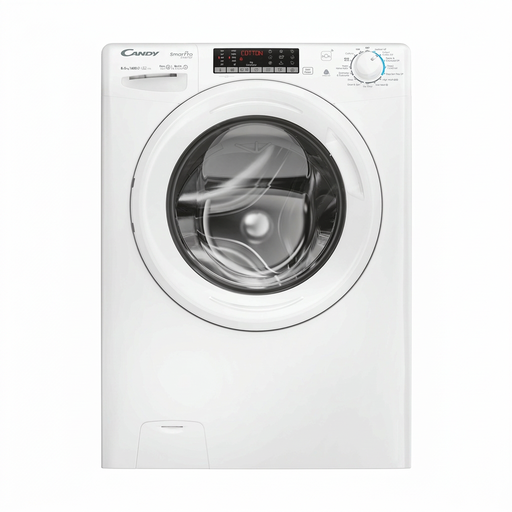
Candy Smart Pro Inverter CSOW4856TWM6-80 washer-dryer, 8 kg/5 kg
For a suitable freestanding space, this model offers a smaller stated wash capacity than the 9 kg options shown here.
Its ratings are 8 kg wash, 5 kg dry and 1400 rpm; drying a full wash load may require splitting it.
Check the combined-cycle energy information and choose programmes according to the pillowcases’ care labels.
View on Joybuy
 No image available
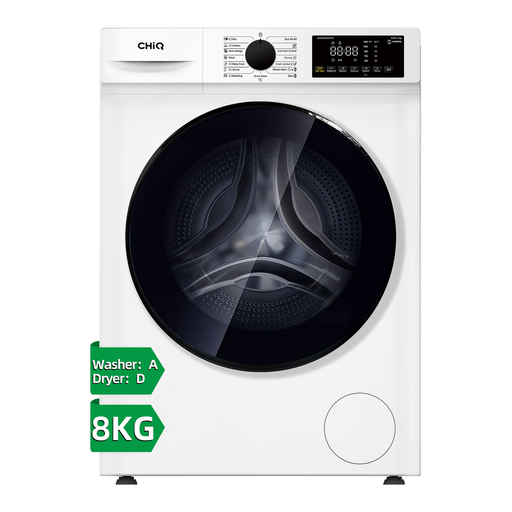
CHiQ JKW85882HW freestanding washer-dryer, 8 kg/5 kg
Consider this freestanding model where a standalone appliance is permitted and its exact dimensions suit the available space.
It is stated as 8 kg wash, 5 kg dry and 1400 rpm; the smaller drying limit matters when pillowcases are washed with other bedding.
Check the route into the room as well as the appliance space, and follow each fabric’s care label when selecting a cycle.
View on Joybuy
Frequently asked questions
Can a washer-dryer wash and dry the same full bedding load?
Not if the load exceeds its rated drying capacity. Which? explains that washer-dryers have a lower drying than washing capacity; a 9 kg wash and 6 kg dry model, for example, may require part of a full wash load to be removed before drying.
Should a student house choose an integrated or freestanding model?
Choose by the space and installation the property can accommodate. A freestanding model needs suitable standalone space; an integrated model needs a compatible cavity and cabinet door, along with permission for the required installation. Neither format’s name establishes that a particular machine will fit.
Can a washer-dryer use an extension lead?
Use an appropriate direct socket rather than an extension lead. Electrical Safety First warns that a washing machine’s power demand can overload an extension lead and create a fire risk; follow the appliance’s installation instructions.
Which programme should I use for pillowcases?
Follow the pillowcase’s care label when choosing its wash cycle, spin setting and drying method. Cotton and delicate fabrics can require different treatment, and Sleep Foundation notes that not all silk pillowcases can be machine-washed or tumble-dried.
Which energy figure matters if the house will use the dryer often?
Compare the combined wash-and-dry information for the exact models, rather than relying on their wash-only figures. Drying frequency matters to the household decision: Which? identifies the drying stage as the more energy-intensive part of washer-dryer use.


