Housemates coordinating laundry
If aprons go into regular shared loads, the drying limit matters as much as the wash capacity. A load that fits the wash drum may need dividing before it can be dried.


Choose a washer-dryer for a student house only after checking that it will fit and that the required connections are available. Plan apron and household loads around its drying capacity, which can be lower than its washing capacity, and check each apron’s care label before relying on a drying or quick-wash programme. Compare energy, water, cycle-time and noise information for the cycles the house expects to use.
If aprons go into regular shared loads, the drying limit matters as much as the wash capacity. A load that fits the wash drum may need dividing before it can be dried.
A combined appliance may suit a house with little room for separate machines, provided its dimensions, door clearance and connections work in the available space.
Aprons with different fabrics, prints or trims need their own care instructions checked against the machine’s temperature, spin and drying options.
Check fit and connections before comparing capacity; then use the aprons’ care labels and the household’s likely drying loads to narrow the choice.
| Concern | What to check | Who this matters to |
|---|---|---|
| Shared loads and drying capacity | Compare the separate wash and dry capacities in kg. Size a continuous wash-and-dry load to the drying limit. | When several housemates wash aprons alongside everyday laundry, I want a load I can dry without unexpectedly dividing it; around 31% of consumers put drying throughput first. |
| Fit and connections | Measure depth around pipes and plugs, door-opening space and ventilation clearance; check water, waste and power connections. | If the kitchen is tight, I need to know the machine can be installed without blocking access; for around 31% of consumers, fit and installation come first. |
| Energy, water, time and noise | Compare product-label figures for equivalent cycles, including consumption, duration, capacity and noise. | With several people using the machine, I want to understand its consumption and whether cycles will disturb nearby rooms; around 19% of consumers prioritise this information. |
| Apron care | Check each care label against the model’s temperature, spin and drying options before choosing a programme. | For aprons with different materials or trims, I need a permitted way to wash them rather than assuming a fast or heated cycle will do; apron care comes first for around 19% of consumers. |
The larger wash figure does not necessarily describe the load the machine can wash and dry without unloading it. Bosch Home UK, for example, specifies 10.5 kg washing but 6 kg for a wash-and-dry cycle on its WNG25401GB.
Use the rated drying or continuous wash-and-dry capacity for the batch you intend to leave in the machine, then compare washing capacity separately.
Dividing a washed load means allowing time for more than one drying cycle.
A machine that fits the width may still project into the room or leave too little space for pipework, ventilation or its open door. Allow around 25 mm on either side and roughly 50–150 mm behind a freestanding machine.
Measure the full installation space and compare it with the exact model’s dimensions and installation instructions.
An apron’s wash instruction does not establish that its fabric, coating, print or trim can tolerate heated drying, steam or a fast spin.
Gather the aprons’ care labels before shopping and check permitted temperatures, spin settings and drying instructions against the programmes you expect to use.
An energy class alone does not show how the cycles your house will use compare. Energy Saving Trust explains that appliance labels also carry information about energy use, noise and performance.
Read the product information for comparable wash and combined cycles, alongside water use, duration and capacity.
Beko UK lists both a smaller freestanding model and a larger-capacity option that illustrate different shared-load plans.
Bosch Home UK’s WNG25401GB provides an example for comparing a large wash capacity with the smaller load permitted for a continuous cycle.
LG UK’s FWV696WSE is a programme-led example for shoppers comparing options with apron care labels.
Haier UK lists freestanding and integrated examples in its 10 kg washer-dryer collection.
These models include freestanding options for shared laundry and integrated options for a kitchen already suited to that type of installation. Compare their drying limits and check apron care labels before choosing among them.
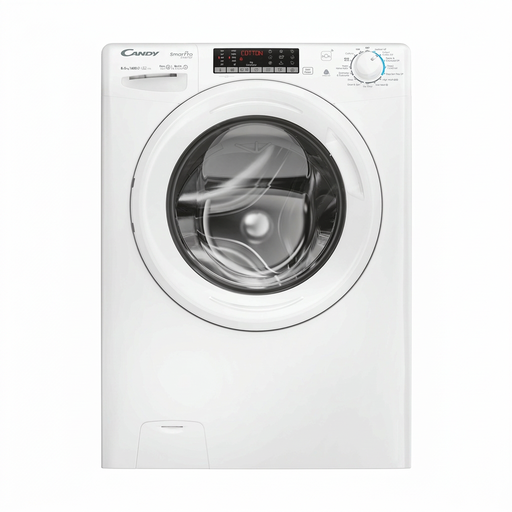 No image available
A freestanding option for shared loads when a 5 kg drying batch suits the household. It is listed with 8 kg wash capacity, 5 kg dry capacity and 1400 rpm spin; check the apron labels and the exact programme durations before choosing a cycle.
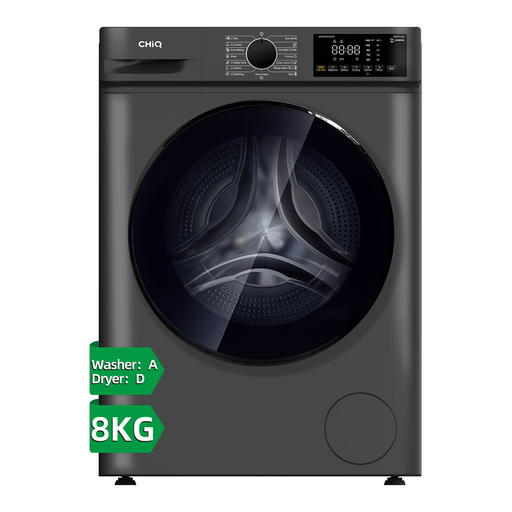 No image available
Consider this for modest combined batches if a freestanding appliance fits the available space. Its listed capacities are 8 kg wash and 5 kg dry, with 1400 rpm spin; compare its programmes with the aprons’ care instructions.
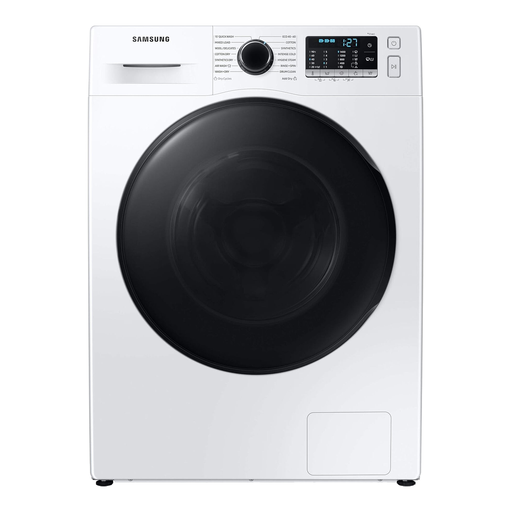 No image available
This freestanding model suits households prepared to keep a continuous load within its 5 kg drying limit. It is listed with 8 kg wash and 5 kg dry capacity; check installation clearance and the care instructions for each apron.
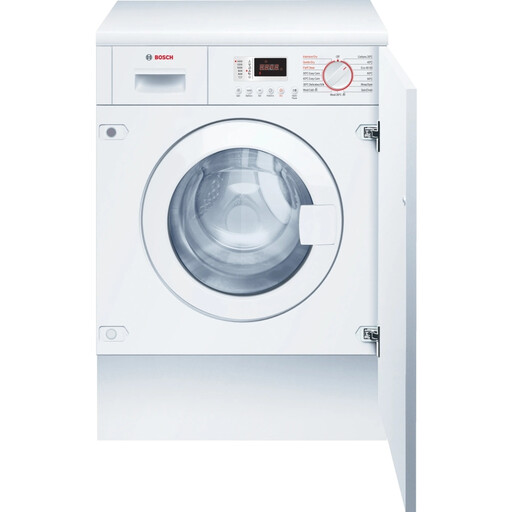 No image available
An option for a kitchen with suitable integrated cabinetry and connections. Its listed capacities are 7 kg wash and 4 kg dry, so plan drying batches around the smaller figure and check the aprons’ care labels.
 No image available
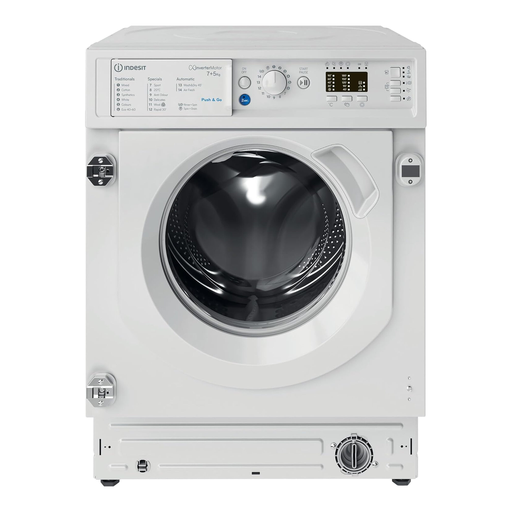
Consider this where an integrated appliance suits the existing kitchen. It is listed with 7 kg wash and 5 kg dry capacity and a 59.5 cm width; confirm the full installation space and permitted care settings before use.
Not unless the load is within that model’s drying or continuous wash-and-dry limit. For example, Bosch Home UK specifies 10.5 kg wash but 6 kg wash-and-dry capacity for the WNG25401GB; compare both figures for the machine you are considering.
Some do not, but check the exact model’s installation manual rather than assuming all work alike. Beko UK describes its freestanding washer-dryers as ventless condenser models that do not require an external vent hose.
Measure the space around pipes and plugs, including the open-door path, and check ventilation clearance plus suitable water, waste and power connections. Allow around 25 mm at each side and roughly 50–150 mm at the rear for a freestanding appliance; check the chosen model’s instructions and any permissions needed before changing a rented kitchen.
No: washability alone does not establish that an apron can withstand fast spinning or heated drying. Follow its care label for the permitted spin and drying method, especially where the apron has delicate fabric, a coating or trims.