Shared-laundry organisers
Students coordinating several housemates' cotton T-shirt loads who need to plan around a drying capacity that may be lower than the washing capacity.


Choose a washer-dryer for a student house by the load it can both wash and dry, not just its washing capacity: a full shared wash may exceed the machine's drying limit. Check that the appliance fits with room for connections and ventilation, then compare cotton programmes, noise and energy-label information for the exact models. A fast combined programme matters most if housemates regularly need small loads ready quickly.
Students coordinating several housemates' cotton T-shirt loads who need to plan around a drying capacity that may be lower than the washing capacity.
Students working with a limited kitchen or utility space who need to allow for pipes, plugs, ventilation and the appliance door.
Students who occasionally need a small load ready before work, sport or travel and need to check the load limit of a named wash-and-dry programme.
Start with the available space and the drying capacity needed for shared loads. Then decide whether everyday cotton washing or occasional small-load turnaround places greater demands on the programme choice.
| Concern | What to check | Who this matters to |
|---|---|---|
| Shared loads | Compare rated washing and drying capacities in kg, plus the combined programme's load limit. Bosch and AEG list models with lower drying than washing capacities. | When several housemates' T-shirts go into one wash, I need a plan for anything that cannot dry in the same cycle. Around 31% of consumers put shared-load capacity first. |
| Fit and installation | Measure the usable bay, connections and door clearance; check the exact installation instructions. Allow around 25mm at each side and roughly 50–150mm at the rear for a freestanding machine. | If the appliance is going into a rented kitchen, I need it to fit and to establish who can authorise installation. Physical and tenancy fit comes first for around 25% of consumers. |
| Small-load speed | Check the named wash-and-dry programme's permitted load and duration, not a wash-only quick-cycle claim. Beko and AEG describe rapid combined programmes for specific models and loads. | When I need a few T-shirts ready soon, a programme for that small load matters more than a fast wash-only setting. Around 25% of consumers prioritise this turnaround. |
| Everyday use | Compare exact-model energy-label and noise information, cotton-programme instructions and the drying maintenance required. The European Commission defines Eco 40-60 for normally soiled cotton declared washable at 40°C or 60°C. | For routine T-shirt loads, I want a suitable programme and a cleaning routine everyone in the house can follow. Around 19% of consumers put everyday use and maintenance first. |
An 8kg wash/5kg dry machine, for example, cannot take its maximum washing load straight through a combined cycle at the rated drying limit. Bosch, Beko and AEG list models with different wash and dry capacities.
Plan combined loads against the drying capacity and the selected programme's limit.
Larger washes may mean another drying cycle or time spent air-drying some T-shirts.
The machine also needs space for pipes, plugs, ventilation and its door to open. A nominally suitable width does not establish that it will fit the usable space.
Measure around the existing connections and compare those measurements with the exact model's installation diagram before ordering.
Rapid combined-cycle claims apply to named programmes and loads. Beko describes an under-three-hour wash-and-dry cycle for up to 5kg on its BMND8545U; AEG lists a one-hour mixed wash-and-dry programme for 1kg on its LWR7196U4B.
Check both the permitted load and fabric instructions before relying on a fast programme for T-shirts.
Lint build-up and obstructed airflow are fire-safety concerns. Lichfield District Council advises cleaning a tumble dryer's lint filter after each use and checking vents and ducts regularly.
Agree who will follow the washer-dryer's filter and ventilation instructions after drying, and do not leave drying running unattended or overnight.
These brand ranges illustrate configurations and programmes to compare; the relevant details depend on the exact model.
Bosch's UK washer-dryer range includes different washing and drying capacity pairings for households planning shared loads.
Beko's BMND8545U is an 8kg wash/5kg dry example for comparing everyday loads with occasional faster programmes.
AEG's LWR7196U4B provides a 9kg wash/5kg dry example with a documented Cotton programme.
These choices include freestanding machines for a suitable appliance space and one integrated model for compatible fitted cabinetry. Compare their separate wash and dry capacities against the house's usual loads, and confirm programme and installation requirements for the model you choose.
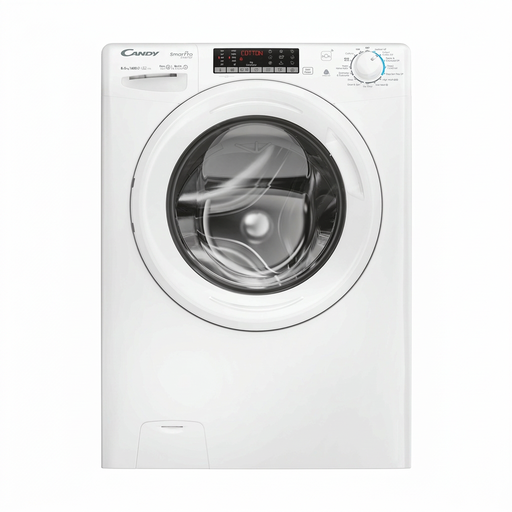 No image available
A freestanding choice for a house that can split or air-dry part of a wash exceeding the 5kg drying capacity.
Check the exact cotton and combined-cycle programme limits, as well as installation clearances, before choosing it for the available space.
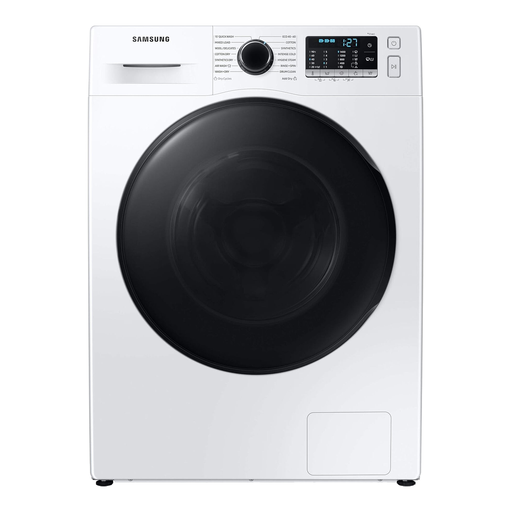 No image available
This freestanding 8kg wash/5kg dry model suits shared laundry only if housemates can keep combined loads within the lower drying limit or dry some items separately.
Compare its installation requirements with the measured space and check the programme details for cotton T-shirts and small wash-and-dry loads.
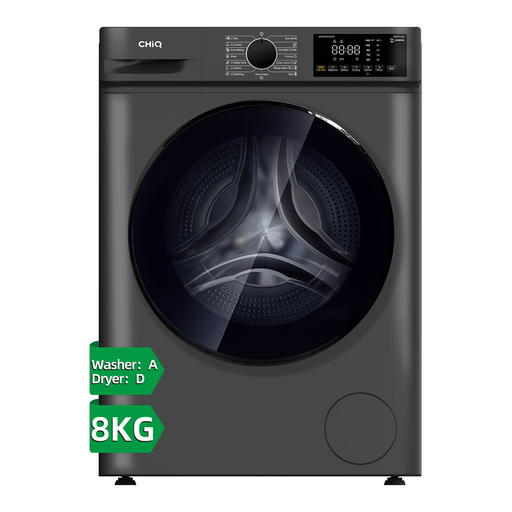 No image available
This freestanding model offers a stated 8kg washing capacity, while a combined load needs to stay within its 5kg drying capacity.
Check the installation diagram for the full space needed around it, and confirm which programmes suit the house's T-shirts.
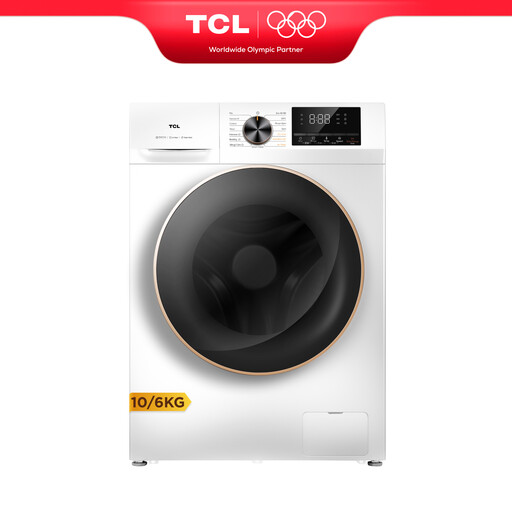 No image available
A freestanding option to consider when several housemates combine washing loads but can divide a load before drying: its stated washing capacity is 10kg and drying capacity is 6kg.
Measure the installation space and check the exact model's noise information, cotton programmes and combined-cycle limits.
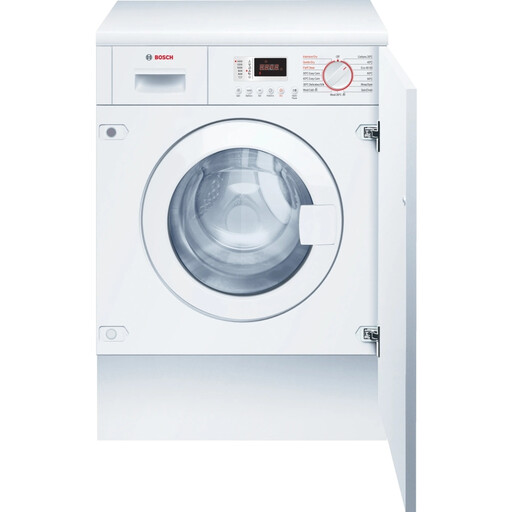 No image available
This integrated option is relevant only where the student house has compatible cabinetry and door arrangements. Its 4kg drying capacity calls for smaller combined loads than its 7kg washing capacity.
Confirm the cabinet and installation requirements with the exact model instructions, along with the cotton and wash-and-dry programme limits.
Yes, if they are normally soiled and their care labels declare them washable at 40°C or 60°C. The European Commission defines Eco 40-60 for that cotton category; follow the garment label and appliance instructions if a print, finish or fabric blend needs different care.
The drying capacity can be lower than the washing capacity, so a maximum-size wash may need splitting before drying. Bosch lists 8kg wash/5kg dry configurations, while AEG lists 9kg wash/5kg dry for its LWR7196U4B; check both figures and the programme limit on the model you are considering.
Measure the usable appliance space, door opening and room around pipes and plugs, not just the cabinet width. Allow around 25mm at each side and roughly 50–150mm at the rear for a freestanding machine; the exact model's installation instructions determine the clearance it needs.
Do not leave drying running overnight or while everyone is out. Lichfield District Council's tumble-dryer fire-safety guidance also calls for cleaning the lint filter after every use and keeping airflow clear; follow the washer-dryer manufacturer's maintenance instructions.
Check the tenancy agreement and ask the landlord or managing agent before arranging a new appliance or changes to its connections. In England, UK Government guidance requires landlords to have electrical installations inspected and tested by a qualified person at least every five years, subject to stated exceptions including student halls; that rule does not itself grant permission to install a washer-dryer. Rules elsewhere in the UK may differ.