Small-flat space planners
If the laundry position is narrow or pipes and plugs sit behind it, usable installation space matters before drum capacity. Allow room around a freestanding appliance as well as behind it.


Measure the installation space, including room for connections and the door, before choosing a washer-dryer for cotton tablecloths. Plan a continuous cycle around the lower drying capacity: an 8 kg wash and 5 kg dry model suits smaller drying batches, while a larger 12 kg wash and 8 kg dry model makes sense only if you regularly need that capacity and can accommodate its depth. Choose an integrated model only where the cabinet and installation are compatible.
If the laundry position is narrow or pipes and plugs sit behind it, usable installation space matters before drum capacity. Allow room around a freestanding appliance as well as behind it.
If you wash several cotton tablecloths together, compare the batch you want to dry with the drying capacity, not just the larger washing figure. Which? explains that washer-dryers have a lower drying capacity than washing capacity.
If you want to wash and dry without transferring the load, check the capacity for a continuous cycle and the model’s drying controls. Beko describes sensor drying on its BMND8545U, but that feature does not increase its stated 5 kg drying limit.
Choose the installation type and drying batch together: a cabinet can determine whether an integrated model is possible, while a larger freestanding drum needs enough usable depth.
Consider it when: You have a compatible appliance cabinet; Bosch specifies its WKD28490GB at 820 × 596 × 525 mm.
Trade-off: The cabinet and installation must fit, and a full 8 kg wash exceeds this model’s 5 kg continuous wash-and-dry capacity.
Consider it when: You have a suitable freestanding position and can dry tablecloths in batches of up to the model’s 5 kg rating.
Trade-off: The appliance also needs installation clearance, and larger wash loads may need splitting before drying.
Consider it when: You regularly need a larger continuous drying batch; Haier lists the HWD120-B14367UUK at 12 kg wash and 8 kg dry.
Trade-off: That Haier model is 666 mm deep before allowing for the installation space behind it.
| Concern | What to check | Who this matters to |
|---|---|---|
| Installation space | Measure usable height, width and depth, allowing for connections and the open door. Allow around 25 mm at each side and roughly 50–150 mm behind a freestanding unit; check the chosen model’s instructions. | If pipes, plugs or a narrow doorway make the laundry position tight, I need to know the machine can be installed and accessed. Around 31% of consumers put physical fit first. |
| Drying batch | Compare the tablecloth load with the stated drying or wash-and-dry capacity. On an 8 kg wash / 5 kg dry model, plan to remove items before drying a full wash load. | When I wash several tablecloths together, I want to know whether they can dry in one continuous cycle or need splitting; roughly 31% of consumers prioritise drying-batch capacity. |
| Cotton care | Check the tablecloth care label against the model’s cotton settings and permitted tumble-drying options. Consider drying controls if a continuous routine matters to you. | I want a straightforward routine without using settings that conflict with my tablecloths’ care labels. Cotton care and finishing convenience come first for around 19% of consumers. |
| Running information and noise | Compare the exact model’s energy label and product information sheet, including relevant cycle information; check its published noise figure if laundry runs near living space. | If laundry is close to where I spend time, I need to weigh cycle information and noise alongside capacity. Roughly 19% of consumers make these comparisons their primary concern. |
An 8 kg wash / 5 kg dry washer-dryer cannot dry a full 8 kg wash as one continuous load at its stated drying capacity.
Plan uninterrupted cycles around the 5 kg figure, or remove some items before drying.
Splitting the load can mean another drying cycle or time spent drying some items separately.
A machine can fit the measured opening yet leave inadequate space for hoses, plugs or the door to open.
Measure the usable position and check the selected model’s installation requirements before ordering, particularly when considering a deeper machine.
Extra capacity is useful only if it matches the batches you expect to run; Which? notes that larger washer-dryers can be less efficient when underfilled.
Size the machine around your usual tablecloth and laundry loads as well as the available space.
A quick, steam or sensor setting does not establish that every cotton tablecloth can use it. Fabric finishes and care instructions can differ.
Follow each tablecloth’s wash and tumble-dry instructions, then check what the chosen model’s programmes actually allow.
Beko’s BMND8545U represents a freestanding 8 kg wash / 5 kg dry choice for smaller continuous drying batches.
Bosch’s integrated WKD28490GB is specified at 820 × 596 × 525 mm, with 8 kg washing and 5 kg wash-and-dry capacities.
Samsung’s freestanding WD80TA046BE/EU is an 8 kg wash / 5 kg dry, 1400 rpm model.
Haier’s freestanding HWD120-B14367UUK is listed at 12 kg wash / 8 kg dry and 595 × 666 × 850 mm.
These freestanding 8 kg wash / 5 kg dry models suit shoppers considering smaller continuous tablecloth-drying batches. Check each model’s programmes, installation requirements and the tablecloth care label before choosing.
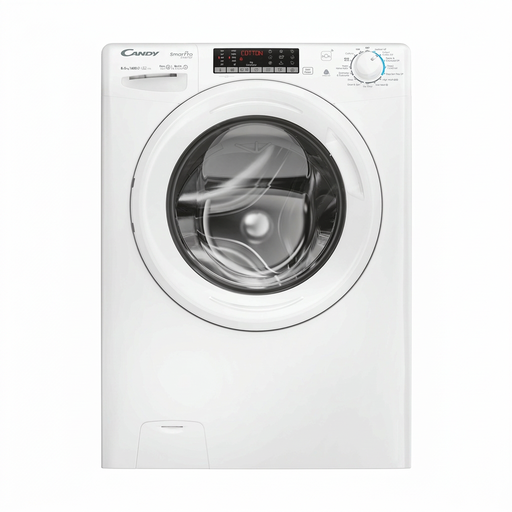 No image available
Consider this model if a 5 kg continuous drying batch suits your tablecloth routine; check its programmes against the tablecloth care label.
The product name specifies 8 kg washing, 5 kg drying, a 1400 rpm spin speed and a white finish. Allow room for connections and the door when checking fit.
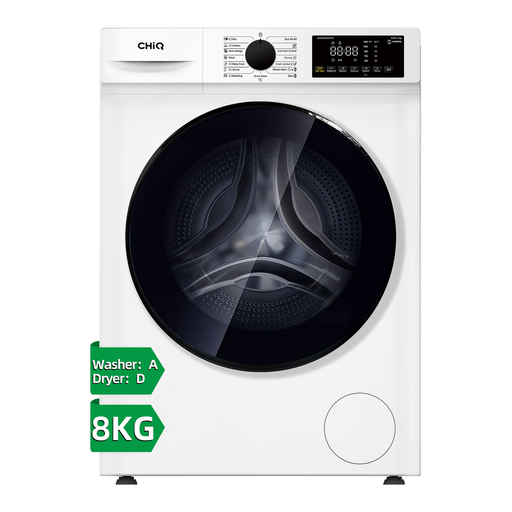 No image available
This freestanding model is worth considering if you can split any wash load that exceeds the drying limit; confirm its cotton settings against your tablecloths’ care labels.
The product name specifies 8 kg washing, 5 kg drying, a 1400 rpm spin speed and a white finish. Check the full installation space before ordering.
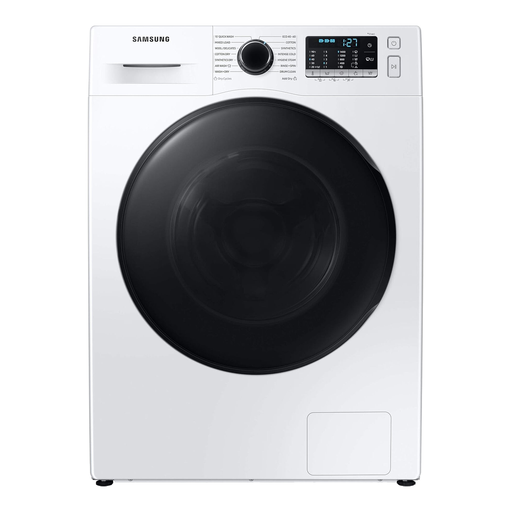 No image available
Consider this freestanding model for tablecloth batches within its 5 kg drying rating; check the available depth and the care label before selecting a programme.
Samsung specifies 8 kg washing, 5 kg drying and a 1400 rpm spin speed for the WD80TA046BE/EU. Its steam feature should not be taken as a result for every fabric or load.
Not on an 8 kg wash / 5 kg dry model: its continuous drying load is limited to 5 kg. Beko, Bosch and Samsung specify those capacities for the models discussed here, so remove some items before drying a full wash load.
Measure usable height, width and depth, including room for pipes, plugs and the open door. Allow around 25 mm at each side and roughly 50–150 mm behind a freestanding appliance; confirm the selected model’s installation instructions.
A cotton programme is a starting point, but the tablecloth’s care label determines suitable washing and drying settings. Check its permitted temperature, spin and tumble-dry instructions before choosing a cycle.
Compare the energy label and product information sheet for each exact UK-market model, rather than relying on an energy-class description alone. GOV.UK describes these as sources of product information; also consider the stated capacities, cycle information and published noise figures in light of the loads you normally run.