What matters when choosing
Start with the size of the loads the house needs to dry without interruption. Then check tea-towel wash programmes and cycle limits before assessing fit and comparing energy and water information.
| Concern | What to check | Who this matters to |
|---|
| Cleaning shared tea towels |
Read the selected model’s programme table for a suitable wash cycle and its load instructions; do not treat a steam refresh as a wash. |
If I am responsible for kitchen laundry, I want used tea towels washed regularly rather than left damp or merely refreshed. Around 33% of consumers would put appropriate cleaning first. |
| Load size and turnaround |
Compare wash-only and complete wash-and-dry capacities in kg, then check the load limit and duration of any short programme. |
When several housemates need the machine, I want to know whether a communal load can finish without being split for drying. Roughly 27% of consumers would make throughput their primary concern. |
| Fit, noise and installation |
Check appliance type and dimensions, including space for hoses and the door; consult the installation instructions and tenancy agreement. |
With a shared kitchen and an existing appliance space, I need a machine that can be installed without obstructing access or conflicting with tenancy requirements. About 20% of consumers would prioritise fit and installation. |
| Energy and water use |
Compare the product information for complete wash-and-dry cycles as well as wash-only cycles, using the same cycle basis. |
If the house often dries laundry in the machine, I want energy and water figures that reflect the full cycle, not washing alone. Around 20% of consumers would put that comparison first. |
Brands to consider for washer-dryers
These brands provide model-specific points of comparison. Check the exact appliance and its current product information rather than applying one model’s specifications across a brand.
Beko
A reference for comparing 10 kg wash and 6 kg dry freestanding configurations.
- Beko UK describes a 6 kg wash-and-dry programme taking around three and a half hours on the B5D510645U.
- That programme time and load apply to the cited model; check the selected model’s programme table and drying limit.
Bosch
A reference for separating wash capacity from complete-cycle capacity and checking published dimensions.
- Bosch UK lists 10.5 kg wash capacity and 6.0 kg wash-and-dry capacity for the WNC25410GB.
- Its listed 848 × 598 × 622 mm dimensions and 70 dB airborne-noise figure describe that model, not every Bosch washer-dryer.
AEG
A reference when programme choices and installation details are central to the decision.
- AEG UK lists 10 kg washing and 6 kg drying capacities and a hygiene programme for the LWR7116O4B.
- Check the programme instructions for the intended load; manufacturer descriptions of steam and fabric care are not independent performance findings.
LG
A reference for comparing a 10 kg wash and 6 kg dry model against the space available.
- LG UK gives 600 × 850 × 620 mm dimensions for the FWY606WWLN1.
- LG advises following the selected product manual because installation instructions vary by model and location.
Haier
A reference when comparing integrated and freestanding layouts.
- Haier’s UK washer-dryer collection includes 10 kg wash and 6 kg dry configurations in both appliance types.
- Confirm the selected model’s construction, dimensions and programme limits before deciding which layout fits the home.
Joybuy product choices
These integrated and freestanding washer-dryers offer different wash and dry capacities for shared-house laundry. Use the drying figure to plan complete cycles, then check each model’s programmes and installation requirements for your kitchen.
 No image available
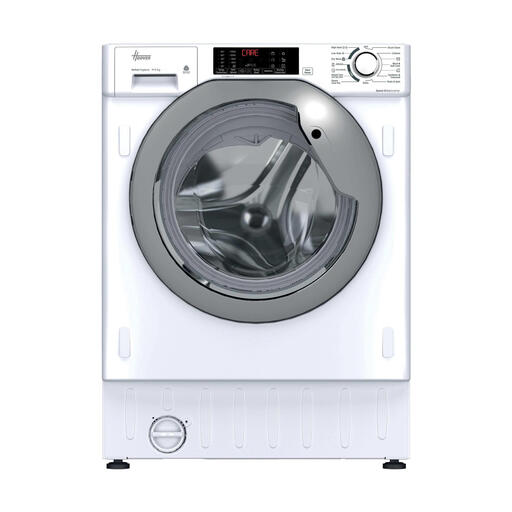
Hoover HBDS 4954DMS5-80 H-Wash & Dry 500, 9 kg/5 kg integrated
Consider this integrated model if the kitchen needs a fitted appliance and a 5 kg complete-cycle load suits the household.
Its stated capacities are 9 kg for washing and 5 kg for drying. Check the programme instructions for tea towels and confirm cabinet and tenancy requirements before ordering.
View on Joybuy
 No image available
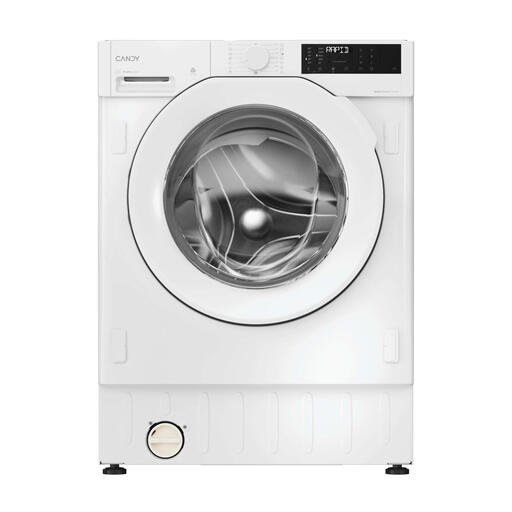
Candy BC4S496M6D8-80, 9 kg/6 kg integrated
Consider this integrated model where a 6 kg drying load better matches the house’s communal laundry and the cabinetry can accommodate it.
The title states 9 kg washing capacity, 6 kg drying capacity and 1400 spin. Check the exact wash programme and any short-cycle load limit before planning tea-towel loads around them.
View on Joybuy
 No image available
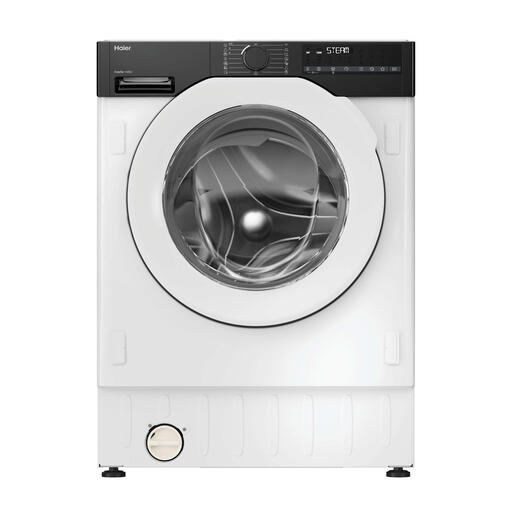
Haier Series 6 BHA6S696M6D9-80, 9 kg/6 kg integrated
This is another integrated option for a shared kitchen where a 6 kg complete wash-and-dry load is useful.
The title states 9 kg washing capacity, 6 kg drying capacity and 1600 rpm. Check the selected programme’s instructions for soiled tea towels, as well as the cabinet and connection requirements.
View on Joybuy
 No image available
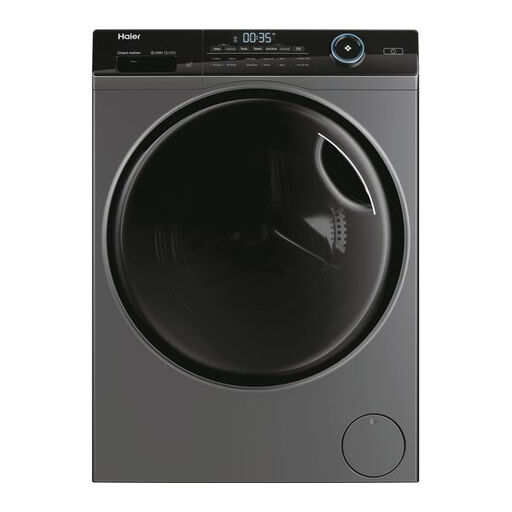
Haier I-Pro Series 5 HWD100-B14959S8NU1, 10 kg/6 kg
Consider this freestanding model if the home has room for that installation type and regularly washes larger shared loads.
Its stated washing capacity is 10 kg, while drying capacity is 6 kg. Plan uninterrupted cycles around 6 kg and check the programme manual for tea towels and shorter loads.
View on Joybuy
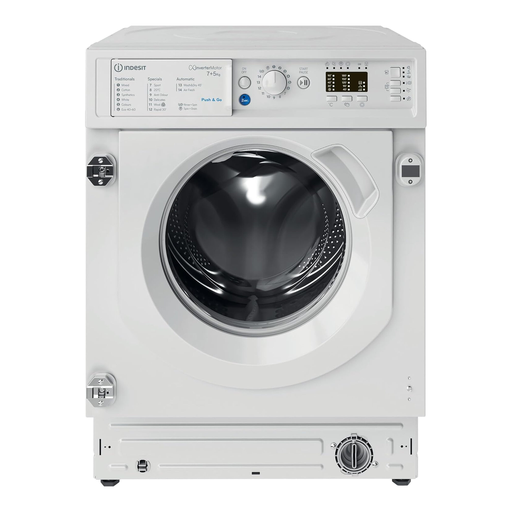 No image available
Hotpoint BI WDHG 75148 UK N, 7 kg/5 kg integrated
Consider this integrated model if a 5 kg complete-cycle load is enough and the fitted kitchen accommodates it.
The title states 7 kg washing capacity, 5 kg drying capacity and a 59.5 cm width. Confirm the full installation dimensions and a suitable wash programme in the model instructions.
View on Joybuy
Frequently asked questions
Should I choose a washer-dryer by its wash or drying capacity?
Check both, but plan uninterrupted wash-and-dry loads around the lower complete-cycle capacity. Which? explains that washer-dryers dry less than they wash; Bosch UK, for instance, lists 10.5 kg washing and 6.0 kg complete-cycle capacity for the WNC25410GB.
What should we do with tea towels before laundry day?
Keep a routine for changing and washing them, avoid leaving them damp in a heap, and separate towels used on raw-food spills where practical. GOV.UK calls for regular tea-towel cleaning in food businesses; its guidance is not a domestic wash-temperature rule.
Can tenants install a washer-dryer in a shared rented house?
Check the tenancy agreement and obtain landlord permission where required before arranging installation. Also follow the selected model’s instructions and confirm the available connections; England’s rented-sector electrical-safety guidance does not, by itself, grant permission for a particular appliance installation or establish the rules elsewhere in the UK.
What maintenance should we check after frequent tea-towel loads?
Follow the selected model’s manual for cleaning the detergent drawer, door seal, drain-pump filter and any lint-management parts it specifies. The components and maintenance intervals vary by model, so do not assume another washer-dryer’s routine applies.


