Housemates with frequent workwear loads
Several people using one machine need to plan washing throughput around a smaller drying limit. Which? notes that a washer-dryer’s washing capacity is higher than its drying capacity.


Choose a washer-dryer by how often housemates wash workwear and how much must be dried in one cycle, not by wash capacity alone: the drying limit is lower. Compare the exact model’s dry capacity, cycle information, noise and dimensions against your shared routine and the garments’ care labels. If workwear may be contaminated with hazardous material, follow the employer’s risk-assessed laundering procedure rather than assuming a domestic machine is suitable.
Several people using one machine need to plan washing throughput around a smaller drying limit. Which? notes that a washer-dryer’s washing capacity is higher than its drying capacity.
If workwear needs to dry without outdoor space, compare the dry-capacity figure and combined-cycle information, not just the size of the wash drum.
Ordinary washable workwear needs settings that suit its care labels. For potentially contaminated clothing, the Health and Safety Executive advises a risk-assessed laundering approach that considers decontamination and cross-infection.
Decide whether a workwear load must be washed and dried without removing items between stages; that determines which capacity limit matters most.
| Concern | What to check | Who this matters to |
|---|---|---|
| Shared washing throughput | Compare wash capacity in kg with the separate wash-and-dry limit, then check the appliance dimensions. | When several of us wash workwear regularly, I need to keep the laundry queue manageable; around 27% of consumers put shared-load throughput first. |
| Indoor drying and running demands | Check dry capacity, combined-cycle energy and water figures, and cycle duration for the exact model. | If I need workwear dry before my next shift, I care about what can finish in one cycle and the resources that cycle uses; roughly 27% of consumers make indoor drying and running demands their primary concern. |
| Noise and shared routines | Compare the stated noise figure in dB and the timing controls and duration of the programmes you would use. | With bedrooms near the machine, I want laundry times that cause less disruption to housemates; around 20% of consumers chiefly prioritise noise and timing. |
| Garment care and contamination | Match programmes and spin settings to care labels; for potentially contaminated clothing, confirm the employer’s laundering procedure. | I need settings that suit my workwear and a clear boundary for items that cannot go into ordinary shared laundry; about 26% of consumers put garment care and contamination first. |
Which? explains that washer-dryers have a lower drying capacity than washing capacity. A full wash load may therefore need splitting before the drying stage.
If workwear must be ready after one uninterrupted cycle, compare the dry-capacity figure first. Otherwise, plan where the remaining items will dry.
A wash-only rating does not describe the same operation as a combined wash-and-dry cycle. Energy Saving Trust explains that appliance labels use an A-to-G efficiency scale.
Compare the label figures for the cycle the household expects to use, including the combined cycle if indoor drying is routine.
The Health and Safety Executive says laundering potentially contaminated fabrics should account for decontamination and prevention of cross-infection. A shared domestic routine is not automatically appropriate.
Check the employer’s risk assessment and laundering instructions before bringing such clothing into shared-house laundry.
A useful capacity does not resolve an installation-space problem or the disruption of a spin cycle near bedrooms. Model dimensions and stated noise figures vary.
Measure the intended space and access route, then check the exact model’s construction type, dimensions and specified noise figure.
The Bosch WNG25401GB illustrates a large-wash-capacity freestanding option: Bosch UK lists 10.5 kg for washing, 6 kg for a wash-and-dry cycle, 1400 rpm and 70 dB for this model.
The Haier X5 HWD100-BP16357UUK is a freestanding 10 kg wash / 6 kg dry model for households comparing a larger washing load with smaller drying batches.
For households considering a higher stated drying limit, the Hisense KitchenFit 5i WD5I1245BWRH is listed at 12 kg wash / 8 kg dry with heat-pump drying.
These washer-dryers offer stated wash capacities of 8–11 kg and lower drying limits of 5–6 kg. They are options to compare if housemates can divide larger wash loads before drying; check each model’s cycle details and garment suitability before choosing.
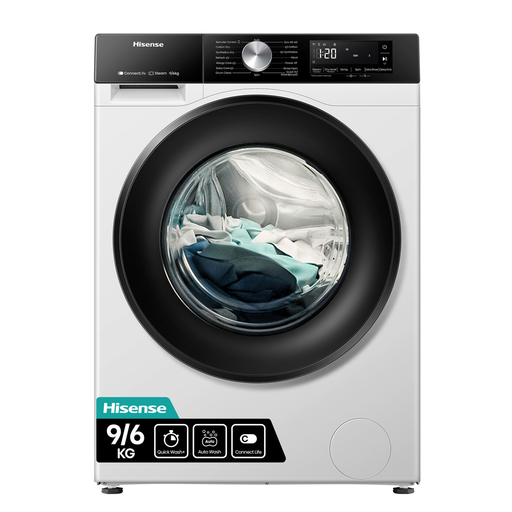 No image available
Suited to shared washing loads that can be reduced before drying. The stated wash limit is 9 kg, the dry limit is 6 kg and the spin speed is 1400 rpm; check the combined-cycle details against your routine.
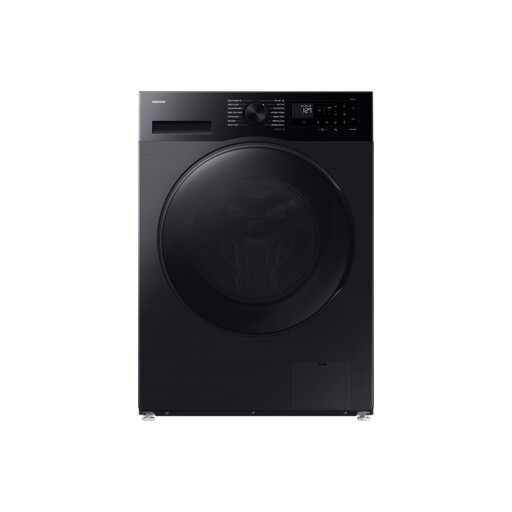 No image available
For housemates considering a larger washing load while planning separate drying batches. Its stated wash capacity is 11 kg and its dry capacity is 6 kg; compare the combined-cycle label and duration before relying on it for shift changes.
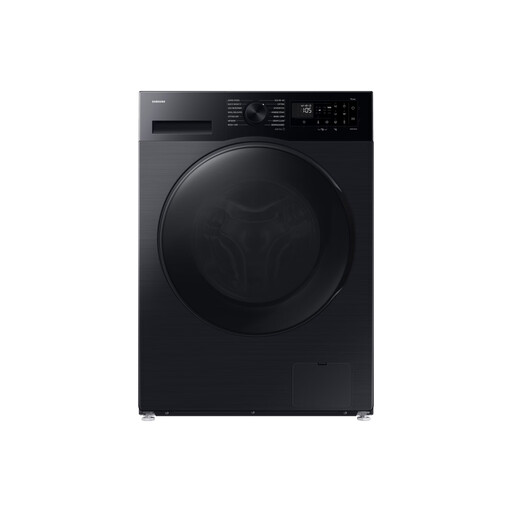 No image available
For shared-house loads where drying can be kept below the washing limit. The stated capacities are 9 kg wash and 6 kg dry; check which programmes suit the workwear care labels.
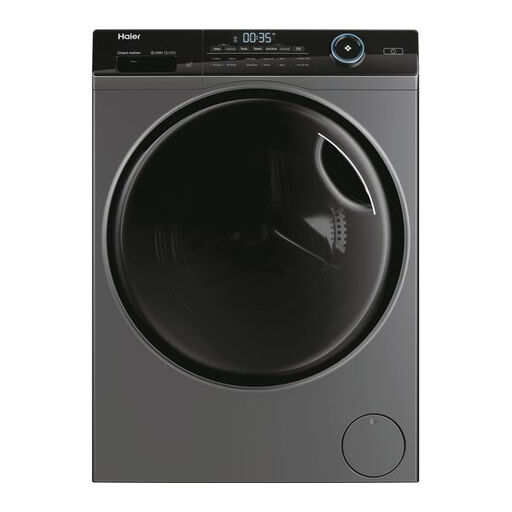 No image available
For frequent washing when housemates can split a larger load before drying. Its stated wash capacity is 10 kg and its dry capacity is 6 kg; compare cycle duration and care-label suitability for the workwear involved.
 No image available
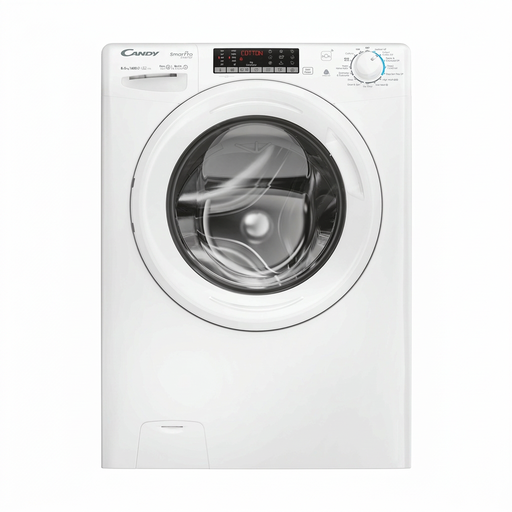
For housemates comfortable drying less than a full wash load at once. The stated capacities are 8 kg wash and 5 kg dry, with a 1400 rpm spin speed; check whether the combined cycle fits the time available.
No: a 10 kg wash rating does not mean the machine can dry 10 kg in the same cycle. Which? explains that washer-dryers have a lower dry capacity, so check the model’s separate wash-and-dry limit and remove items when a wash load exceeds it.
Measure the intended space, access route and door clearances against the exact appliance dimensions. Check whether the installation needs a freestanding or integrated model, and compare its stated noise figure if living or sleeping areas are close by.
Compare figures for the same operating mode, particularly the combined wash-and-dry cycle if that is how you will use the machine. Energy Saving Trust describes the A-to-G efficiency scale; also read the exact model’s label information rather than treating a wash-only rating as its drying performance.
Do not assume ordinary shared-house washing is appropriate; follow the employer’s risk-assessed laundering procedure. The Health and Safety Executive says the method should consider decontamination and prevention of cross-infection, with the likelihood and extent of contamination assessed.
No. Check each garment’s care label before choosing a programme and spin setting, and use a gentler setting where the fabric requires it. A machine’s maximum spin speed is not an instruction to use that speed for every load.