For frequent face-cloth loads, a 3 kg compact or portable washer may be enough if its connections and setup suit your space. Choose a higher-capacity, reduced-depth front loader if it must also handle regular household laundry and you have room for its width. In either case, measure the installed space, including hoses, ventilation and the open door, rather than relying on cabinet dimensions alone.
Who each format suits
Small-load, permanent-installation households
If face cloths and other small textiles make up most loads, a compact front loader is worth considering when you can provide fixed water and electrical connections but have limited height or width. Compare the full installed dimensions with the available space.
Households needing flexible placement
A portable format may suit a room without a dedicated washer position. Before choosing one, establish where it will be filled, drained and stored; a twin-tub also requires more hands-on washing and spinning.
Households washing more than face cloths
If the same machine must regularly handle clothing and towels, consider a higher-capacity front loader. Reduced depth can help where front-to-back space is tight, but it does not necessarily reduce the machine’s width.
What matters when choosing
Decide whether this is mainly a small-load washer or the household’s main machine, then check the actual position and connection route. Programme choices matter too, but the face cloths’ care labels set the limits for washing temperature.
| Concern | What to check | Who this matters to |
|---|
| Installed footprint |
Measure height, width and depth with room for rear connections, ventilation and the open door. Follow the chosen model’s installation instructions. |
I have a specific gap to fill and need the machine, its connections and its door to fit in use; around 33% of consumers put installed fit first. |
| Placement and drainage |
Check the water source, drain destination and hose route. For a portable model, check its stated drain-height limit. |
I cannot dedicate a permanent laundry position and need a filling and draining routine I can manage; roughly 27% of consumers prioritise flexible placement. |
| Cloth-care programmes |
Read the cloth care label, then confirm the model offers a suitable fabric programme and permitted temperature. |
My face cloths need a programme that suits their fabric, rather than simply the hottest available wash; around 27% of consumers make cloth-care options their main concern. |
| Capacity for other laundry |
Decide whether the washer is for small loads or regular household washing, and compare its stated capacity with your recurring loads. |
I need this machine to wash clothing or towels as well as face cloths; approximately 13% of consumers put broader laundry capacity first. |
Buying pitfalls
-
Measuring only the cabinet depth
A washer that fits an empty gap on paper may obstruct its door or leave too little room for hoses, plugs and ventilation.
Measure from the front of existing pipes and plugs, check the door-opening path and compare your space with the model’s installation instructions. Allow around 25 mm at each side and roughly 50–150 mm behind for ventilation and connections; use the chosen model’s requirements where they differ.
-
Assuming every portable washer runs automatically
Portable designs differ. HAVA specifies a maximum drain height of 120 cm for its T02, while the Leisurewize twin-tub has separate wash and spin tubs and timed controls.
Plan the filling and drainage route before buying, and decide whether transferring laundry between stages is acceptable.
-
Using a hot programme regardless of the cloth
A washer’s 60°C option does not mean every face cloth can be washed at 60°C; the fabric and its care label may call for a different programme.
Check the cloth label first, then confirm the selected washer offers an appropriate temperature and fabric programme.
-
Overlooking the mains-water connection
Water Regs UK says water-fittings regulations or byelaws apply to appliances with a mains water supply. Suitable backflow protection depends on the installation arrangement.
Follow the appliance’s installation instructions and, if the proposed connection is uncertain, check it with the local water undertaker or a competent installer before installation.
Brands to consider
These examples illustrate different washer formats; a brand’s inclusion does not establish that every model in its range has the same dimensions or installation requirements.
HAVA
HAVA’s T02 is a portable automatic washer aimed at small loads and sink-oriented drainage.
- HAVA lists a 3 kg load limit, 42 × 46 × 75 cm dimensions and 40°C and 60°C options for the T02.
- Check that its filling arrangement and stated 120 cm maximum drain height work in the intended position.
Zanussi
The ZWC1301 is a compact conventional front loader for a fixed washing position.
- Euronics lists the ZWC1301 at 67 × 49.5 × 51.5 cm, with a 3 kg capacity.
- Its water and electrical connections still need space beyond the cabinet.
LG
LG’s F2X50S9TWB illustrates a higher-capacity, reduced-depth front loader for broader household laundry.
- LG describes this specific model as a 9 kg counter-depth washer.
- Reduced depth does not remove the need to check width, rear connections and door clearance.
Leisurewize
The Leisurewize twin-tub is a portable alternative for someone willing to manage separate laundry stages.
- This model has separate wash and spin tubs with timed controls.
- Washing, rinsing and spinning require more intervention than a fully automatic cycle.
Joybuy product choices
These fixed, freestanding machines are choices to consider when the washer must also serve household laundry. Their stated capacities do not establish that they will fit a tight space: check installed dimensions, connections, door clearance and suitable programmes before choosing one for face cloths.
 No image available
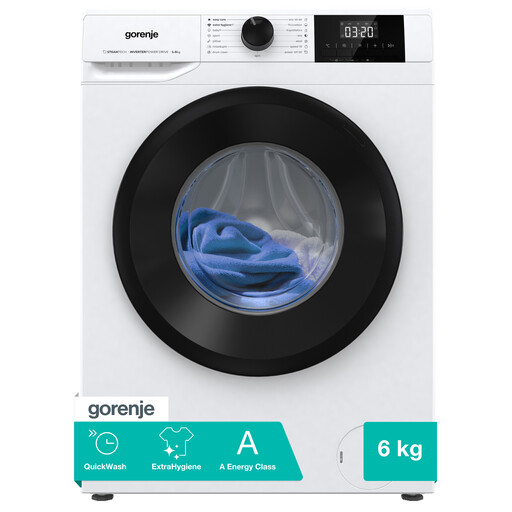
Gorenje G100 Series WG1PS62A1/UK 6 kg washing machine
Consider this model if face cloths are part of a wider laundry routine and you have a position for a fixed washer. Its stated capacity is 6 kg, with a 1200 rpm spin rating. Check installed depth, door clearance and the programmes permitted by your cloth care labels.
View on Joybuy
 No image available
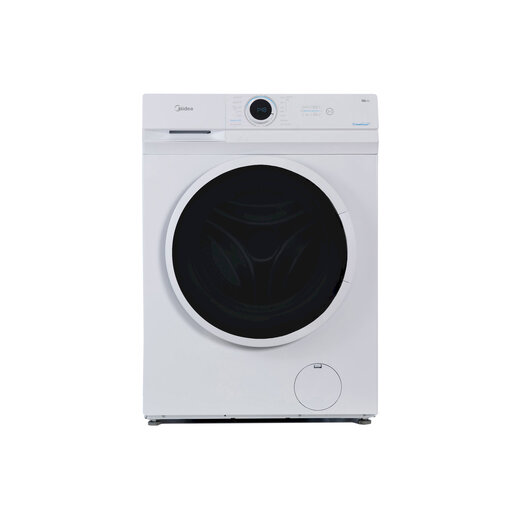
Midea MF100W60 6 kg freestanding washing machine
This is another fixed-machine option for face cloths alongside other laundry. The product name specifies a 6 kg capacity and 1000 rpm spin rating. Confirm the complete installed footprint and that its temperature settings suit the cloth care labels.
View on Joybuy
 No image available
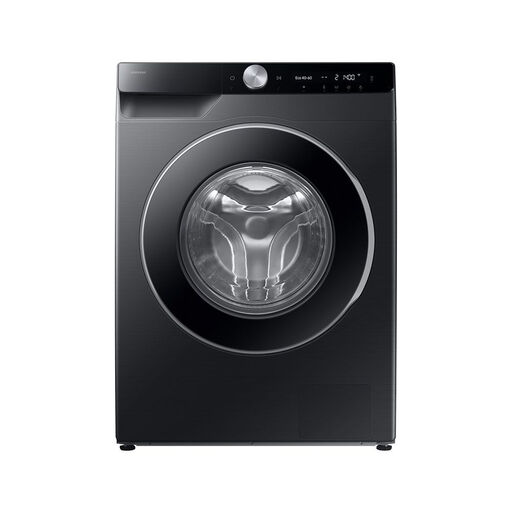
Samsung Series 6 WW90DG6U25LBU1 9 kg washing machine
Consider the 9 kg capacity if this machine must also handle regular household loads, rather than choosing by face-cloth loads alone. The product name specifies a 1400 rpm spin rating. Check the installed width and depth, door-opening space and suitable programme temperatures.
View on Joybuy
 No image available
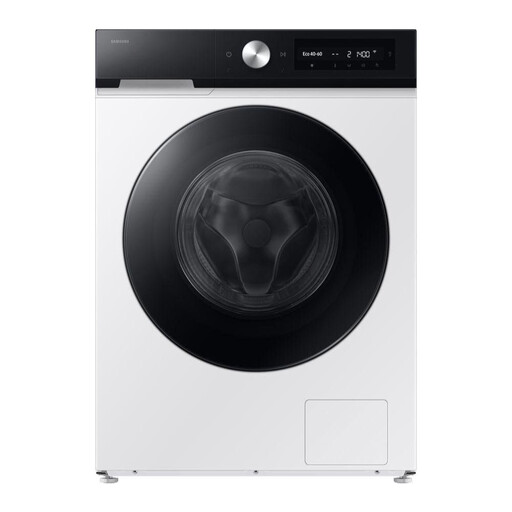
Samsung Series 7 WW11DB7B94GEU1 11 kg washing machine
Its 11 kg stated capacity is relevant if face cloths are only a small part of the household laundry. The product name also specifies a 1400 rpm spin rating. Measure the proposed position against the model’s dimensions and installation instructions, and check the cloth-care programmes.
View on Joybuy
 No image available
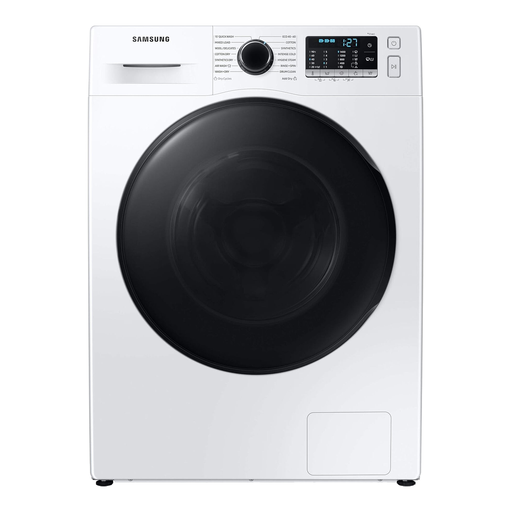
Samsung Series 5 Ecobubble WD80TA046BE/EU 8 kg/5 kg washer dryer
Consider a combined washer dryer only if drying household laundry is part of the same purchase decision. This variant states separate capacities of 8 kg for washing and 5 kg for drying. Check its full installed footprint, door access and face-cloth programme temperatures before choosing it for a limited space.
View on Joybuy
Frequently asked questions
Is a 3 kg washer enough if I mainly wash face cloths?
A 3 kg washer can suit frequent small loads if you are happy to wash bulkier household items separately. If it must also serve as the main washer for clothing and towels, compare higher-capacity machines against your available installed space instead.
Do face cloths need a 60°C programme?
Not necessarily: check each cloth’s care label before choosing a wash temperature. If 60°C is important for cloths whose labels permit it, confirm that the specific machine has an appropriate 60°C programme rather than relying on a programme name.
How much extra room does a freestanding washer need?
Allow for the selected model’s ventilation, pipes, plug and open door as well as its cabinet. Allow around 25 mm at either side and roughly 50–150 mm behind a freestanding machine; check the model’s installation instructions for its actual requirements.
Can a portable washer be connected to any sink?
Do not assume every sink arrangement will work. Check the washer’s filling instructions, hose route, drain destination and any product-specific drain-height limit; seek advice on a proposed mains-water connection if its suitability is uncertain.
Do water-fittings rules matter for a compact or portable washer?
Yes, where the appliance has a mains water supply: Water Regs UK says water-fittings regulations or byelaws apply. The appropriate backflow protection depends on the installation, so check an uncertain arrangement with the local water undertaker or a competent installer.


