
24/7 Customer Support

Free returns

Same-day & Next-day Delivery

Quality Guaranteed

Unlock Your Welcome Offers: FREE Delivery | Up to 80% OFF | Free 30-day JoyPlus trial
Download the APP
Buying a washing machine is rarely just about choosing the largest drum or the lowest ticket price. The wrong model can fail to fit beneath your worktop, use more electricity than expected or leave you paying for features that do not match your routine.
This guide explains the specifications that matter, highlights common purchasing traps and presents Our Top Recommendations for 2026 by household type. For more models, you can also browse the complete washing machine range.
A 10kg washing machine may sound suitable for every household, but a larger drum can be unnecessary for a couple or single occupant. Under-filling a large machine regularly may reduce the practical value of the purchase, while overloading a smaller model can restrict movement and affect wash results.
As a general guide:
Capacity should be matched to your typical load, not just your largest occasional wash.
A slim washing machine usually refers to reduced depth, not necessarily reduced width or height. UK freestanding models commonly remain close to 595–600mm wide and approximately 850mm high.
Measure the full installation space, including:
For example, the Midea MF100W60 has a stated depth of 400mm, while several CHiQ models measure 520mm or 577–580mm deep. Always check the product specification rather than relying on the word “slim”.
The UK energy label uses an A–G scale. An A-rated washing machine is placed in the highest class on that scale, but annual running cost also depends on how often you wash, the programme selected, water temperature and the machine’s stated energy consumption per 100 cycles.
Some product listings use terms such as “A-15%” or “A-30%”. These are product classification descriptions, so check the full energy label and specification before comparing models. A machine with an inverter motor may also appeal to households prioritising quieter operation, but the stated noise level remains the more useful comparison figure.
An 8kg washing machine is a flexible choice for many UK homes. A 9kg or 10kg drum gives more room for family laundry, but the appliance may be deeper and heavier. If you regularly wash king-size bedding, towels or sports kits, additional capacity can reduce the number of cycles required.
Avoid packing laundry tightly into the drum. Clothes need room to move and manufacturers’ instructions should take priority for bulky items.
A 1400rpm washing machine extracts more water during the final spin than a lower-speed model, which may be useful if you air-dry clothes indoors or use a tumble dryer. However, spin speed is not the only consideration. Check the machine’s spin-drying efficiency class and noise rating as well.
Some compact models, such as the Midea MF100W60, provide a maximum 1000rpm spin speed. That may be sufficient for light everyday loads, particularly where purchase price and reduced depth are more important than faster drying.
Freestanding washing machines are generally easier to position and replace. They are available in different finishes, including white washing machine and black washing machine designs.
An integrated washing machine is designed to sit behind a matching kitchen cabinet door. It requires compatible cabinet dimensions, hinges and installation clearances. The Sharp ES-NIH814BWA-EN, for example, has a stated appliance size of 817 × 597 × 544mm, which differs from common freestanding dimensions.
A washing machine with steam function may help refresh fabrics or reduce creasing, depending on the programme. It should not be treated as a substitute for selecting the correct wash cycle or following garment-care labels.
Other features worth checking include:
The following selections are matched to distinct household needs using the supplied specifications.
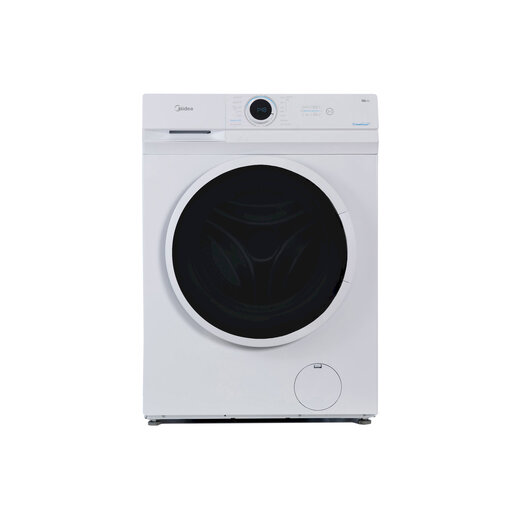
Why This Fits Their Persona: Its 400mm depth suits flats, compact utility rooms and smaller rental properties where space is limited.
The stated 400mm depth provides a clearer space-saving reference than a vague slim-product label. Its 6kg capacity also avoids paying for a larger drum than necessary.
Two rapid-wash options, 15 and 45 minutes; four temperature settings from cold to 60°C.
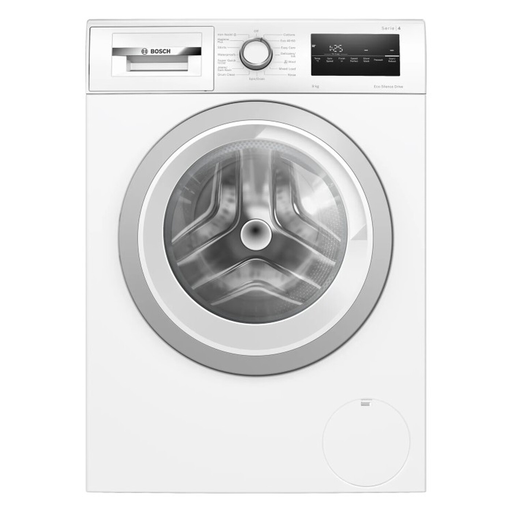
Why This Fits Their Persona: It combines a 9kg drum with an A energy class, reload functionality and a stated five-year manufacturer’s warranty upon registration.
The stated 590mm depth and 71dB spin noise figure help with installation and sound comparisons. Registration conditions for the warranty should be checked before purchase.
1400rpm spin speed; EcoSilence Drive motor; Iron Assist and SpeedPerfect programmes.
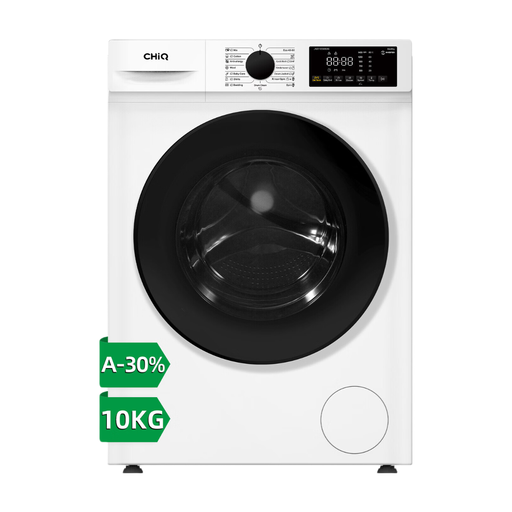
Why This Fits Their Persona: The 10kg drum is designed for large household loads, bedding and bulky garments, while the 577mm depth remains suitable for many standard utility spaces.
The listing specifies dimensions, capacity and a 1400rpm maximum spin speed, making it easier to compare with the available installation space.
16 programmes including Steam Care; BLDC inverter motor; 24-hour delay timer and two-year appliance warranty.
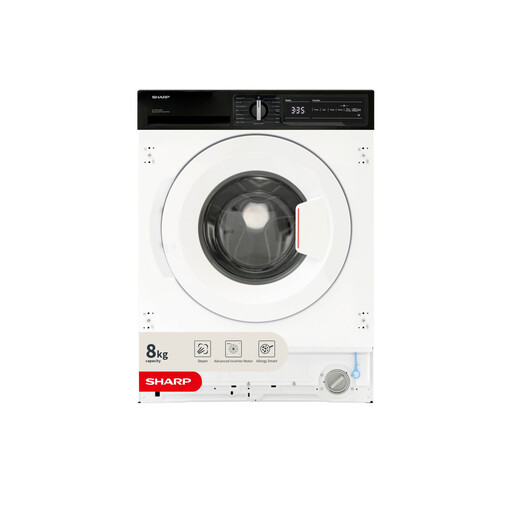
Why This Fits Their Persona: Its fully integrated format is intended for kitchens where the appliance needs to sit behind a cabinet door rather than remain visible.
The integrated installation type is clearly specified, helping buyers avoid ordering a freestanding appliance for a cabinet installation.
8kg capacity; 1400rpm spin speed; 15 programmes including Steam and SuperJet 15.
We have compiled a complete, real-time list of products that fully satisfy these strict selection criteria and UK safety regulations.
Before the first cycle, remove every transit bolt from the rear of the machine. Failure to do so can cause excessive vibration and mechanical damage. Connect the appliance to a suitable earthed socket and avoid extension leads or multi-plug adaptors.
For regular care:
Running cost depends on the energy label, programme, temperature, load size, electricity tariff and frequency of use. Compare the stated energy consumption per 100 cycles rather than relying only on the A–G rating. Lower-temperature programmes may use less electricity, but always follow garment-care instructions.
Lifespan varies with construction, usage, installation and maintenance. A machine used several times daily experiences more wear than one used weekly. Check the appliance warranty separately from any extended motor warranty, as coverage may apply to different parts and may require registration.
Some households can connect a freestanding appliance if the plumbing, drainage and electrical socket are already suitable. However, the appliance must be level, securely connected and correctly earthed. Integrated models may require cabinet-door fitting and alignment. If you are unsure, use a suitably qualified installer and follow the manufacturer’s manual.