Families with frequent cotton laundry
If T-shirts accumulate throughout the week, compare drum capacity with the loads you actually wash. Check the intended machine’s cotton programme and dimensions before choosing a larger drum.


Choose a washing machine that fits both your usual cotton T-shirt load and the space where it will go: an 8kg drum can suit routine family clothing, while 9kg or 10kg is worth considering when laundry builds up quickly. Compare energy information between similar machines rather than relying on the rating letter alone. If drying space is the main constraint, check a washer-dryer’s drying capacity separately from its washing capacity.
If T-shirts accumulate throughout the week, compare drum capacity with the loads you actually wash. Check the intended machine’s cotton programme and dimensions before choosing a larger drum.
Energy Saving Trust recommends considering lower temperatures for clothing that is not heavily soiled. Compare energy labels for similar machines, then check whether the available programmes suit your normal cotton loads.
Measure the installation space and delivery route, not just the drum capacity. If one appliance must also dry clothes, compare the washer-dryer’s separate wash and dry capacities.
Settle the appliance format and available space before comparing drum sizes and programmes. A washer-dryer addresses a different constraint from a washing machine that can be paired with air-drying or a separate dryer.
Choose when: You have a suitable appliance space and primarily need to wash family clothing.
Allow for: Drying clothes separately and checking the connections, clearance and delivery access.
Choose when: The kitchen cabinetry is designed for an integrated appliance.
Allow for: Model-specific cabinet dimensions, depth and door-mounting requirements; a freestanding machine is not an interchangeable fit.
Choose when: Drying space is limited and one appliance needs to handle both tasks.
Allow for: A smaller dry load than wash load on some models. The Samsung WD80TA046BE/EU listed by Joybuy specifies 8kg for washing and 5kg for drying.
| Concern | What to check | Who this matters to |
|---|---|---|
| Drum capacity | Compare the stated capacity with your usual loads and check the cotton programme’s permitted load. | If family T-shirts build up quickly, I want enough room for a regular load without routinely splitting it. Around 40% of consumers put capacity first. |
| Running costs | Compare energy-label information for similar machines and check Eco 40–60 capacity and lower-temperature options. | For normally soiled T-shirts, I want a wash routine that uses less energy without ignoring garment-care needs; roughly 30% of consumers prioritise running costs. |
| Fit and operation | Measure the machine, installation space and access route; check clearance, connections and stated noise information. | If the utility space or route into it is tight, I need the appliance to fit and operate where it will be installed. Fit and operation come first for around 20% of consumers. |
| Drying space | For a washer-dryer, compare wash and dry capacities separately and check the combined-cycle information. | Without room to dry clothes separately, I need to know how much of a washed load the same appliance can dry; about 10% of consumers make drying convenience their primary concern. |
Machines with the same rating need not have the same absolute energy use. Energy Saving Trust advises considering appliance size as well as the A-to-G rating.
Compare the label information for machines of a similar type and size, alongside the capacity you will use.
Programme conditions and timings can vary by model and load. A short cycle may not accommodate the family T-shirt load you had in mind.
Check the exact model’s manual for Cotton, Eco and quick-cycle load limits, temperatures and durations.
A full wash may exceed the amount the appliance can dry in one go. Joybuy lists the Samsung WD80TA046BE/EU at 8kg washing capacity and 5kg drying capacity.
Check both figures before planning a continuous wash-and-dry load.
A larger washed load may need splitting or drying separately.
A machine that fits its intended position still needs to get through the access route and meet the installation requirements.
Measure doorways and corridors as well as the final space, then consult the model’s installation instructions for clearance, water, waste and levelling requirements.
These model examples provide points of comparison; capacity, dimensions and features need checking for the particular machine you choose.
Consider Bosch when comparing the capacity and fit of a larger freestanding family washer.
Samsung offers a 9kg freestanding example for households comparing capacity, depth and connected features.
AEG is relevant when comparing 8kg machines whose installation depth may affect the choice.
The WWB360 WCS PWash&8kg is an 8kg option for buyers comparing programmes and connected features rather than seeking a larger drum.
These freestanding machines are options for households washing recurring family T-shirt loads. Compare their stated capacities with your laundry routine, then confirm cotton-cycle conditions and installation fit for the model you prefer.
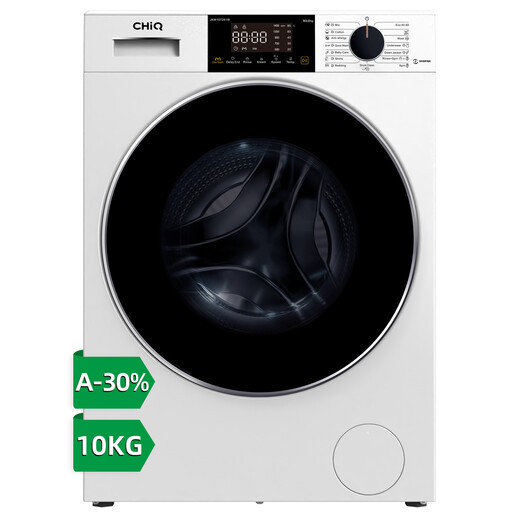 No image available
Consider this freestanding model if recurring family loads make a 10kg drum useful and it fits your space.
The name specifies a 1400rpm spin speed. Check the manual for the Cotton programme’s load limit and settings, and compare standardised energy information before judging running costs.
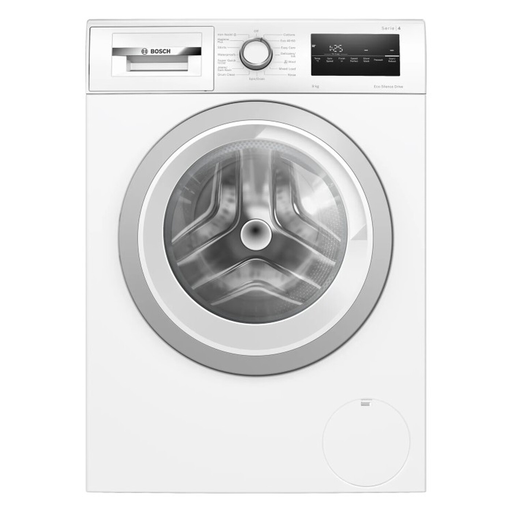 No image available
Consider this freestanding 9kg model if that capacity matches your regular family laundry loads.
The name specifies a 1400rpm spin speed and an A energy rating. Check the exact model manual for a suitable cotton cycle and measure the installation space and delivery route.
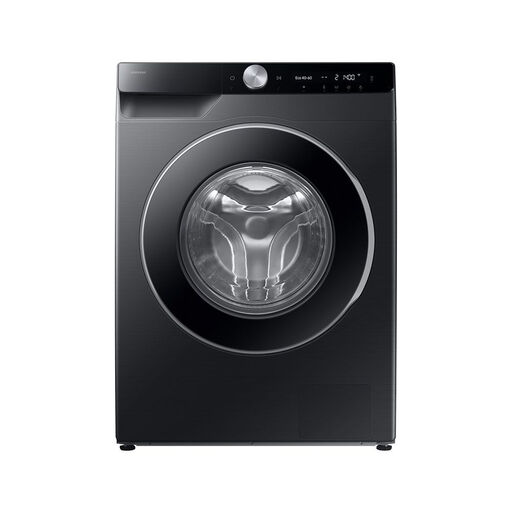 No image available
This freestanding 9kg model is worth comparing if you want capacity for regular family loads and need to assess depth carefully.
The name specifies a 1400rpm spin speed and an A energy rating. Confirm the cotton-cycle conditions, installation clearance and any requirements for connected features before relying on them.
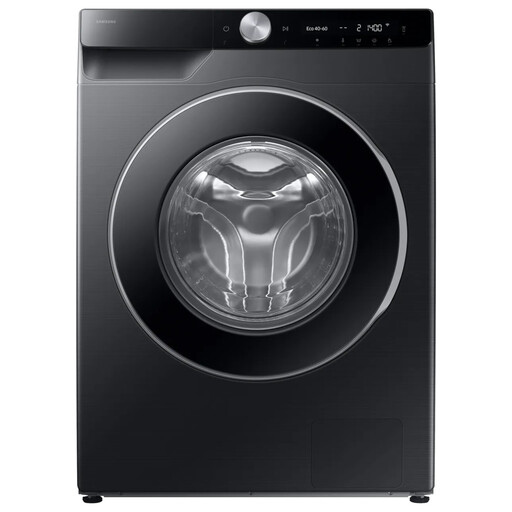 No image available
Consider the stated 11kg capacity if family laundry regularly accumulates into larger loads, provided the machine fits your home.
The name specifies a 1400rpm spin speed and an A energy rating. Check cotton and faster-cycle load conditions in the model manual, as well as installation clearance and any connected-feature requirements.
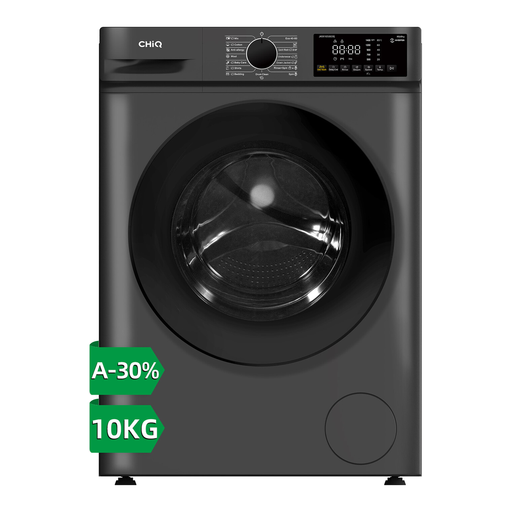 No image available
This 10kg freestanding model may suit larger recurring family loads if its dimensions work for the intended space.
Check the exact manual for the cotton-cycle load and settings. Use standardised energy-label information when comparing running costs with other machines.
Look for a Cotton programme or equivalent in the exact machine’s manual and follow the T-shirts’ care labels. Samsung’s UK programme guidance includes shirts under Cotton, while Energy Saving Trust suggests considering lower temperatures for clothing that is not heavily soiled; programme loads and timings still depend on the model.
No: the rating letter alone does not establish absolute energy use across machines of different sizes. Energy Saving Trust advises considering appliance size, so compare label information alongside capacity for similar types of machine.
Check delivery access, the final space and the exact model’s installation manual before ordering. Bosch’s general guidance covers removing transit bolts, connecting the water and waste hoses, levelling the machine and checking for leaks; get qualified help if you are unsure about installation.
Ask about the retailer’s take-back process when ordering the replacement. GOV.UK guidance says retailers selling new household electrical equipment must provide a way for customers to dispose of an old equivalent item; check how the particular retailer arranges collection or take-back.
For products placed on the market in Great Britain, GOV.UK guidance recognises CE marking alongside UKCA marking in applicable areas. Northern Ireland follows different arrangements, so check the applicable product documentation and requirements for a Northern Ireland delivery address.