Small-kitchen tablecloth washers
You need to wash cotton tablecloths, but the room available for pipes, the open door and the machine itself makes depth a particular concern.


Choose by the space the machine needs once installed, not drum capacity alone. A shallow freestanding washer is a starting point when depth is the main constraint; choose an integrated model for a compatible cabinet, or a washer-dryer if drying space is the bigger problem and smaller drying loads are acceptable. If you have room for a deeper machine, compare its capacity with the tablecloth loads you wash.
You need to wash cotton tablecloths, but the room available for pipes, the open door and the machine itself makes depth a particular concern.
You want the washer behind a kitchen door. Cabinet dimensions, hinges and service access matter more than choosing a shallow freestanding model.
You have limited room both for the appliance and for air-drying tablecloths. A washer-dryer is worth considering if smaller drying batches will work for you.
Choose when: Floor depth is tight and you have a freestanding position with the necessary connections.
Bear in mind: A shallower body does not necessarily mean a narrower machine, and installation clearances add to its footprint.
Choose when: The kitchen has a compatible cabinet intended to conceal the appliance.
Bear in mind: Concealing the machine does not remove the need for cabinet, door and service space.
Choose when: Finding space to dry tablecloths is as difficult as finding space to wash them.
Bear in mind: Drying capacity can be lower than washing capacity, so a washed load may need dividing.
Choose when: The installed machine will fit and you regularly wash several large tablecloths together or add other laundry.
Bear in mind: Check the depth of the exact model rather than assuming the extra capacity will fit the available space.
| Concern | What to check | Who this matters to |
|---|---|---|
| Installed depth and access | Measure height, width and usable depth from the front of pipes and plugs; allow for the exact model’s clearances and open door. | If the machine crowds a walkway or catches on nearby fittings, I need it to fit in use, not just on a floor plan. Around 46% of consumers put installed fit and access first. |
| Tablecloth loads | Compare rated capacity with the tablecloths you wash together, and check cotton settings against their care labels. | When I wash several tablecloths, I want enough room for the load and a setting the fabric permits. For around 36% of consumers, handling the cotton load is the main concern. |
| Drying space | Compare the separate wash and dry capacities of a washer-dryer, as well as its installed dimensions. | With little room to hang tablecloths, I would consider drying in the same appliance even if it takes smaller batches. Drying space comes first for around 18% of consumers. |
A machine that fits the measured recess may still obstruct pipes or plugs, lack the required clearance or have too little room for its door to open. Allow space around freestanding machines for ventilation and connections.
Measure from the front of pipes and plugs, then check the chosen model’s installation instructions and door swing.
Beko UK’s documented 55 cm-deep WTK72042 is still 60 cm wide. A reduced depth will not solve a width restriction.
Measure width and height separately from usable depth, and compare all three with the exact model.
A washer-dryer may not dry its full wash load in one batch. The Beko BMM5DFO5741W has a 7 kg wash capacity and a 5 kg dry capacity.
Check both capacity figures and whether dividing a tablecloth load for drying suits your routine.
A discontinued machine can illustrate a useful size or programme combination without being a current purchase option.
Check the current model number, dimensions, cotton programmes and installation instructions before ordering.
A reference point for shallow freestanding machines with cotton programmes.
A reference point if an 8 kg freestanding washer can fit the available space.
A reference point for a kitchen designed around an integrated washer.
A reference point for an 8 kg front-loading washer where its installed size suits the room.
These products cover freestanding washers, an integrated washer and an integrated washer-dryer. Compare each model with your measured installation space and the care labels on your cotton tablecloths.
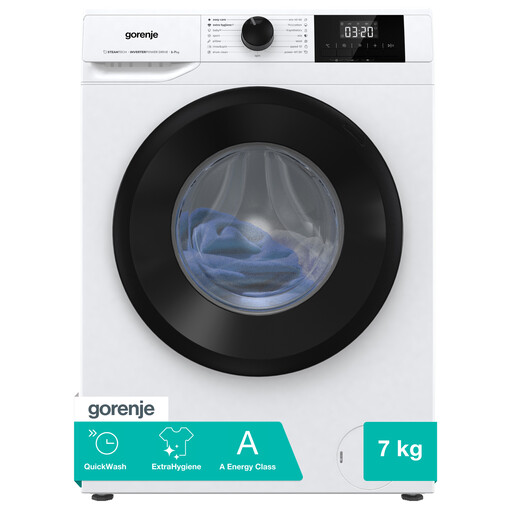 Image unavailable
Consider this freestanding washer if you need to assess a 7 kg model for a depth-restricted position.
1200 rpm spin; energy rating A. Check the installed dimensions, required clearances and a wash setting appropriate to each tablecloth’s care label.
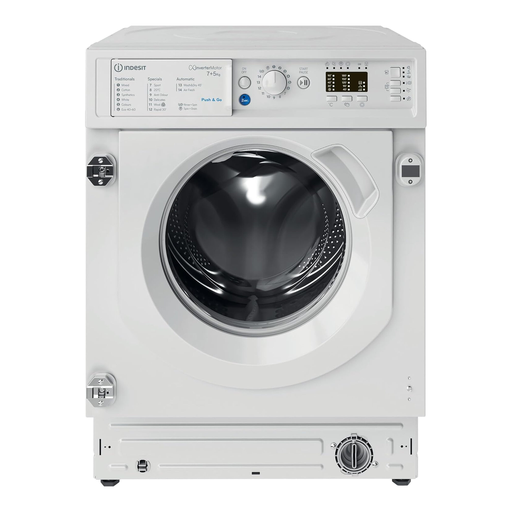 Image unavailable
Consider this model if a compatible integrated position must provide both washing and drying without a separate appliance.
59.5 cm stated width; 7 kg wash and 5 kg dry capacities. A full wash load may need dividing for drying; check cabinet fit, service clearances and suitable tablecloth programmes.
 Image unavailable
Consider this freestanding model when comparing machines for a limited-depth laundry position.
1200 rpm spin; energy rating A. Measure the available width and installed depth, and check for a programme suited to the tablecloths’ care labels.
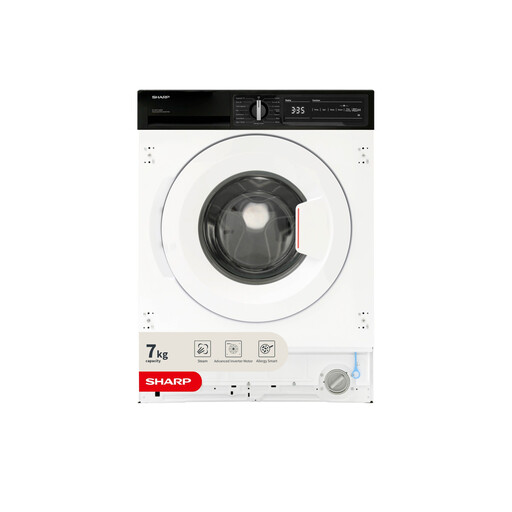 Image unavailable
Consider this 7 kg model only if your kitchen has a suitable integrated installation.
1400 rpm spin; energy rating A. Confirm cabinet and door compatibility, service clearances and a wash programme appropriate to your tablecloths.
Follow the installation instructions for the exact model. As a general measurement guide, allow around 25 mm at either side and roughly 50–150 mm behind a freestanding machine for ventilation, pipes and plugs; also check the space needed to open its door.
Not necessarily: shallow describes depth, not width. Beko UK’s documented 55 cm-deep WTK72042 is 60 cm wide, so measure the gap’s width, height and usable installed depth separately.
Use a quick programme only if the tablecloth care label and the machine instructions make it suitable for that fabric and load. Check the available cotton settings and choose a permitted temperature rather than assuming every cotton tablecloth needs the same cycle.
Check its separate capacity ratings before planning to do so. The Beko BMM5DFO5741W is rated at 7 kg for washing and 5 kg for drying, which means a full wash load would need splitting to stay within its stated dry capacity.