Families washing aprons frequently
If cooking, baking, craft or child-care aprons regularly join the household wash, you need capacity for the combined load and programmes that fit your routine.


Choose a washing machine around the family laundry you normally wash with reusable aprons, rather than the number of aprons alone. Check that it fits the available space, then compare its energy label and the programmes you expect to use; extra capacity or a quick cycle is worthwhile only when its load limits and your aprons’ care instructions suit your routine.
If cooking, baking, craft or child-care aprons regularly join the household wash, you need capacity for the combined load and programmes that fit your routine.
If apron washing adds little to your usual laundry, compare machine size and energy-label information rather than assuming a larger drum is necessary.
If aprons pick up stubborn marks or have coatings and delicate trims, their care labels matter as much as the machine’s available settings. Ordinary household laundry should not automatically be treated as contaminated workplace laundry.
Start with the size of your normal combined load and the space available. Then check fabric-care options, energy-label figures and the conditions attached to any quick programme.
| Concern | What to check | Who this matters to |
|---|---|---|
| Capacity and fit | Compare Eco-programme capacity with your usual combined load. Measure the recess, allowing for plumbing and door clearance. | If aprons usually go in with clothes or household textiles, I need enough drum space without buying a machine that will not fit. Around 33% of consumers put capacity and physical fit first. |
| Stains and fabric care | Check each apron’s care label against the available temperatures and programmes; consider how you will pre-treat stubborn marks. | When an apron has stains or a coating, I want a permitted wash that respects its fabric limits. For around 27% of consumers, stain handling and fabric care are the primary concern. |
| Repeated-use efficiency | Compare the A–G energy class and product-specific energy-label figures, including consumption per 100 Eco 40–60 washes and programme duration. | If I run family laundry often, I want to understand the energy use of a suitably sized machine, not judge it by its letter rating alone. Running-cost considerations come first for around 20% of consumers. |
| Turnaround and convenience | Check a quick programme’s permitted load and conditions, along with spin options and noise information relevant to your home. | When aprons are needed again soon, I need a shorter cycle that accepts the load and fabric I intend to wash. Around 20% of consumers prioritise turnaround and household convenience. |
Aprons may take up little of a combined load. Energy Saving Trust notes that larger appliances often use more energy even when they have the same efficiency rating.
Size the machine for the laundry you normally wash together, and compare its Eco-programme capacity rather than apron count alone.
Duration and load limits belong to specific programmes. For example, Beko describes a 28-minute wash for up to 8 kg and a separate 14-minute programme for 2 kg on its BMN3WT3841.
Check the exact model’s programme table and the apron care label before relying on a short cycle for a particular load.
Energy Saving Trust advises against overloading: laundry needs room to move, and a tightly packed drum can wash less effectively.
Use rated capacity as an upper limit, not a reason to compress bulky items into the drum. Split a load when there is too little room for movement.
A load that needs washing again also takes more time and uses another cycle.
A suitable capacity does not establish that the machine will fit its recess or connect safely. Hose space, door clearance and correct installation also matter.
Measure before ordering and follow the exact machine’s installation instructions, including transit-bolt removal, hose routing and levelling. Use a qualified installer where the required connections cannot be provided safely.
Bosch has 8 kg and 9 kg front-loading examples relevant to families comparing conventional freestanding machines.
Beko’s cited 8 kg and 9 kg freestanding models are relevant when a stated quick-programme load matters.
Miele’s WED385 WCS is a 9 kg option for households considering additional programme and connected features.
These 8 kg and 9 kg machines are choices to consider when reusable aprons are washed alongside ordinary family laundry. Compare each model’s dimensions and permitted programmes with your space, usual loads and apron care labels.
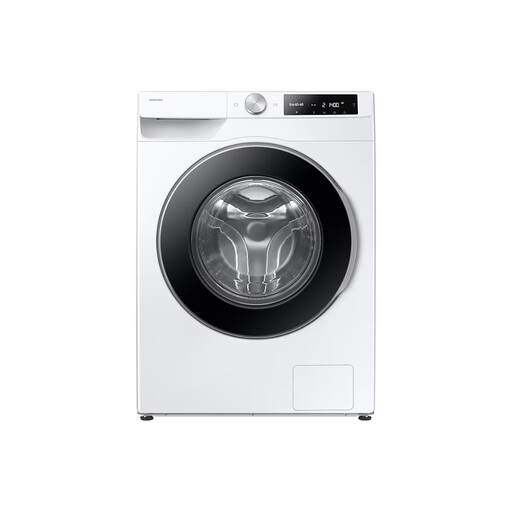 No image available
Consider this model if aprons normally join a larger family load and you also want to assess shorter-wash options.
The product name states 9 kg capacity, 1400 rpm and an A energy rating. Check the manual for the load, fabric and soil conditions of any quick or stain-focused programme before using it for aprons.
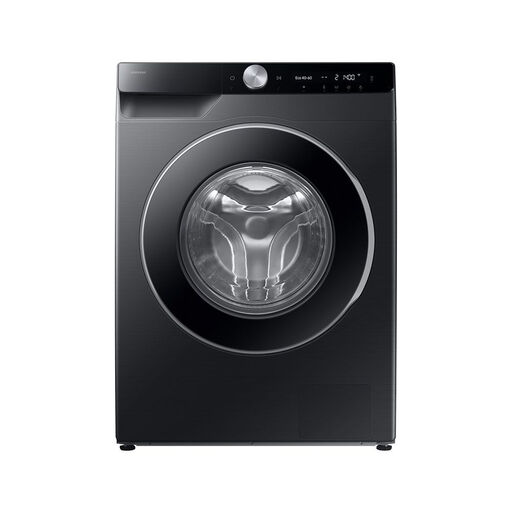 No image available
This is a 9 kg option for combined family laundry when a defined smaller quick-wash load would also be useful.
The product name states 1400 rpm and an A energy rating. The described 39-minute Super Speed cycle is for 5 kg, not a confirmed full 9 kg load; check its other conditions and the apron care label.
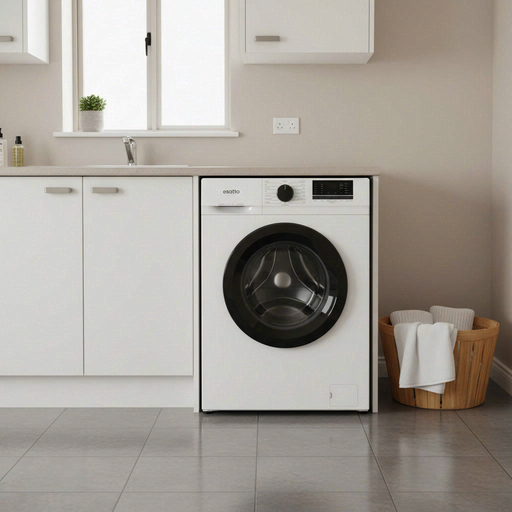 No image available
Consider an 8 kg machine if that capacity matches the laundry you usually wash with aprons.
The product name states 1400 rpm and an A energy rating. If the described 15-minute quick wash matters to you, confirm its permitted load and fabric conditions before relying on it.
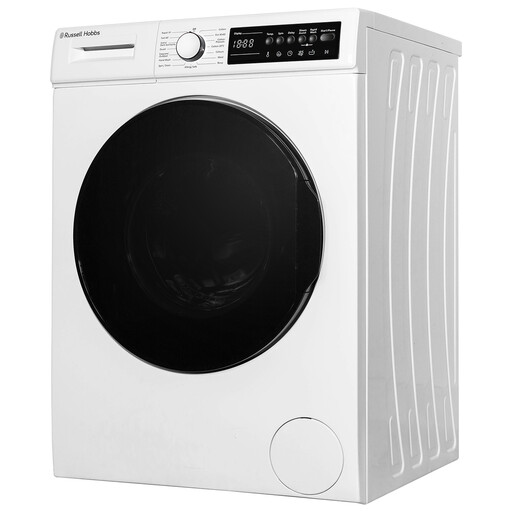 No image available
This 9 kg model is worth considering when aprons form part of larger family loads and adjustable wash settings matter.
The product name states 1400 rpm and an A energy rating. Check the permitted load and fabric conditions for the described Rapid 15 programme; follow each apron’s care label when adjusting temperature or spin.
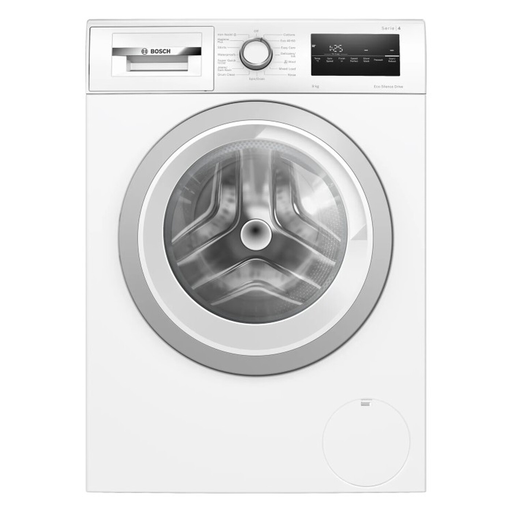 No image available
Consider this model for aprons washed with a larger ordinary household load, rather than for an assumed apron-specific setting.
The product name states 1400 rpm and an A energy rating. Check the programme-specific load and duration before relying on the described SpeedPerfect time-saving option.
No: the apron’s care label sets the fabric limits. Health and Safety Executive advice about washing potentially contaminated fabrics at the highest temperature recommended for that fabric addresses a particular contamination risk; it is not a temperature rule for ordinary family aprons.
No. Energy Saving Trust advises comparing product-specific energy-label information and choosing a size suited to your loads; a larger appliance can use more energy even when it carries the same rating. The programmes you actually run also matter.
Check the machine’s dimensions, access and required water, drain and electrical connections before ordering. Electrolux’s installation guidance includes removing transit bolts, avoiding kinked hoses and levelling the appliance; follow the instructions for your exact model and use an installer if you cannot provide the connections safely.
For washing machines within the scope of UK energy-information rules, GOV.UK states that an energy label must be displayed at the point of sale, including online. Use the label to compare the specific machines you are considering rather than relying on an efficiency letter in a product title alone.