
24/7 Customer Support

Free returns

Same-day & Next-day Delivery

Quality Guaranteed

Unlock Your Welcome Offers: FREE Delivery | Up to 80% OFF | Free 30-day JoyPlus trial
Download the APP
Buying a new appliance can seem straightforward until you compare capacity, energy ratings, spin speed, programmes and installation types. Marketing language can also make similar machines appear very different.
For UK households, the main risks are buying a drum that is too small, overlooking the difference between washing and drying energy ratings, or discovering that the appliance does not fit the intended space. This guide explains the specifications that matter and highlights suitable options for different household needs.
A washer dryer may be advertised as an 8kg washer dryer, but its drying capacity could be only 5kg. This means you can wash 8kg of laundry, but must remove part of the load before drying.
For example, the Candy Smart Pro Inverter Washer Dryer CSOW4856TWM6-80 has an 8kg wash and 5kg dry capacity. Its combined wash-and-dry cycle is listed at 550 minutes, so it may suit households that value having two functions in one appliance, but users should plan around the smaller drying load.
A 15-minute or 30-minute programme is generally intended for smaller, lightly soiled loads. It may not provide the same cleaning time, rinsing or capacity as a full cotton or mixed-fabric cycle.
Check the stated load limit for the quick programme. A short cycle can be useful for gym clothing or a few everyday items, but it should not be judged against a full-capacity wash.
A washing machine with an A-rated washing cycle may have a different rating when it also dries clothing. The Candy model above is rated A for washing and D for combined washing and drying. The CHiQ JKW85882HB is similarly listed as A for washing and D for wash-and-dry use.
Always compare the energy consumption figures for the function you expect to use most. A washer dryer can save floor space, but frequent drying may use considerably more energy and water than washing alone.
Capacity should match your normal laundry habits rather than occasional maximum loads. Overloading can reduce cleaning performance, while consistently washing very small loads in a large drum may not make efficient use of space or resources.
A 1400rpm washing machine extracts more water during the final spin than a 1000rpm or 1200rpm model, potentially reducing air-drying or tumble-drying time. It does not necessarily mean every programme spins at 1400rpm, so check the selected cycle and spin-drying class.
For delicate garments, a lower spin speed may be more appropriate. For towels and cottons, higher-speed spinning can be useful, particularly in homes where indoor drying is necessary during wet UK weather.
Measure the full space, including pipework, ventilation and door clearance. A listed depth may not include every protruding control or the open door.
A slim-depth washing machine such as the CHiQ JKW85883G measures 520mm deep. By contrast, the CHiQ JKW105883G 10kg model is listed at 577mm deep. Both are freestanding, but the larger drum requires more front-to-back space.
An integrated washing machine is designed to sit behind a kitchen cabinet door. The Hoover HBWS 48D1W4J-80 measures 820mm high by 596mm wide and requires a suitable cabinet door and qualified installation. A freestanding washing machine is easier to position in a utility room or standalone space, but its exterior remains visible.
Look for the official energy label, which shows consumption per 100 cycles and water use per cycle. An energy-efficient washing machine may reduce running costs, but actual costs depend on programme choice, temperature, load size and electricity prices.
An inverter washing machine uses a brushless or electronically controlled motor. Product specifications may associate this design with reduced friction or quieter operation, but compare the stated noise level in decibels rather than relying on the motor description alone.
A smart washing machine or washer dryer can offer Wi-Fi, Bluetooth, cycle notifications and additional programmes through an app. These features are useful if you want remote monitoring, but they should not outweigh capacity, dimensions and core wash performance.
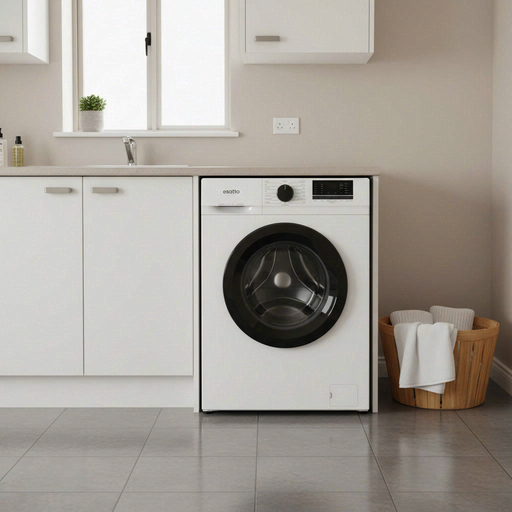
Why This Fits Their Persona: A straightforward choice for a couple or small family wanting everyday capacity without app connectivity or complex controls.
Its 8kg capacity and 15-minute quick wash are clearly specified, helping distinguish a regular cycle from a small-load rapid programme.
An A energy rating, 23 programmes, 1400rpm spin speed and a 500mm listed depth.
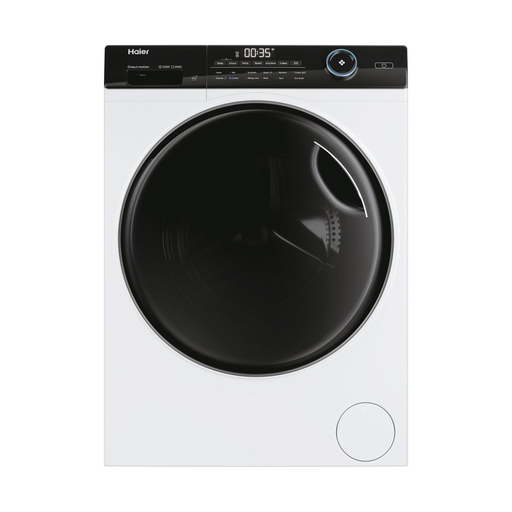
Why This Fits Their Persona: Suitable for households that value quieter operation, connected controls and a compact depth for a modern kitchen or utility room.
The specification separates its 8kg wash capacity from programme functions, while the A rating applies to washing rather than drying.
8kg capacity, 1400rpm spin speed, Wi-Fi and Bluetooth connectivity, 497mm depth and a stated 70dB spin noise level.
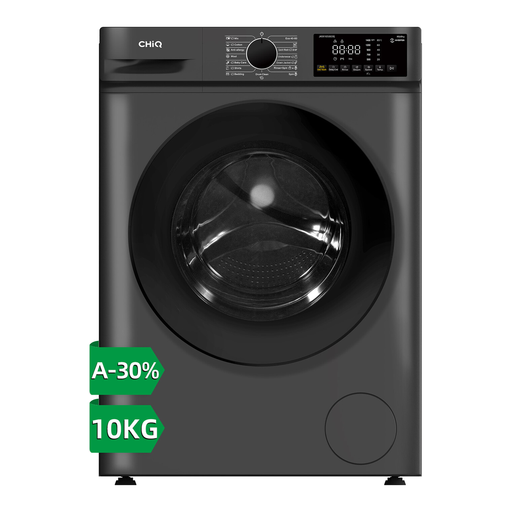
Why This Fits Their Persona: Designed around larger weekly loads, bulky bedding and households that prefer fewer wash cycles.
Its 10kg drum, 577mm depth and 1400rpm spin speed are stated clearly, so shoppers can check both room size and laundry volume before ordering.
16 programmes, steam programme, 46kWh per 100 wash cycles and 51 litres of water per wash, according to the listed specifications.
We have compiled a complete, real-time list of products that fully satisfy these strict selection criteria and UK safety regulations.
A washer dryer is useful where floor space is limited or plumbing allows only one appliance. Models such as the Haier I-Pro Series 5 Washer Dryer offer 8kg washing and 6kg drying, while the CHiQ JKW85882HG provides 8kg washing and 5kg drying with a listed 520mm depth.
Separate appliances generally allow washing and drying at the same time and may offer larger drying capacity. However, they require additional floor space, ventilation planning and suitable connections. Compare the total installation area rather than the width of the appliance alone.
Lifespan depends on load frequency, installation, maintenance and correct use. Avoid overloading, clean the detergent drawer and door seal, check the pump filter as instructed and leave the door ajar after use to ventilate the drum. Warranty terms vary, so check whether cover applies to parts, labour or only the motor.
It can be useful if you air-dry clothes indoors or want to reduce tumble-drying time. The advantage depends on the spin-drying class and programme settings, so it should be considered alongside noise, energy consumption and fabric-care requirements.
Their running cost depends on how often the drying function is used. Check the separate wash-only and combined wash-and-dry figures on the energy label. Washing and air-drying may use less electricity, while a washer dryer offers convenience and saves the space required for a separate tumble dryer.