Housemates managing regular workwear loads
When workwear and ordinary laundry compete for one machine, capacity matters alongside how long a suitable full-load programme occupies it.


For a shared house with regular, substantial loads of washable workwear, a freestanding 9 kg machine is a useful starting point if it fits the space and has a programme suitable for the loads you need to wash. Give a full-load rapid programme more weight when access to the machine causes queues, or a stain programme when ordinary marks are the main issue; neither replaces the garment-care instructions or an employer's procedure for potentially contaminated clothing.
When workwear and ordinary laundry compete for one machine, capacity matters alongside how long a suitable full-load programme occupies it.
A stated stain programme may be worth considering for washable clothing with ordinary dirt or marks. Check the garment-care label; stain treatment is not a contamination-control procedure.
Compare energy-label information and measure the installation space, including access around pipes and the machine door, before committing to a larger drum.
Start with the size of the loads and the available space, then check whether the programmes you would actually use suit the workwear. Compare energy-label figures between machines of a similar capacity rather than relying on the letter class alone.
| Concern | What to check | Who this matters to |
|---|---|---|
| Shared-load capacity | Check drum capacity and the permitted load for the programme you plan to use; measure the machine's depth as well as its width. | When several housemates' clothes create a backlog, I need enough usable capacity without choosing a machine that will not fit. Around 33% of consumers put shared-load capacity and queue reduction first. |
| Stains and fabric care | Match the exact stain programme and temperature to garment-care instructions. For potentially contaminated workwear, establish the employer's laundering procedure before domestic washing. | If my washable workwear regularly picks up everyday marks, I want a programme appropriate for the fabric, not a hygiene claim I cannot rely on for contamination control. Stains and fabric care come first for around 27% of consumers. |
| Turnaround between shifts | Confirm whether a rapid programme permits a full load and whether its fabric and soil conditions suit the workwear. | With little time between shifts and one machine to share, I need a suitably short wash that can take the load waiting to be done. Around 20% of consumers prioritise that turnaround. |
| Running information and fit | Compare label information on energy, water, duration and noise; check appliance dimensions against pipes, plugs and installation instructions. | If we split utility bills or have a tight utility space, I need a machine whose running information I can compare and whose installation will work in the room. Those costs and space constraints are the primary concern for around 20% of consumers. |
Stain programmes address ordinary soiling under their stated conditions. The Health and Safety Executive says laundering and handling of potentially contaminated fabrics must account for cross-infection risks.
Follow the employer's risk assessment and laundering procedure, as well as the garment-care instructions, before deciding whether workwear can go into a domestic machine.
Manufacturer dimensions for the 9 kg models discussed here differ, and hoses, plugs and door opening need space beyond a machine's headline dimensions.
Measure the usable opening and delivery route, then follow the chosen model's installation instructions for clearance.
Rapid programmes can have different permitted loads and fabric conditions. A short cycle intended for a smaller or lightly soiled load may not clear a shared-house queue.
Check the programme table for load, fabric and soil conditions before treating the advertised cycle time as your likely turnaround.
Energy Saving Trust notes that larger appliances can use more energy even when they share a rating. Label figures also relate to specified programme conditions, not every wash you might select.
Compare energy and water information, programme duration and noise alongside capacity, then consider which programmes the household expects to use.
These examples show features to compare on named models, not claims about every machine from each brand.
Bosch UK lists the WGG24400GB as a 9 kg, 1400 rpm model with Anti Stain and Speed Perfect.
Beko UK states that its 9 kg BM1WT3921 has a 28-minute full-load Quick Programme.
Hotpoint UK specifies an Anti-stain 40 cycle and a Full Load 45' programme for the 9 kg NSWM 946 W UK.
Miele UK lists the WWD380 WCS as a 9 kg, 1400 rpm machine with QuickPowerWash and SteamCare.
Samsung UK lists the WW90CGC04DAEEU as a 9 kg, 1400 rpm model with SmartThings features.
These washing machines offer stated capacities of 9 kg or 11 kg for households assessing regular shared loads. Compare the permitted programmes and installation requirements for the particular model; a rapid or steam feature alone does not establish that it suits your workwear.
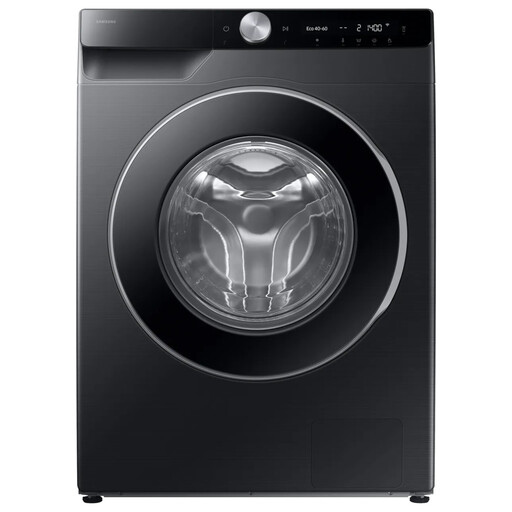 Image unavailable
Consider its 11 kg capacity if the household regularly has substantial shared loads. The product title states 1400 rpm and an A rating; if its stated 39-minute full-load programme is important to you, check the permitted fabrics and soil level before relying on that time.
Measure the installation space and compare the energy-label figures. A steam feature does not establish a procedure for potentially contaminated workwear.
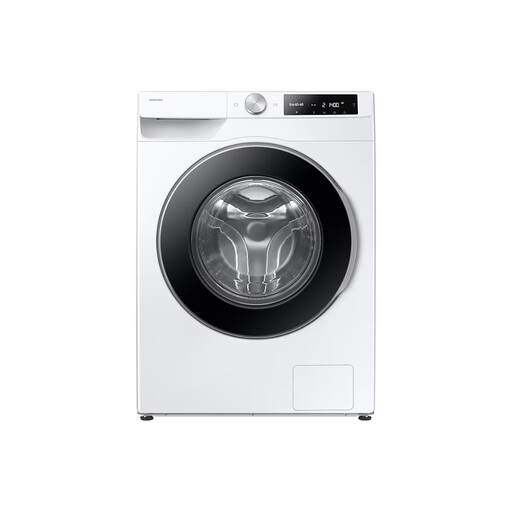 Image unavailable
Its 9 kg capacity is worth considering when housemates generate regular loads. The product title states 1400 rpm and an A rating; check whether the stated 39-minute full-load programme accepts the fabrics and soil levels in your workwear.
Confirm installation clearance and compare energy-label figures. Do not treat Bubble Soak or steam claims as a workplace contamination procedure.
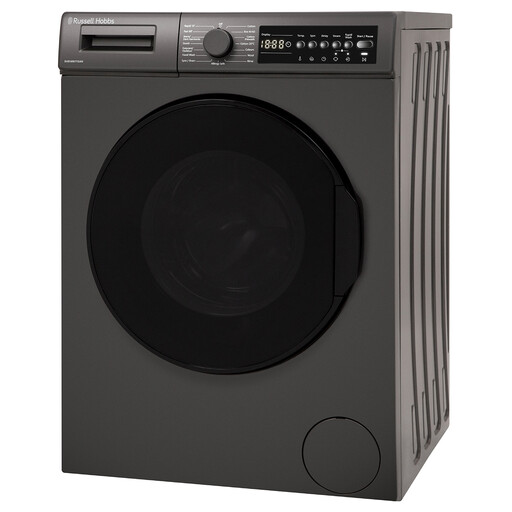 Image unavailable
The stated 9 kg capacity suits consideration for recurring shared loads; the product title also states 1400 rpm and an A rating. If a short wash is central to your choice, check the permitted load and fabrics for Rapid 15 rather than assuming it handles a full drum.
Measure the space and access route before ordering. Steam-assist and Anti-Allergy features are not substitutes for workplace laundering instructions.
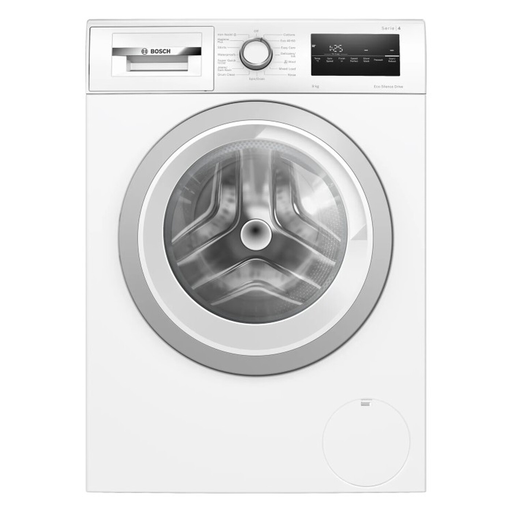 Image unavailable
Its stated 9 kg capacity makes it relevant to regular shared loads; the product title also states 1400 rpm and an A rating. If you plan to use SpeedPerfect to shorten washes, check which programmes and loads permit it.
Compare energy-label figures and installation requirements for this exact model. Do not assume a cycle-shortening feature is a full-load rapid or dedicated stain programme.
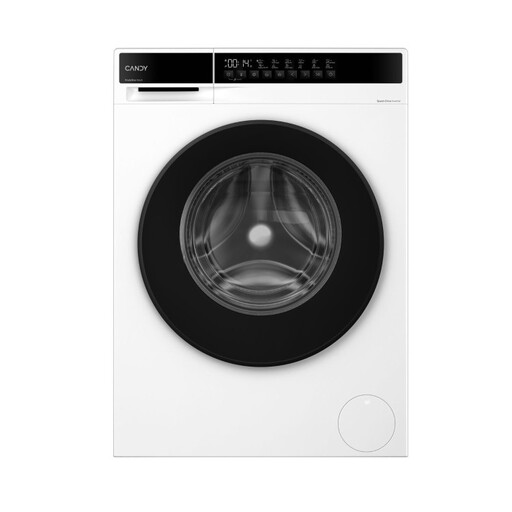 Image unavailable
The stated 9 kg capacity makes it an option to assess for regular shared loads, and the title specifies a 1400 rpm spin. Its described 30-minute quick wash is for lightly soiled items; check the permitted load and fabrics before counting on it to clear a workwear queue.
Check the exact energy label before comparing running information, and measure the space with installation clearance in mind.
A 9 kg machine is a useful starting point when several occupants regularly produce substantial washable loads. Check the permitted load of the programme you would use, along with appliance depth and space for pipes and the door, before choosing by drum size.
A quick wash can help if it accepts the actual load and suits the workwear's fabric and soil level. For queues involving full drums, look for a stated full-load rapid programme rather than assuming a small-load quick cycle will do the same job.
Do not put potentially contaminated workwear into mixed household laundry without following the applicable employer procedure. The Health and Safety Executive says laundering and handling of fabrics that may be contaminated with body fluids must consider cross-infection risks; the workplace risk assessment should determine whether domestic laundering is appropriate.
Compare the energy-label information for machines of a similar capacity, including energy use, water use, programme duration and noise as well as the A–G class. Energy Saving Trust cautions that a larger appliance can use more energy despite having the same letter rating.
Measure the usable space around pipes and plugs, the delivery route and the clearance needed to open the machine door. Allow around 25 mm at either side and roughly 50–150 mm behind a freestanding machine; follow the chosen model's installation instructions where they call for different clearance.