Residents with a tight laundry space
If the washer must fit a narrow position, measure the appliance space and the route into it. Allow for connections and a usable door opening, not just the width of the gap.


Start by checking whether a washer can be installed in the space available, including room for connections and the door to open. A slim freestanding washer is a practical choice when depth is tight; consider an integrated washer only with a compatible cabinet, or a washer dryer when the lack of drying space matters more than its smaller drying load.
If the washer must fit a narrow position, measure the appliance space and the route into it. Allow for connections and a usable door opening, not just the width of the gap.
Frequent small loads make fabric-care instructions and programme choice worth checking. Choose drum capacity for the rest of the household laundry too, rather than for table napkins alone.
If there is no practical place to air-dry laundry, a washer dryer may address a bigger constraint than washing capacity. Plan around its separate, often lower, drying capacity.
Establish where the machine can go and how it will connect before deciding whether you need a drying function or a concealed installation. A standard-depth freestanding washer remains an option if its exact dimensions fit without obstructing the space.
| Concern | What to check | Who this matters to |
|---|---|---|
| Fit and connections | Measure height, width and full appliance depth; check hose space, door clearance, cold water, drainage and socket access. | If the laundry position is tight, I need to know the machine can be installed and used without blocking the space. Around 40% of consumers put fit and connections first. |
| Napkin care and load size | Check napkin care labels against the model’s programmes and load instructions, particularly before relying on a quick cycle. | When food-marked napkins are part of my regular laundry, I want a suitable cycle without choosing drum size on that load alone. Napkin care is the primary concern for around 30% of consumers. |
| Drying space | For a washer dryer, compare its separate washing and drying capacities and its wash-and-dry programme information. | With nowhere practical to air-dry, I may accept drying a smaller load than I wash. Around 20% of consumers place drying space first. |
| Energy and disturbance | Compare exact-model energy information on the same programme basis and check the listed noise information and installation instructions. | In close quarters, I want to assess energy use and potential disturbance without overlooking whether the machine fits. These are the leading concerns for around 10% of consumers. |
Depth differs between models described as compact or slim. Beko UK describes its compact category as 50 cm deep, while its discontinued WTK72011 slim-depth example measures 55 cm deep; neither figure establishes the space required by another machine.
Measure the whole position and access route, then check the chosen model’s dimensions and installation instructions, including room for hoses and the open door.
Candy specifies 9 kg washing capacity but 6 kg drying capacity for its CSOW4966TWMB6-80. A wash filled to its rated washing capacity would therefore exceed its rated drying capacity.
Compare both capacities and the combined programme information before deciding whether a washer dryer suits your laundry routine.
Drying a full wash may mean removing some items and running another drying load or finding room to air-dry them.
A short programme is a time option, not proof that it suits every fabric or level of food staining. Beko UK lists a 28-minute programme for its WTK72011 example, but its settings should not be generalised to other models.
Check the napkin’s care label and the chosen washer’s programme instructions, including permitted load and soil levels.
An integrated model must fit the cabinet arrangement and still needs water, drainage and power. A matching appliance width alone does not establish that its furniture door or connections will fit.
Confirm the cabinet opening, furniture-door requirements and connection locations against the exact model’s installation guide.
Beko UK provides compact and slim-depth freestanding examples for homes with limited appliance space.
Bosch UK provides specifications for both freestanding and integrated washing-machine formats.
Candy has washer-dryer options worth considering when space to dry laundry is the main constraint.
These choices cover freestanding washers for a tight laundry position, integrated washers for a suitable cabinet, and an integrated washer dryer where drying space is also limited. Check the installation requirements of the exact model before choosing between them.
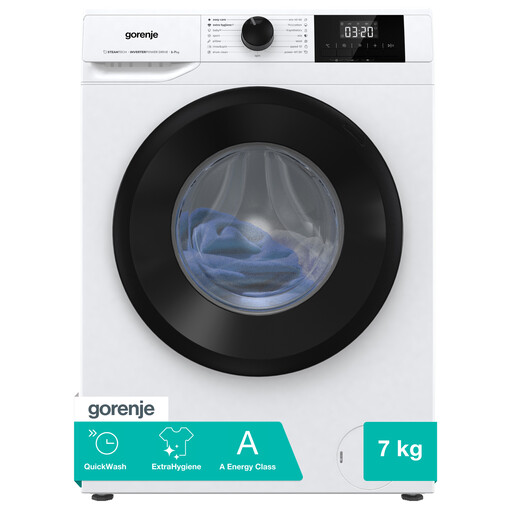 No image available
Consider this freestanding washer if you want a 7 kg machine for regular laundry alongside table napkins.
The product name specifies a 1200 rpm spin speed and an A energy rating. Check the full space needed for hoses and the door, and consult the exact energy label before comparing models.
 No image available
This is another freestanding 7 kg option to assess for a modest household laundry routine.
The product name specifies a 1200 rpm spin speed and an A energy rating. Confirm the installation depth and door clearance at the intended position, and use the napkins’ care labels when choosing a programme.
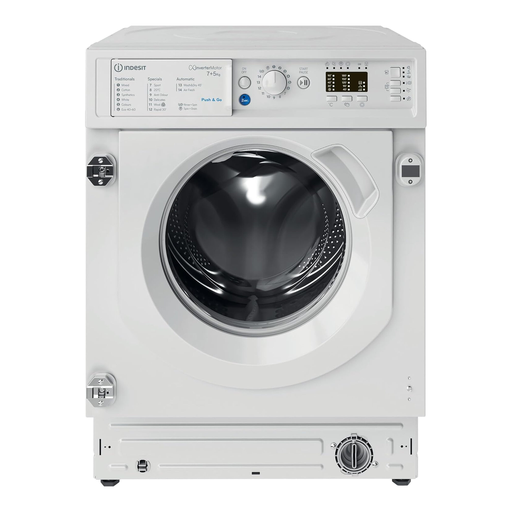 No image available
Consider this combination only if you need both a cabinet installation and an alternative to air-drying.
The product name specifies 7 kg washing and 5 kg drying capacity and a 59.5 cm width. A full rated wash exceeds its stated drying capacity; check cabinet and furniture-door compatibility as well as separate wash and wash-and-dry information.
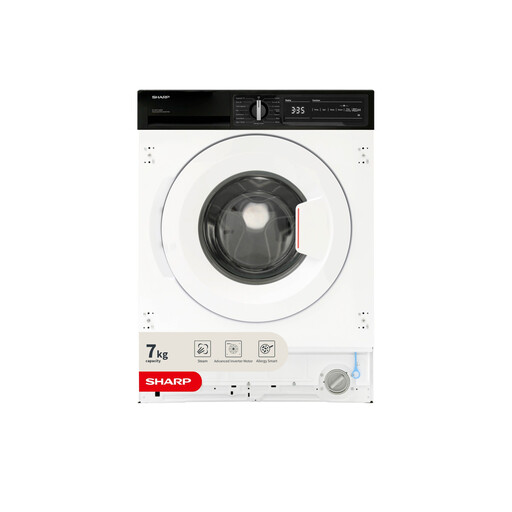 No image available
This integrated washer is relevant if a compatible cabinet is already available and drying can be handled separately.
The product name specifies 7 kg capacity, a 1400 rpm spin speed and an A energy rating. Check the cabinet opening, furniture-door fit and installation clearances before ordering.
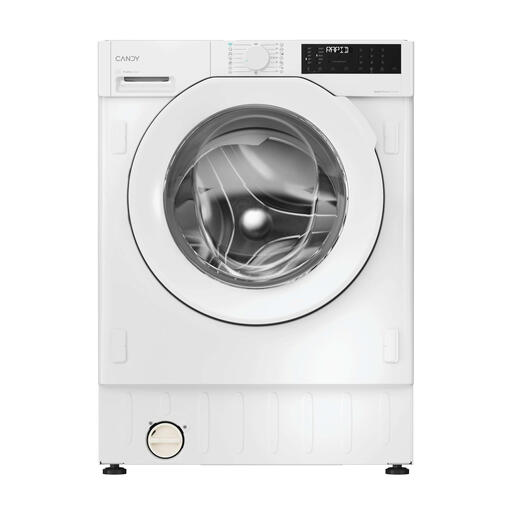 No image available
Consider this integrated model when the household’s wider laundry, rather than napkins alone, calls for a 9 kg machine.
The product name specifies a 1400 rpm spin speed and an A energy rating. Confirm the exact installation depth, cabinet and furniture-door fit, and energy information for this variant.
No larger drum is needed solely because you wash table napkins regularly. Choose capacity for the household’s complete laundry routine and the space available, then follow the napkins’ care labels and the machine’s load guidance.
Confirm the full installation space, a suitable cold-water connection, drainage, socket access and the route into position. Bosch UK’s installation guidance also calls for correct pipe connections and levelling; follow the instructions for the exact machine.
A washer dryer can address limited drying space if its drying load and programmes fit your routine. Candy specifies 9 kg washing but 6 kg drying for its CSOW4966TWMB6-80, illustrating why a full wash may need to be split before drying.
Check the energy label and product information sheet for the exact washing machine or washer dryer you are considering. For a washer dryer, compare wash-only and wash-and-dry figures on their stated programme bases rather than treating them as interchangeable.
Follow the chosen machine’s manual for cleaning and maintenance, whatever the usual load size. Some models offer a dedicated drum-clean programme, but its availability and instructions are model-specific.