Housemates planning a tea-towel routine
Look for clear programme temperatures and conditions so everyone can choose a wash that suits the towel’s care label, rather than assuming the shortest cycle or a programme name answers the question.


Choose a washing machine for the house’s everyday laundry pattern, not tea towels alone: check that it fits the installation space, then compare capacity, programme conditions and energy information. A quick cycle may ease the laundry queue, but it is not automatically suitable for every tea towel or a substitute for a hotter wash when one is appropriate and the fabric permits it.
Look for clear programme temperatures and conditions so everyone can choose a wash that suits the towel’s care label, rather than assuming the shortest cycle or a programme name answers the question.
Compare the load allowed on quick programmes with the loads you normally wash. A short small-load cycle and a full-load quick cycle serve different scheduling needs.
Check the machine’s full dimensions, door clearance and connections before choosing. Published energy information also helps when comparing models intended for frequent shared use.
For shared-house tea towels and ordinary laundry, settle programme suitability and installation fit before deciding whether a faster cycle or a different capacity will make daily use easier.
| Concern | What to check | Who this matters to |
|---|---|---|
| Tea-towel programme | Match the care label to the programme chart’s temperature and load conditions. Keep a drum-clean cycle separate from the cycle used to wash towels. | If I am responsible for the tea-towel routine, I want a wash the fabric permits without mistaking a quick or maintenance cycle for the right wash. Around 36% of consumers put programme and care-label fit first. |
| Capacity and queueing | Compare the rated drum capacity with the load limit and duration of the quick programme you would actually use. | When several housemates need the machine, I want predictable turns without treating a small-load cycle as a full-load option. For around 29% of consumers, capacity and turnaround are the primary concern. |
| Installation and noise | Measure the full space and clearances, then check the inlet, drainage route and the model’s levelling instructions. | If the machine will sit near shared living space, I need it to fit and be installed securely rather than cause avoidable vibration or leaks. Installation and disturbance come first for around 21% of consumers. |
| Energy information | Read the exact model’s energy label and product information sheet; compare the programmes likely to be used, not just the class letter. | With frequent household loads, I want published information I can compare before choosing a machine. Around 14% of consumers make energy information their leading concern. |
An NHS leaflet on laundry associated with patient care distinguishes soiled or infection-associated items from non-soiled laundry. It does not establish a blanket temperature rule for ordinary household tea towels, and hotter washing may conflict with a fabric’s care label.
Read the towel label and the machine’s programme chart. Use a higher-temperature wash where the circumstances call for it and the fabric permits it; do not assume a quick or steam-labelled feature is equivalent.
A quick programme may restrict load size. Beko, for example, describes a 28-minute full-load programme and a separate 14-minute programme for a 2kg load on its BMN3WT3821.
Compare load limit, temperature and duration for the loads your housemates actually plan to wash.
The machine also needs space for its door and connections. Bosch warns that incorrect levelling can cause intense noise and vibration, while an unsecured drainage hose can slip and leak.
Measure the full installation space and follow the exact model’s instructions for clearances, transport-bolt removal, levelling and drainage. Check any installation requirements in the tenancy agreement before arranging work.
The Bosch Series 4 WAN28254GB is an example for households considering an 8kg freestanding machine with a reload function.
The Beko BMN3WT3821 illustrates a shared-laundry choice where clearly differentiated quick-load options matter.
The Hotpoint NSWM 846 W UK is an 8kg option for households comparing named full-load and stain programmes.
The Miele WWB360 WCS PWash&8kg offers another 8kg, 1400rpm model to assess against the house’s laundry routine.
These models offer different capacities and installation formats for shared household laundry. For any tea-towel load, check the exact programme chart against the fabric’s care label before relying on a short or specially named cycle.
 No image available
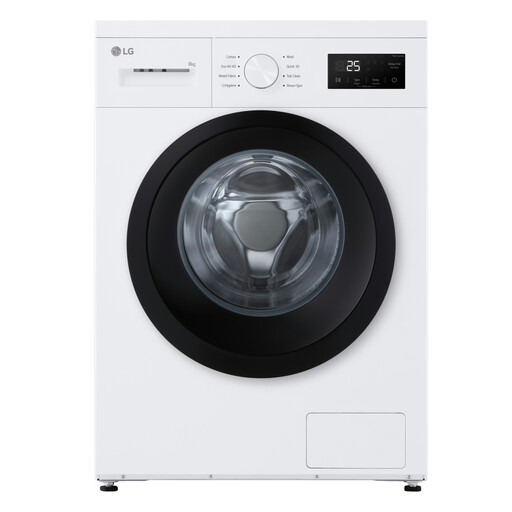
Consider this model if an 8kg freestanding machine fits the household’s usual loads. The listed maximum spin speed is 1400rpm and the energy class is A.
Check the full installed depth, including the door, and confirm the programme temperature and load limit before choosing a tea-towel cycle.
 No image available
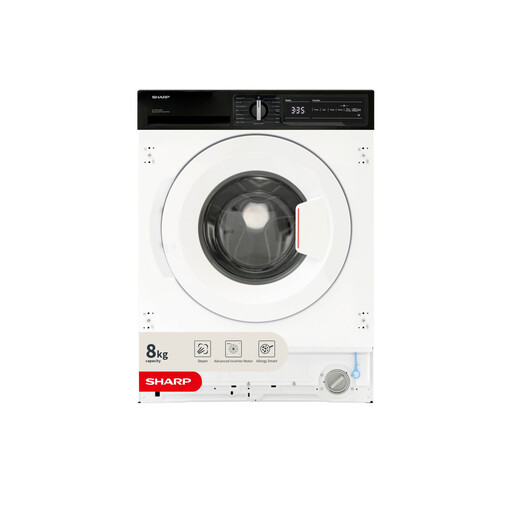
Consider an integrated model where the shared house already has suitable cabinetry and fitting arrangements. This variant is listed at 8kg, 1400rpm and energy class A.
Confirm the cabinet and installation requirements, then check programme temperatures and load limits against the tea towels’ care labels.
 No image available
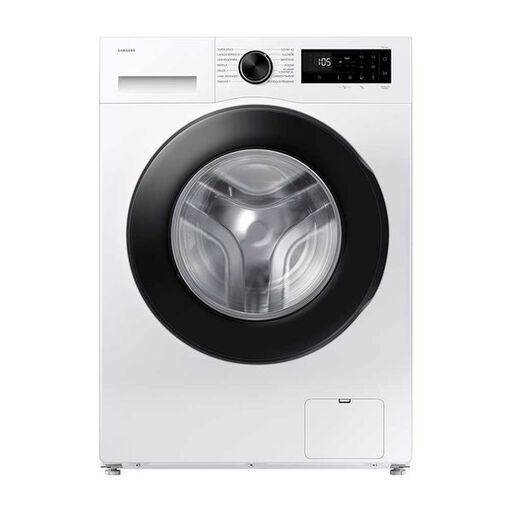
This 8kg, energy class A model is worth checking if shared-house loads usually fit that capacity.
Before planning a quick tea-towel wash, confirm its permitted load, temperature and fabric conditions. Check the complete dimensions and door clearance for the intended space.
 No image available
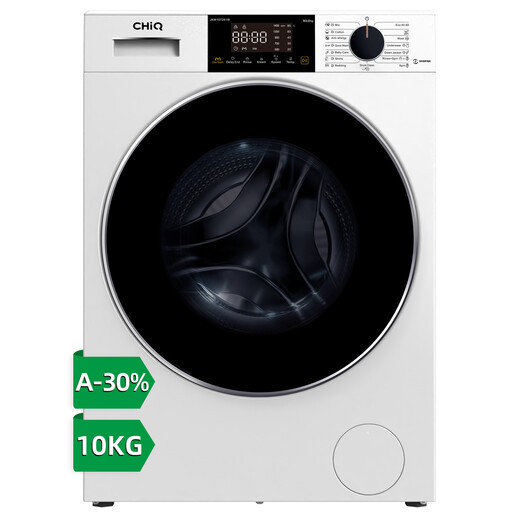
Consider the stated 10kg capacity if the house regularly combines larger laundry loads; capacity alone does not determine whether it fits the space or the tea-towel routine.
Measure the full installed depth and check the programme chart for the load and temperature you intend to use.
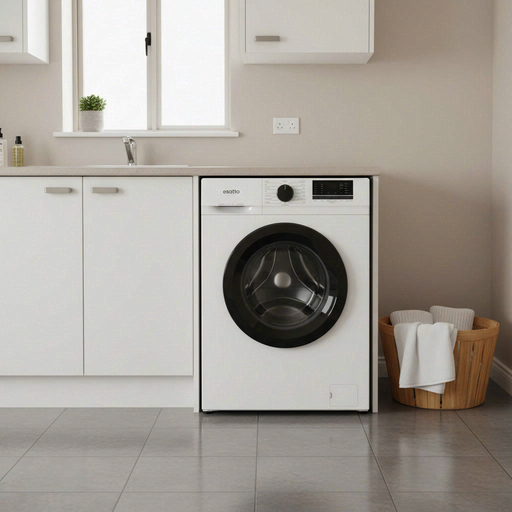 No image available
This 8kg, energy class A model is an option to compare with the house’s normal load size and available installation space.
Check the dimensions and connections, and confirm the wash temperature and load conditions before selecting a programme for tea towels.
No. An NHS leaflet about laundry associated with patient care calls for 60°C or above for specified soiled or infection-associated items when the material allows, while distinguishing non-soiled laundry. Do not turn that guidance into a rule for every household tea towel: follow its care label and choose an appropriate programme for the circumstances.
Not automatically: a quick programme has its own load, temperature and fabric conditions. Beko describes both a 28-minute full-load programme and a separate 14-minute, 2kg option on the BMN3WT3821. Check the exact programme chart before using any quick cycle for tea towels.
Measure the space, check the tenancy arrangements and follow the exact model’s installation instructions. Bosch advises removing transport bolts, levelling the machine and securing drainage; incorrect levelling can cause strong vibration, and a loose drainage hose can leak.
No. Compare the energy label and product information sheet for each exact model, alongside the programmes and loads the household expects to use. The class letter alone does not establish identical energy use across different laundry routines.
Arrange an appropriate electrical-appliance collection or recycling route rather than putting it in ordinary household waste. Check whether the retailer offers removal or whether the local council accepts the appliance for collection.