Shared-house laundry coordinators
You need a drum that suits several residents’ laundry routines without assuming tracksuits, towels and everyday clothes should all go in the same load.


Measure the installation space and use 7–9kg machines as a starting comparison for a shared house; that capacity range suits homes of three to four people, but the right size depends on how residents organise their loads. Before choosing, check each tracksuit’s care label against the machine’s programmes and settings, and compare the full energy-label information and noise figure if the machine will be used near living or sleeping areas.
You need a drum that suits several residents’ laundry routines without assuming tracksuits, towels and everyday clothes should all go in the same load.
You wash synthetic, printed or delicate tracksuits and need programmes and adjustable settings that match the garments’ care labels. Nike UK advises checking those labels and separating synthetic activewear from lint-producing cotton items.
You need to check the appliance bay, access route and connections, particularly if the machine will sit near bedrooms or a communal living area. Bosch UK warns that incorrect levelling can cause substantial noise and vibration.
Start with the space available and the tracksuits’ care labels, then judge capacity and energy-label figures against the way the household actually washes.
| Concern | What to check | Who this matters to |
|---|---|---|
| Shared-load capacity | Compare 7–9kg drums with the household’s usual load sizes and washing frequency. This range suits homes of three to four people. | When several residents need the machine regularly, I want enough room for their laundry without combining fabrics that should be separated. Around 31% of consumers would put shared-load capacity first. |
| Tracksuit care | Match each garment label to the exact model’s temperature, spin and fabric-programme options; check any quick cycle’s permitted load. | If my tracksuits have prints or performance fabrics, I need a suitable cycle rather than assuming a fast wash will do. For around 25% of consumers, garment care would be the primary concern. |
| Fit and disturbance | Measure the bay and access route, allow for connections, and compare noise information. Check the installation instructions and any property-approval requirements. | With the machine close to a bedroom or shared living space, I care most about whether it fits and can be installed without avoidable vibration. That would come first for around 25% of consumers. |
| Energy and water information | Compare the A–G class alongside Eco 40-60 energy, water, capacity, duration and noise figures on a consistent basis. | When the household runs frequent cycles, I want to understand what the labelled programme uses before choosing a machine. Around 19% of consumers would prioritise that information. |
An 8kg or 9kg rating does not tell you whether the appliance will pass through the property, fit beneath the worktop or leave room for hoses and the door. Integrated machines also need a suitable cabinet arrangement.
Measure the installation bay and access route, then compare them with the exact model’s dimensions and installation instructions.
Tracksuits can have different fabrics, prints and care instructions. Nike UK advises checking each garment label and separating synthetic activewear from lint-producing cotton items.
Check the label first, then consult the machine’s programme table for a suitable cycle and permitted temperature and spin settings.
Energy Saving Trust notes that appliance size matters: a larger machine can use more energy even when it has the same rating as a smaller one.
Compare the full energy label, including the Eco 40-60 energy and water figures, rated capacity, duration and noise information. Choose a washing programme that also suits the garments.
Bosch UK warns that incorrect levelling can cause substantial noise and vibration, while an unsecured drainage connection can create a risk of leakage.
Follow the exact model’s installation instructions, including transport-bolt removal, levelling and securing the water and drainage connections.
Relevant when comparing model-specific quiet-wash features or an integrated installation.
Relevant to households considering an 8kg freestanding machine with a short programme.
Relevant where a shallower machine and a delicate-garment option are important.
Relevant when comparing the controls and rapid programmes of specific 8kg freestanding models.
These machines offer 8kg and 9kg starting points for shared-house laundry, alongside an 11kg option to consider only if larger coordinated loads suit the space and routine. Match any model’s programmes to your tracksuits’ care labels before ordering.
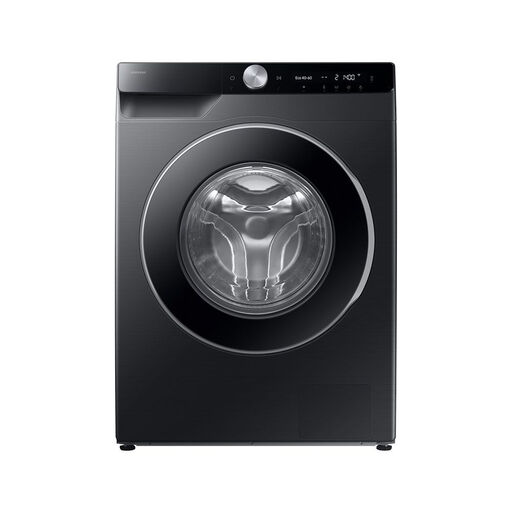 No image available
Consider this 9kg model if residents regularly coordinate larger loads, while keeping tracksuits separated when their care instructions call for it.
The product name states a 1400rpm spin speed and A energy class. Check the exact programme table, garment-care settings and installation dimensions before choosing.
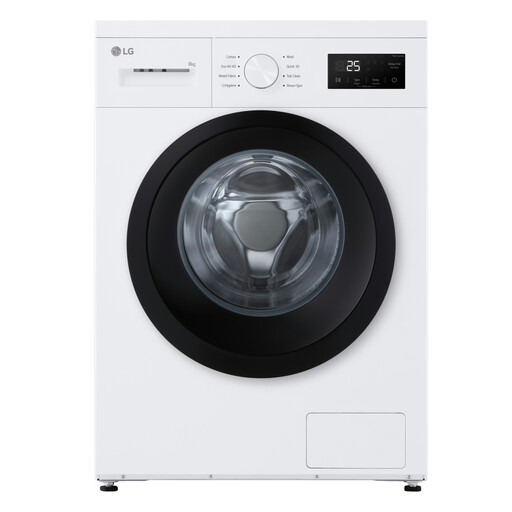 No image available
This model is worth considering where an 8kg drum and a shallower product depth suit the kitchen and the household’s separated laundry loads.
LG UK lists a 470mm product depth and a delicate-garment option; its Quick 30 programme is limited to loads of up to 2kg. The product name states 1400rpm and an A energy class. Check the installed clearance and each tracksuit’s care requirements.
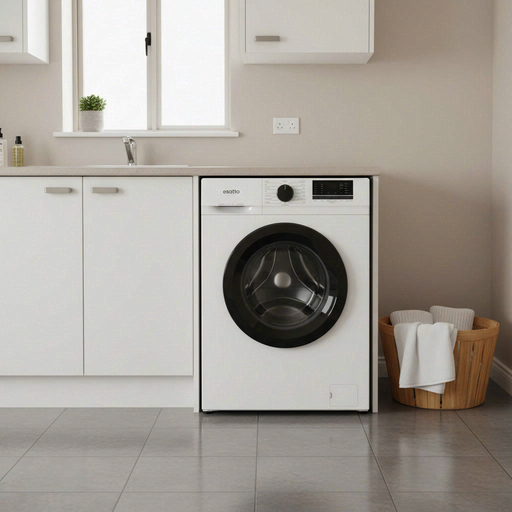 No image available
An 8kg capacity may suit a shared house that usually washes tracksuits in smaller, separated loads.
The product name states a 1400rpm spin speed and A energy class. Check the exact programme and care settings, along with the permitted load and conditions of any short cycle.
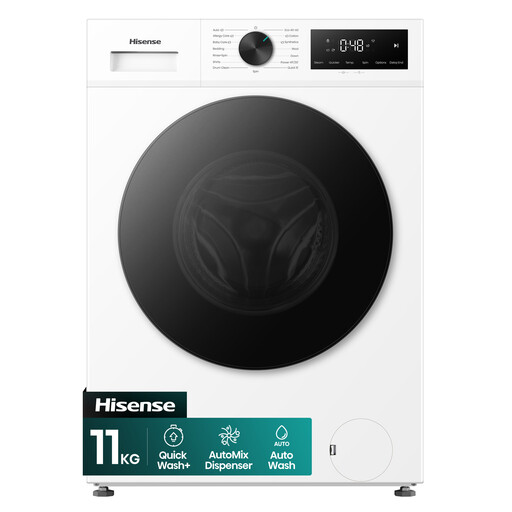 No image available
Consider the larger 11kg drum only if the household routinely has suitable coordinated loads and enough installation space; extra capacity does not justify mixing tracksuits with incompatible fabrics.
The product name states a 1400 spin-per-minute speed and A energy class. The listing specifies a Euro/Schuko plug, so confirm the intended UK connection and installation arrangements before buying. Check the programme settings against each garment label.
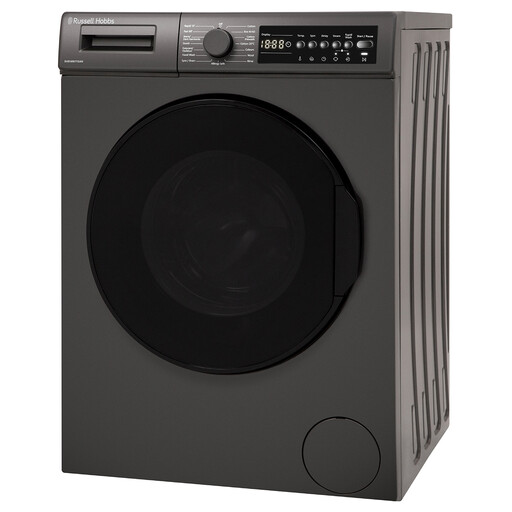 No image available
The 9kg capacity offers a comparison point for a household that sometimes coordinates larger loads, provided the machine fits the intended space.
The product name states a 1400rpm spin speed and A energy class. Check the exact programme table for your tracksuits and the permitted load of any rapid cycle; the stated depth is 60.9cm before allowing for the installation arrangement.
Compare 7–9kg machines as a starting point, then choose according to the household’s actual load sizes and available space. that range suits homes of three to four people; a larger drum does not remove the need to separate garments whose care instructions differ.
No: the garment label and the programme’s permitted load and settings must both suit the tracksuit. LG UK, for instance, limits the F4A10S8NWK’s Quick 30 programme to loads of up to 2kg, rather than a full shared-house load.
Compare the A–G class alongside the model’s energy, water, capacity, duration and noise information, using the same labelled programme when comparing machines. GOV.UK says in-scope products must display an accurate energy label at the point of sale, including online; the letter alone does not tell you whether a programme suits a particular tracksuit.
Measure the space and access route, confirm whether the position requires a freestanding or integrated machine, and follow the exact model’s installation instructions. Bosch UK advises removing transport bolts, levelling the appliance and securing drainage; check the tenancy agreement and obtain any approval needed before altering the property.
Check the tracksuit labels and separate the loads where the fabric-care instructions call for it. Nike UK advises keeping synthetic activewear apart from cotton items that can shed lint onto it; the appropriate machine programme still depends on the individual garments.