Apron users with limited appliance space
If space is tight, drum capacity is only part of the decision. Check the machine’s depth and height alongside its door swing, pipework position and route through the flat.


For washable aprons and modest everyday loads, a freestanding 7kg washer is a useful starting point if the machine, delivery route and open door all fit your flat. Choose an integrated machine only for a compatible cabinet opening; consider a washer-dryer if drying space is the greater constraint, but check its drying capacity separately from its wash capacity. In every case, match programmes to the apron’s care label and consider spin noise before buying.
If space is tight, drum capacity is only part of the decision. Check the machine’s depth and height alongside its door swing, pipework position and route through the flat.
If aprons regularly need washing, look for programmes that suit their care labels and your usual soil levels. A short cycle is useful only when its permitted load and settings suit the aprons you wash.
Where laundry runs close to living or working areas, compare stated spin-noise figures and available spin settings, then allow for a stable, level installation.
Choose it when: You have a suitable appliance position and mainly wash aprons alongside modest household loads.
Allow for: Its visible position and possible spin vibration; Beko’s washing-machine guidance notes that a faster spin can leave less moisture in laundry while producing more noise.
Choose it when: The flat has a compatible integrated-appliance cabinet opening and you want the machine behind a kitchen door.
Allow for: Cabinet and door compatibility, which make placement less flexible than for a freestanding machine.
Choose it when: Finding somewhere to dry aprons is a bigger difficulty than accommodating the appliance.
Allow for: A smaller combined-cycle load. Bosch specifies 7kg washing but 4kg wash-and-dry capacity for its WKD28543GB model, so a full wash may need splitting before drying.
Start with the space and installation type, then check whether the programmes suit your aprons and whether spinning will disrupt the flat.
| Concern | What to check | Who this matters to |
|---|---|---|
| Fit and capacity | Compare exact height, width and depth with the appliance space; measure access and door-opening clearance. | If the machine cannot get into my flat or its door cannot open properly, its drum size will not help. Around 36% of consumers put fit and practical capacity first. |
| Apron care and stains | Check each apron’s care label against programme temperature and action; confirm any quick-cycle load limit. | I wash aprons often and need settings that suit their fabric as well as the stains on them. For around 29% of consumers, compatible apron care is the primary concern. |
| Spin disruption | Compare declared spin noise for the exact models and check whether spin speed can be adjusted. | With laundry close to where I work or rest, I want to limit disturbance without overlooking how wet the load will be afterwards. Around 21% of consumers place spin disruption first. |
| Drying and turnaround | Compare wash-only with wash-and-dry capacity, and check short-cycle load limits. | I have little room to air aprons and sometimes need them ready again quickly. Getting them washed and dried is the leading need for around 14% of consumers. |
A 7kg label says nothing about whether the machine will pass through your hallway, clear pipework or let its door open in the intended position.
Measure the appliance space and delivery route, then compare them with the exact model dimensions and required installation clearances.
A poor fit can mean a failed delivery or changes to the planned installation.
Bosch specifies 7kg wash capacity but 4kg wash-and-dry capacity for its WKD28543GB washer-dryer. A full wash therefore exceeds that model’s combined-cycle capacity.
Read both capacity figures and plan how you would dry any items removed from a full wash.
Splitting a load can take another drying cycle.
A programme’s temperature or action may not suit every washable apron. Hotpoint’s cited anti-stain programme runs at 40°C, but the apron’s own care label determines whether that setting is appropriate.
Sort aprons by their care instructions and use a programme only when its settings suit the fabric and soil level.
Electrical Safety First warns that a washing machine’s electrical load can overload an extension lead used with other large appliances, creating a fire risk.
Check the planned fixed socket arrangement and the machine’s installation instructions before ordering; seek qualified help if the connection is unsuitable.
These brands offer useful examples of the formats and features to compare; check the specifications of the particular machine you intend to buy.
Beko positions its 7kg washing-machine range for smaller households and compact spaces, with freestanding and integrated options.
Bosch provides examples of both a 7kg freestanding washer and the capacity trade-off involved in a washer-dryer.
Hotpoint has cited 7kg freestanding and integrated models with stain-focused programme options.
Miele lists front-loaders in 8kg, 9kg and 10kg capacities, including models with quick-wash and fabric-care features.
These machines cover freestanding washing and an integrated option for flats with a compatible cabinet opening. Compare their fit and apron-care settings individually; the list is not a washer-dryer selection.
 No image available
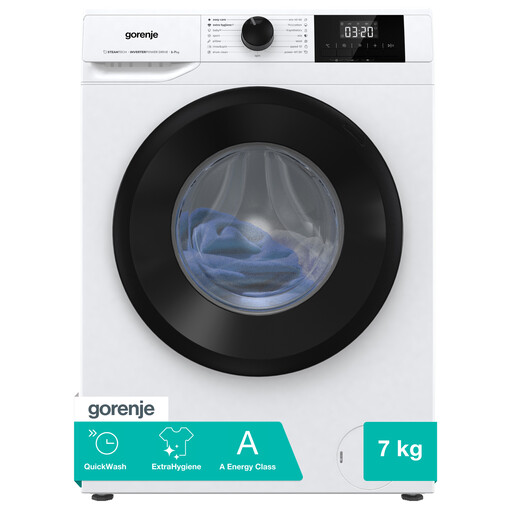
Consider this freestanding machine for modest apron and household loads if its dimensions and door clearance suit your space.
The product name specifies 7kg capacity, 1200 spin and an A energy rating.
If you need a short wash, check the listed QuickWash 15' cycle’s load limit and whether its settings suit your apron labels. Consider the stated spin-noise figure when planning where and when to run the machine.
 No image available
This is another freestanding option for modest loads, provided the appliance and delivery route fit your flat.
The product name specifies 7kg capacity, 1200 spin and an A energy rating.
For a small load needed quickly, check the permitted load and fabric settings of its listed 15-minute Quick Wash. Compare its stated spin-noise figure with your tolerance for disruption.
 No image available
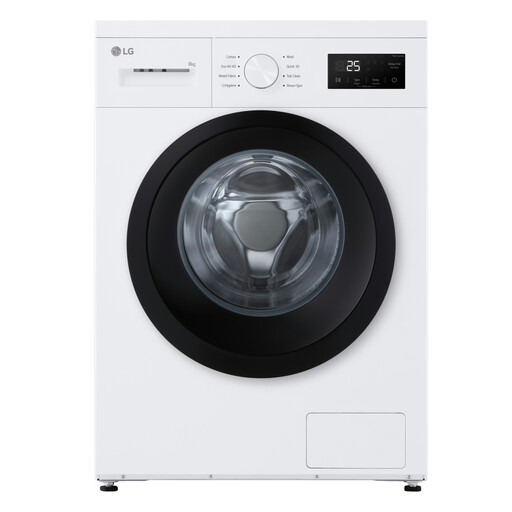
Consider the 8kg capacity if apron washing is part of a larger regular laundry load, but measure the space rather than assuming the machine will fit.
The product name specifies 8kg capacity, 1400rpm spin and an A energy rating.
Confirm the effective installed depth, including the door and clearances. If the listed Quick 30 programme matters to you, check its load limit and your aprons’ care labels.
 No image available
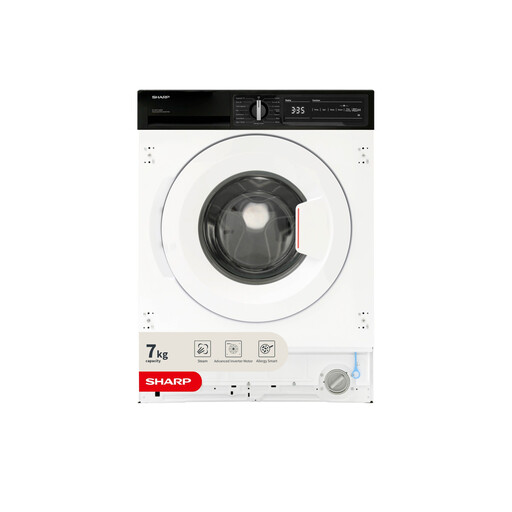
Consider this model only if you have an integrated-appliance opening compatible with the machine and its installation requirements.
The product name specifies 7kg capacity, 1400rpm spin and an A energy rating.
The listed SuperJet 15 cycle is for a 2kg load; check its settings against the aprons’ care labels. Confirm cabinet fit, door arrangement and access before ordering.
A 7kg washer is a starting point when washable aprons are part of modest everyday laundry. Beko positions its 7kg range for smaller households and compact spaces, but the exact machine must still fit your appliance space, access route and door clearance.
No: use a 40°C stain programme only when the individual apron’s care label permits its temperature and wash action. Hotpoint offers such a programme on a cited model, but that does not establish suitability for every apron.
A washer-dryer is worth considering if indoor drying space is your main constraint and the appliance fits. Compare its two capacity figures: Bosch specifies 7kg washing but 4kg combined washing and drying for the WKD28543GB, so a full wash may need dividing.
Do not use a shared extension lead as a way around an unsuitable socket position. Electrical Safety First warns that a washing machine used on an extension lead with other large appliances can overload it and create a fire risk; follow the appliance’s installation instructions and arrange a suitable fixed connection.
For private renting in England, GOV.UK says landlords must ensure appliances they supply are safe. If you plan to buy or install your own machine, check your tenancy terms and installation arrangements rather than assuming the same responsibilities apply.