What matters when choosing
Start with the loads you actually wash and the garments’ care labels. Then compare the programmes, capacity and installation fit of individual machines.
| Concern |
What to check |
Who this matters to |
| Soil and stains |
Check the exact stain programme and whether its temperature and fabric settings match the workwear care label. |
If work clothes often come home visibly dirty, I need a wash setting suited to the garment and the stain, not just a short cycle. Around 33% of consumers put soil and stain handling first. |
| Capacity and turnaround |
Compare rated drum capacity with usual loads; check the permitted load and spin setting for the cycles you would use. |
When workwear, towels and family clothes build up together, I want to avoid splitting ordinary loads unnecessarily. For around 27% of consumers, capacity and turnaround are the primary concern. |
| Fabric care and hygiene |
Check care-label-compatible programmes and temperatures; follow workplace procedures for potentially contaminated clothing. |
If my workwear includes different fabrics, I need to avoid a setting that damages them. I must also handle any potential contamination separately; around 20% of consumers put fabric care and hygiene first. |
| Energy and fit |
Compare A–G label information, installed dimensions and spin noise for machines of a suitable capacity. |
If laundry loads are usually modest or the installation space is tight, I do not want to choose capacity the household cannot use comfortably. Energy and fit come first for around 20% of consumers. |
Brands to consider for these needs
These examples show features to compare on specific models or ranges; a brand name alone does not establish programme suitability for your workwear.
Bosch
The WGG24400GB is a 9kg option to examine when family loads include ordinary stained workwear.
- Bosch specifies a 1400rpm maximum spin, energy class A, Anti Stain for four common stains and Active Water Plus for this model.
- Check the workwear care label against the programme instructions; do not assume the features or technical details apply to other Bosch models.
Hotpoint
The H 101B ANTI STAIN UK is a 10kg option for households that regularly assemble larger washable loads.
- Hotpoint specifies an Anti Stain programme and a Full Load 45' cycle for this model; check the cycle instructions for the garments you intend to wash.
- Hotpoint’s stain-removal statements are manufacturer claims, not proof of results for every workwear stain or fabric.
Beko
The B5W5941BD may interest households comparing a 9kg drum with automatic detergent dosing.
- Beko specifies 1400rpm, energy class A, EnergySpin and Autodose for this model.
- Beko’s stated EnergySpin saving compares this model with an equivalent-capacity Beko machine without the feature; it is not a cross-brand or every-cycle result.
Miele
Miele’s UK range offers different combinations of fabric-care and convenience features across 8kg, 9kg and 10kg machines.
- Depending on the model, the range includes features such as SteamCare, QuickPowerWash and automatic dispensing.
- Capacity, spin speed and programmes vary. Check the exact model rather than treating a range-level feature as standard.
Joybuy washing machines for family workwear loads
These machines offer different drum capacities for families washing ordinary, washable workwear alongside household laundry. Compare each model’s programme manual with the garments’ care labels before choosing; capacity and a programme name alone do not establish stain results or suitability for contaminated clothing.
 No image available
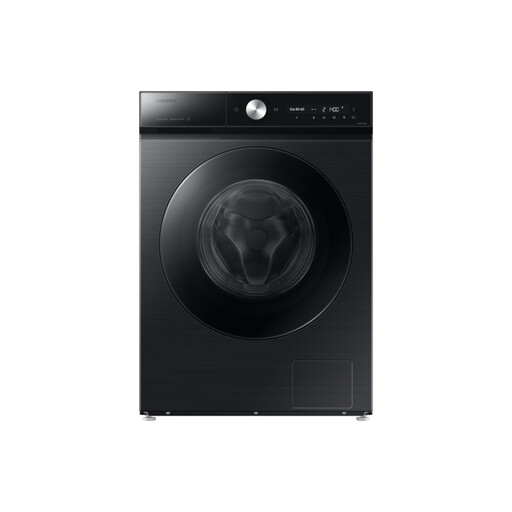
Samsung Series 8 WW90DB8U95GBU1 9kg washing machine, black
Consider this size if your usual family and washable-workwear loads fit a 9kg drum.
9kg capacity; 1400rpm maximum spin; A-rated listing.
If stain handling matters, check the exact programme instructions and permitted garment temperatures before choosing a cycle.
View on Joybuy
 No image available
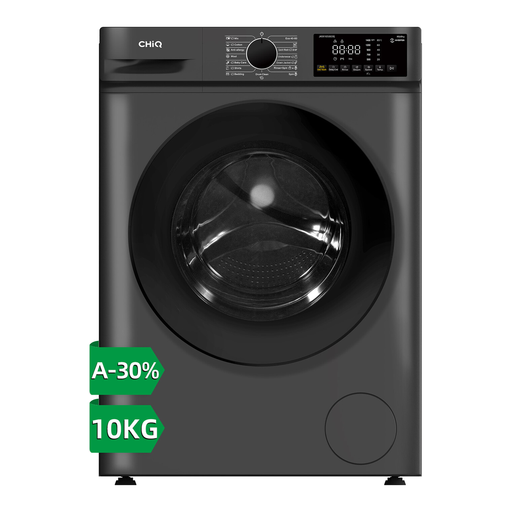
CHiQ JKW105883G 10kg washing machine, Dark Graphite Grey
The 10kg drum is worth considering if larger family and washable-workwear loads are routine.
10kg capacity; 1400rpm spin; A-rated listing.
Check the exact wash programmes and care-label-compatible temperatures if stained workwear drives your choice.
View on Joybuy
 No image available
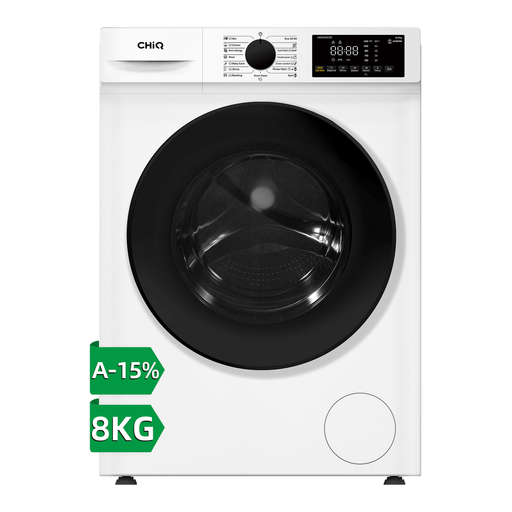
CHiQ JKW85883W 8kg washing machine, white
An 8kg drum may suit households whose usual washable-workwear loads do not call for a larger machine.
8kg capacity; 1400rpm spin; A-rated listing.
Compare its installed depth with your space, and consult the programme manual before washing workwear with particular care requirements.
View on Joybuy
 No image available
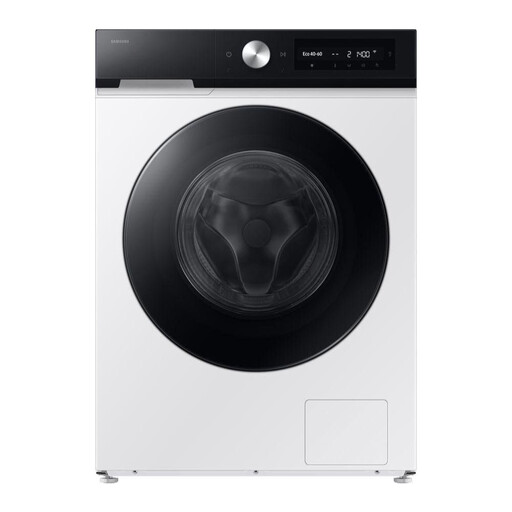
Samsung Series 7 WW11DB7B94GEU1 11kg washing machine, white
Consider the 11kg drum when your household regularly has enough washable laundry to use its capacity.
11kg capacity; 1400rpm maximum spin; A-rated listing.
Check the load limit and conditions of any faster cycle, as well as which programme suits stained workwear.
View on Joybuy
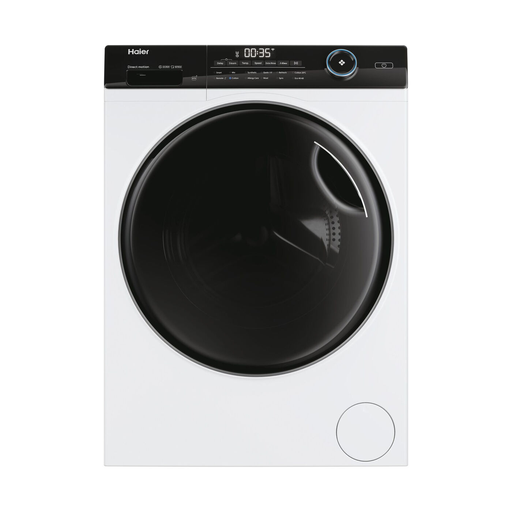 No image available
Haier HW100-B14959U1UK I-Pro Series 5 10kg washing machine, white
The 10kg capacity may suit families that regularly wash larger loads of ordinary, washable clothing.
10kg capacity; 1400rpm spin; A-rated listing.
Check the wash-programme manual for stain settings and temperatures; a fabric-refresh function should not be treated as a wash for soiled workwear.
View on Joybuy
Common questions
Can washable workwear go in with family laundry?
Ordinary workwear can be washed with a compatible household load if its care label permits the chosen programme and there is no workplace contamination concern. For fabrics that may carry blood or body fluids, the Health and Safety Executive advises assessing laundering and handling to prevent cross-infection; follow the employer’s process instead of assuming an ordinary mixed load is appropriate.
Should I wash workwear at 20°C, 40°C or 60°C?
Choose a temperature the garment permits and that suits its level of soiling. Which? describes 20°C as more suitable for lightly soiled clothing, says 40°C handles most stains and notes that serious soiling may need 60°C. Workplace contamination calls for separate risk-assessed handling, not a temperature choice based on this general advice alone.
How much drum capacity does a family need?
Base capacity on the loads your household actually produces, especially if workwear regularly joins towels or bedding. 7kg–9kg is commonly presented as a starting point for medium-sized households, with larger capacities for bigger families; those household-size suggestions do not replace checking your own load sizes and available installation space.
Does an A-rated washer always use less energy than another model?
Not necessarily for the loads you plan to wash: compare the energy-label information on machines of a suitable type and capacity, rather than choosing by letter alone. Energy Saving Trust explains that the A–G label also provides product-specific information, including energy use and noise.
What should I check before arranging delivery and installation?
Measure the intended location against the exact machine dimensions, allowing access for hoses and door opening. Check the product’s installation instructions and which delivery, installation, disconnection or removal services the listing offers before ordering.


