Households with a shallow installation space
Measure the usable space in front of pipes and plugs before comparing machines. The door must also open, and the installation needs the clearances specified for the chosen model.


For regular table-napkin washing in a tight space, start by finding a washer whose full installation depth fits, rather than choosing by drum capacity alone. An integrated washer makes sense when suitable cabinetry is planned; consider a washer-dryer if you also lack drying space, provided its dimensions and drying capacity work for you. Let the napkins’ care labels guide the programmes and temperatures you need.
Measure the usable space in front of pipes and plugs before comparing machines. The door must also open, and the installation needs the clearances specified for the chosen model.
Look for controls that suit the napkins’ care labels rather than relying on a short cycle. Christeyns advises separating white and coloured table linen; removing food debris before washing is another practical step.
A washer-dryer puts both tasks in one appliance, but its installed depth and drying capacity still need checking. Confirm that the napkins’ care labels permit tumble drying.
Choose the installation format first, then check that its controls suit your napkins and that you have a workable way to dry them.
Consider it when: Appliance depth is the main constraint and you have suitable connections.
Allow for: A shallow cabinet still needs space for pipes, ventilation and the open door; check each model’s installed dimensions.
Consider it when: The room has a suitable cabinet opening and you want the machine behind a furniture door.
Allow for: Cabinet and door compatibility; an integrated format does not, by itself, establish a shallower fit.
Consider it when: There is no practical room for a separate dryer or airer.
Allow for: A potentially deeper appliance and distinct washing and drying capacities that vary by model.
| Concern | What to check | Who this matters to |
|---|---|---|
| Installed fit and access | Measure usable height, width and depth in front of pipes and plugs; check door swing and the chosen model’s clearances. Allow around 25 mm at each side and roughly 50–150 mm behind freestanding washers and washer-dryers. | If the machine cannot be connected or its door cannot open, its programmes are no use to me; around 50% of consumers would put installed fit first. |
| Stains and fabric care | Check for a suitable prewash, selectable temperatures and programmes that match the napkins’ fibre content and care labels. | I regularly wash food-stained or coloured napkins and need to protect the fabric while dealing with the soil; around 30% of consumers would prioritise napkin care. |
| Drying in one appliance | Compare installed depth, separate wash and dry capacities, and programme duration; check whether the napkins can be tumble dried. | Without room for an airer or separate dryer, I need one appliance to handle both tasks; roughly 20% of consumers would make combined drying their first concern. |
Two machines with the same capacity can have different cabinet depths, and the cabinet depth does not include all the room needed for connections and access.
Measure the usable space, account for the open door, then compare it with the exact model’s dimensions and installation instructions.
A short programme alone does not establish that it will suit food-stained napkins or every fabric.
Remove debris, separate whites from colours and check the care label. If appropriate for the fabric and soil, look for a usable prewash and temperature setting.
A combined appliance can remove the need for a separate dryer, but its extra drying components can increase depth. Washing and drying capacities also need separate checks.
Compare the exact installed dimensions, both capacities and the drying programme with your space and the napkins’ care labels.
A machine used in a café, venue or similar premises may need a different assessment of its water connection and backflow protection.
Before buying or installing it, ask the local water undertaker and a competent installer what applies to the intended use.
A reference point for comparing 7 kg freestanding and integrated machines, including quick-programme options.
A reference point for freestanding, built-in, built-under and compact installation formats.
A reference point when comparing freestanding and integrated formats alongside fabric-care controls.
A reference point for comparing standard-depth machines with LG’s Counter-Depth MAX range.
These freestanding washing machines offer different stated capacities and spin speeds for a space-limited napkin-washing setup. Compare their exact installed dimensions and care controls before choosing; this selection does not cover integrated washers or washer-dryers.
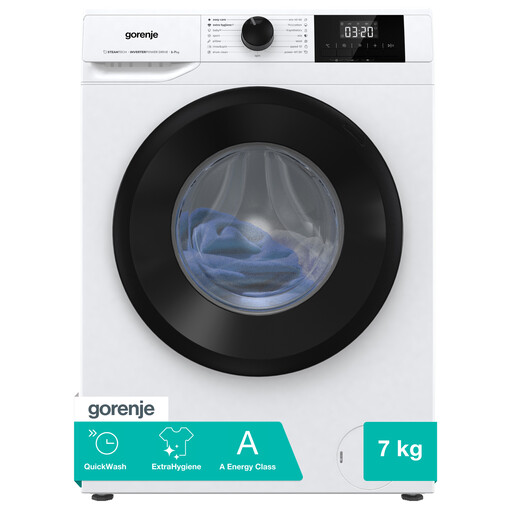 No image available
Consider this for napkin loads where a 7 kg washing capacity suits your needs and the installed machine fits the space.
The product name specifies a 1200 spin speed and an A energy rating. Check the exact installation clearances and use the napkins’ care labels when selecting a programme.
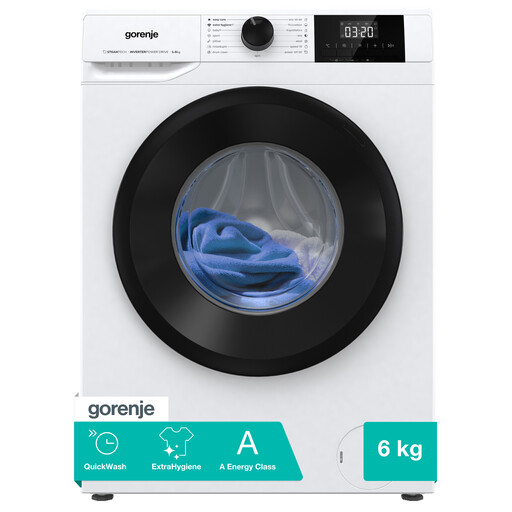 No image available
Consider the 6 kg variant if that capacity suits your usual loads and its installed dimensions work in the available space.
The product name specifies a 1200 spin speed and an A energy rating. Check connection and door clearances before buying.
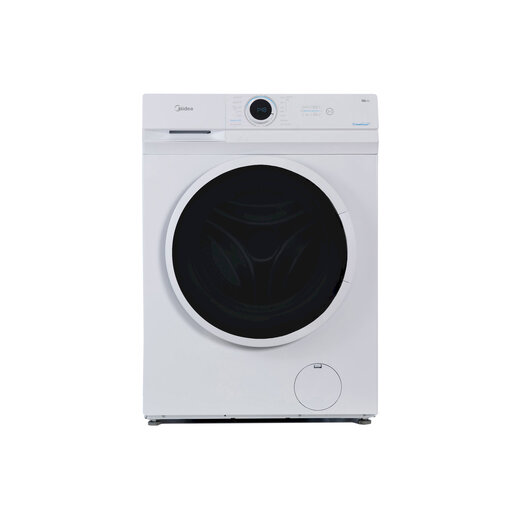 No image available
Consider this 6 kg freestanding model where installation depth is a priority, subject to checking the complete space it needs.
The product name specifies 1000 rpm and a D energy rating. Confirm whether the supplied variant is MF100W60 or MF100W60-E and check its specifications and installation instructions.
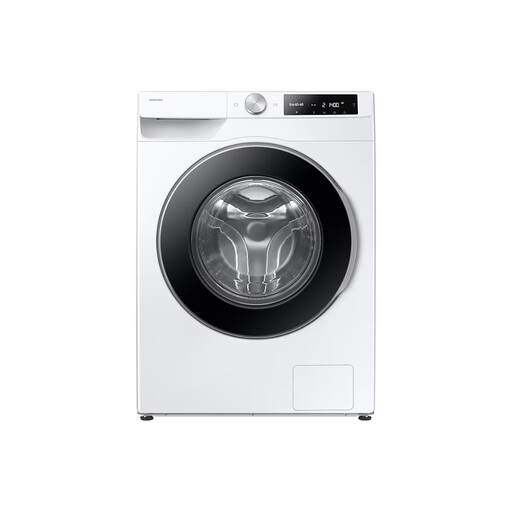 No image available
Consider this model if you need a 9 kg capacity and can accommodate its installed dimensions.
The product name specifies 1400 rpm and an A energy rating. Check its selectable temperatures and prewash options if those controls matter for your napkins.
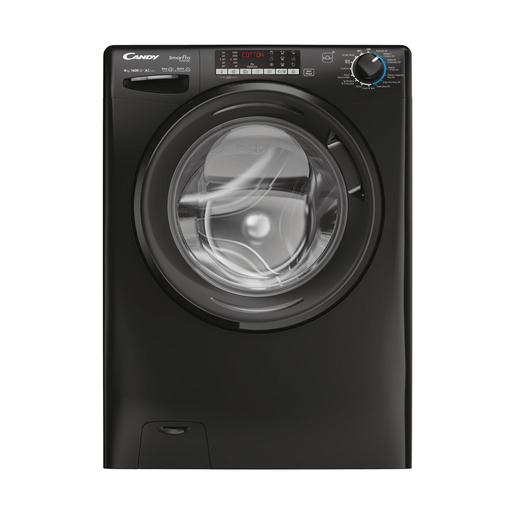 No image available
Consider this freestanding model if a 9 kg capacity suits your loads and the installation space allows for it.
The product name specifies 1600 rpm and an A energy rating. Check the exact prewash and temperature controls against the napkins’ care requirements.
Not necessarily: the machine also needs room for connections, ventilation and its open door. Measure in front of pipes and plugs, then check the model’s installation instructions; allow roughly 25 mm at each side and 50–150 mm behind freestanding washers and washer-dryers.
No single temperature suits every napkin; follow its fibre composition and care label. Richard Haworth’s guidance for polyester table linen specifies a synthetic process up to 60°C for normal soiling, rather than a universal temperature for all fabrics.
Remove food debris and separate whites from colours before washing. Christeyns advises separating coloured and white table linen; for protein-based food stains, consider a prewash before a warmer wash only if the napkin’s care label permits it.
Use the energy label and product information sheet for the exact appliance, comparing like appliance types. GOV.UK states that products within the energy-labelling rules must be supplied with an accurate label and accompanied by a product information sheet.
Check the water-connection requirements for that non-domestic installation before the machine is fitted. Water Regs UK’s July 2025 whitegoods guidance says to notify the local water undertaker at least 10 working days before installation at non-domestic premises; backflow protection depends on the use and installation, so confirm the local requirements with the undertaker and installer.