
24/7 Customer Support

Free returns

Same-day & Next-day Delivery

Quality Guaranteed

Unlock Your Welcome Offers: FREE Delivery | Up to 80% OFF | Free 30-day JoyPlus trial
Download the APP
A washing up bowl might seem like a simple purchase, but choosing the wrong one can lead to daily frustration. From flimsy plastic that warps with hot water to designs that scratch your new sink, the pitfalls are surprisingly common. As a Joybuy Product Recommendation Officer, my role is to help you see past the marketing and focus on the features that deliver genuine, long-lasting value for your home.
This guide will walk you through the common traps to avoid and the key factors to consider, ensuring your next washing up bowl is a practical and durable addition to your kitchen.
Many of us have bought a washing up bowl on impulse, only to regret it weeks later. Here are the three most frequent issues that UK households encounter:
To avoid these issues, focus on a few non-negotiable parameters. These details separate a well-designed product from a future recycling bin item.
The type of plastic washing up bowl you choose is critical. Look for descriptions that mention durable, hard-wearing or robust materials. Many quality bowls are made from plastics that are heat-resistant up to 100°C, meaning they can safely handle hot water from the tap without warping. A scratch-resistant finish is another excellent feature, helping the bowl maintain its appearance after months of contact with cutlery and pans. For those looking to make a more sustainable choice, options made from 100% recycled plastic now offer the same durability as their virgin plastic counterparts.
A rectangular washing up bowl is generally the most efficient choice for standard UK sinks, as it maximises the washing area and allows you to lay items like baking trays flat for soaking.
Small features can make a big difference in daily use. A washing up bowl with handles is a must-have for safety and convenience, providing a secure grip for lifting and emptying. Other practical innovations include:
Instead of a generic list, we've matched specific bowls to the households that will benefit from them most.
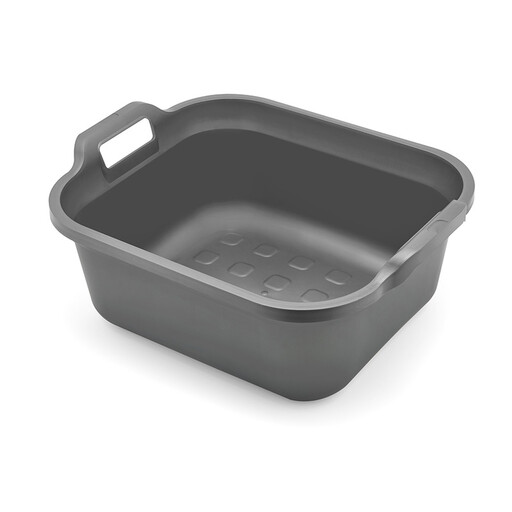
Why This Fits Their Persona: This is a perfect all-rounder for most UK homes. Its 10-litre capacity is ideal for daily dishwashing, and the rectangular shape fits neatly into standard sinks, making washing up less of a chore.
Made from durable plastic with a scratch-resistant finish, it is built to withstand daily use and hot water without warping or looking worn out after a few months.
Features raised handles for easier and safer lifting. The contemporary metallic grey finish offers a modern look that complements most kitchen styles.
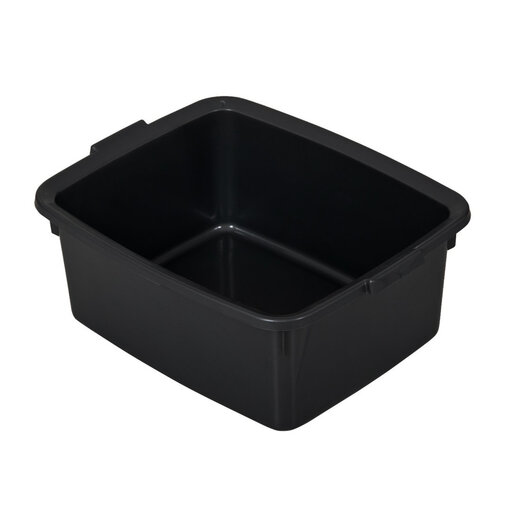
Why This Fits Their Persona: Specifically designed for larger sinks, this bowl's generous 12-litre capacity and wide profile are perfect for the deep basins of butler and farmhouse sinks, protecting the ceramic from heavy pots and pans.
It directly counters the "one-size-fits-all" trap by providing the scale and sturdiness needed for larger sinks. Its hard-wearing, high-gloss surface is also easy to clean.
Features comfortable, ergonomic grip handles that make lifting a full 12-litre bowl significantly easier and safer, reducing strain and risk of spills.
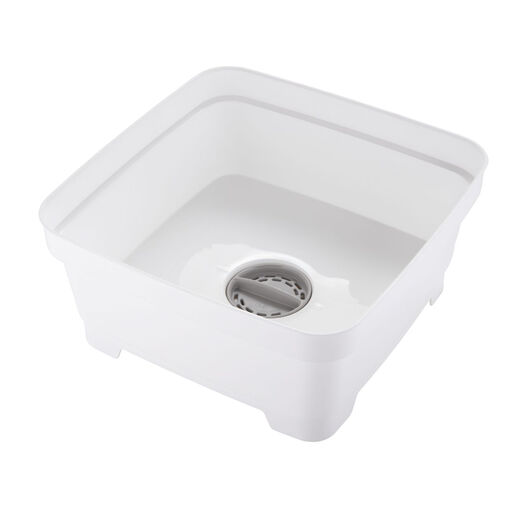
Why This Fits Their Persona: For those who value smart design that simplifies chores, this bowl is a standout. It eliminates the heavy lifting associated with emptying a full bowl of water, making it ideal for anyone with mobility concerns or who simply wants a more efficient clean-up.
It tackles the "poor design" pitfall head-on by integrating a highly practical feature. The large handle rim also ensures a secure grip when the bowl does need to be moved.
The built-in removable plug and strainer allows for effortless draining and catches food scraps, helping to keep your sink and pipes clear without the heavy lifting.
We have compiled a complete, real-time list of products that fully satisfy these strict selection criteria and UK safety regulations.
This depends on your household and sink. For most standard UK sinks, a 9 to 10-litre bowl offers a good balance of capacity and fit. If you have a large family or a butler-style sink, a large washing up bowl of 12 litres or more will be more practical. Always measure your sink's internal dimensions before purchasing to ensure the bowl will sit comfortably inside.
Using a bowl is already a great step towards protecting your sink from scratches from cutlery and pans. To protect the sink from the bowl itself, look for models that specifically mention having soft-touch feet or a soft base liner. These are designed to provide a protective cushion between the hard plastic of the bowl and the delicate surface of a ceramic or stainless steel sink.
This depends entirely on the quality of the plastic. Low-cost, flimsy bowls can warp or even crack. It is much safer to choose a bowl that is explicitly described as heat-resistant, with many quality models rated to withstand temperatures up to 100°C. As a general precaution, it is always best to run the hot and cold taps together to achieve your desired temperature, rather than pouring boiling water directly from a kettle into an empty bowl.