
24/7 全天候客户支持

免费退货

当日/次日达

品质保障

开启新人专享福利: 全场免邮 | 低至 2 折 | 免费试用 30 天 JoyPlus 会员
下载 Joybuy
Choosing washing-up liquid can seem straightforward, but the wrong bottle may leave you using too much product, scrubbing greasy pans repeatedly or dealing with a fragrance that becomes unpleasant around the sink. For UK households, students, renters and families, the most suitable option depends on cleaning needs, bottle size, scent preferences and how the formula fits into everyday routines.
Lemon, apple, pomegranate and grapefruit scents can make washing dishes feel fresher, but fragrance does not automatically indicate grease-cutting performance. A pleasant aroma may linger even when food residue has not been fully removed.
Look for clear information about grease removal, food-residue cleaning and rinsing rather than choosing solely by scent. Fragrance is a personal preference; cleaning instructions and surfactant information are more useful when comparing products.
A concentrated washing-up liquid may require less product per wash, but only when used according to the label. Adding a large amount to every bowl of water can waste money and leave more foam or residue to rinse away.
Check whether the bottle is described as concentrated or ultra-concentrated, and follow the stated directions. Fairy Clean & Fresh, for example, is described as ultra-concentrated, while the Morrisons 450ml options are practical everyday bottles intended for regular dishwashing.
A product described as gentle on hands may feel comfortable for ordinary use, but skin can react differently from person to person. Washing-up liquid is not a hand-care product, and frequent contact may still cause dryness or irritation for some users.
Read the ingredients and safety information on the packaging. Products in this selection list surfactants and perfumes, while the Fairy product also lists preservatives. Use gloves if preferred, rinse thoroughly and stop using a product if irritation occurs.
For everyday plates, mugs and cutlery, a standard formula may be sufficient. If your household regularly cooks with oils, sauces or roasting trays, prioritise a grease-cutting washing-up liquid and follow the instructions for applying it directly to tougher residue.
Surfactants help loosen and lift grease from surfaces. The product label should provide ingredient information, directions and warnings. Do not assume that more foam means more cleaning power; foam level can vary between formulas.
A 450ml washing-up liquid bottle offers a useful balance between storage and household practicality. It fits neatly beside many UK sinks and is convenient for smaller kitchens, shared houses and rented accommodation.
A 320ml bottle may be more compact, while its concentrated formula could mean that a smaller amount is used per wash. To compare value fairly, consider the amount required for each cleaning session rather than comparing bottle volume alone.
Choose a lemon washing-up liquid for a familiar citrus scent, an apple washing-up liquid for a fruity option or a pomegranate and grapefruit washing-up liquid if you prefer a more distinctive fragrance. Unscented or lightly fragranced products may be preferable if several people share the kitchen and fragrance preferences differ.
Rinse dishes thoroughly with clean water. The Morrisons product descriptions state that the formulas are designed to rinse off easily, but the amount used and water temperature will also affect the rinsing process.
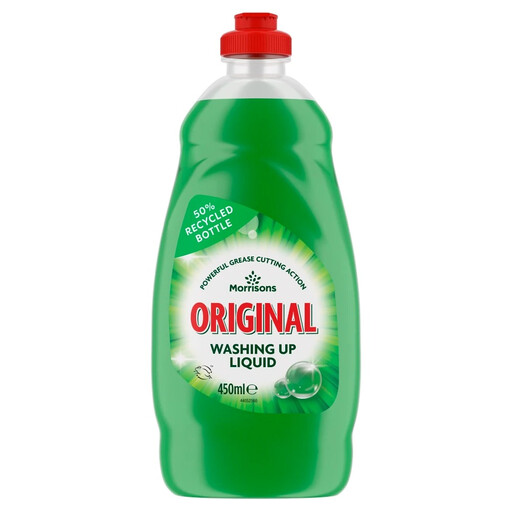
Why This Fits Their Persona: The 450ml bottle is a practical size for students, first-time renters and households looking for an everyday washing-up liquid with a classic clean fragrance.
Its product information clearly identifies the bottle size, everyday use and directions, helping shoppers avoid choosing on fragrance alone.
450ml capacity; classic clean fragrance; listed for grease and food-residue cleaning.
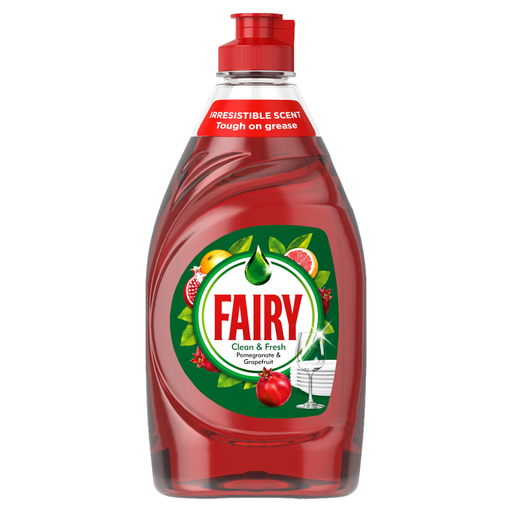
Why This Fits Their Persona: A suitable choice for shoppers who want a smaller bottle, a distinctive fruity-floral fragrance and a formula described as ultra-concentrated.
The stated ultra-concentrated format supports measured dosing, while the label provides specific warnings and ingredient information to review before use.
320ml bottle; ultra-concentrated description; pomegranate and grapefruit fragrance.
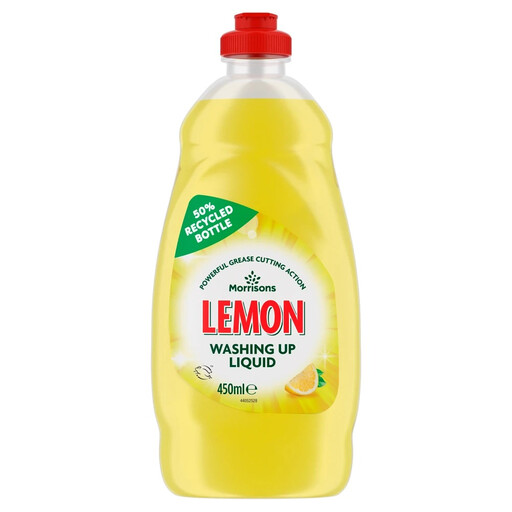
Why This Fits Their Persona: The larger everyday bottle and lemon fragrance suit busy family kitchens or anyone washing dishes frequently throughout the day.
The clear 450ml size makes it easier to plan household use, while the directions recommend applying a small amount rather than relying on excessive product.
450ml bottle; lemon scent; listed as suitable for grease and food residues.
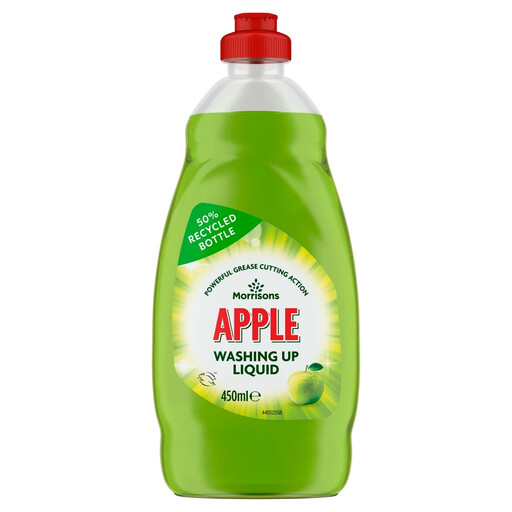
Why This Fits Their Persona: This option suits shoppers who prefer a fruity scent while still wanting a familiar 450ml format for regular kitchen cleaning.
The apple fragrance is presented alongside practical cleaning details, so the choice is not based on scent marketing alone.
450ml capacity; fresh apple fragrance; described as suitable for regular use.
Always read the packaging before use. Some formulas carry specific warnings, including eye irritation or environmental hazards. Do not ingest washing-up liquid, avoid eye contact and rinse immediately with clean water if contact occurs.
It can be, if the recommended small dose is sufficient for your washing-up routine. Compare the stated dosage, bottle volume and price rather than assuming that a smaller bottle offers better value. Overdosing concentrated liquid can remove any potential savings.
There is no single lifespan for a bottle because usage varies. A single-person household may use a 450ml bottle for considerably longer than a family washing several loads of dishes each day. Measuring a small amount and avoiding unnecessary reapplication can help extend its use.
Fragrance does not determine cleaning ability. Lemon and apple versions may offer different scent experiences, but compare their stated cleaning features, directions and ingredients when choosing between them. For grease-heavy cooking, focus on the product’s grease-cutting description and correct usage.