
24/7 Customer Support

Free returns

Same-day & Next-day Delivery

Quality Guaranteed

Unlock Your Welcome Offers: FREE Delivery | Up to 80% OFF | Free 30-day JoyPlus trial
Download the APP
A bottle of washing up liquid may look like a simple household purchase, but the wrong choice can lead to wasted product, dry hands, lingering fragrance or an unsuitable format for frequent washing. UK households, cafés and commercial kitchens have different priorities, so comparing bottle size and formula matters more than choosing by colour or advertising language alone.
A thick layer of bubbles can make a product feel effective, but lather alone does not tell you how well it handles grease. Look for a clearly stated concentrated formula, suitable surfactants and directions explaining whether the liquid should be used directly on a sponge, in a bowl or diluted in a sink.
A small amount of concentrated washing up liquid may be more economical than a larger bottle that requires frequent reapplication. However, “one drop” claims should still be treated as usage guidance rather than a guaranteed amount for every pan or load.
Lemon washing up liquid, apple scents and floral options can make the sink area smell fresher, but perfume ingredients may not suit everyone. If you have sensitive skin or dislike lingering fragrance, check the ingredients panel for perfume allergens such as limonene, linalool, citral or geraniol.
A gentle washing up liquid can still contain preservatives or fragrance compounds. Read the bottle label and stop using the product if irritation occurs.
Antibacterial washing up liquid may be designed to provide an additional hygiene feature, particularly for sponges or kitchen surfaces. It does not remove the need to wash items thoroughly, rinse them with clean water and allow cloths or sponges to dry between uses.
For food-contact items, follow the manufacturer’s directions carefully. Do not mix washing up liquid with bleach or other cleaning chemicals.
For greasy pans, roasting trays and cooking utensils, prioritise a grease-cutting washing up liquid with instructions for applying a small quantity directly to the dirty area. Warm water can help loosen fats, while soaking may still be appropriate for baked-on food, even when a product is promoted as requiring no soaking.
Compare the recommended dosage and bottle size rather than relying only on the word “concentrated”. A 320ml bottle may suit occasional use or a smaller flat, while a 1,015ml or 1,450ml bottle can reduce repurchasing for a busy family kitchen.
Bulk washing up liquid is practical for large households, cafés and restaurants, but a 4-litre or 5-litre container needs safe storage and a suitable dispensing method. Decanting into a clearly labelled, clean dispenser can make daily use easier, provided the product label and workplace safety procedures are followed.
For home use, compare the price per 100ml and the expected dosage. A larger bottle is not automatically cheaper if the liquid is less concentrated or is used too generously.
Look for clear warnings about eye irritation, children, aquatic life and accidental ingestion. Some products listed here contain preservatives including methylisothiazolinone or benzisothiazolinone, which may produce an allergic reaction in some people. Always use the current packaging as the final reference because formulations and labels can change.
“Gentle on hands” describes a product’s intended use or positioning, not a medical guarantee. Gloves may be sensible for prolonged washing, particularly in professional kitchens.
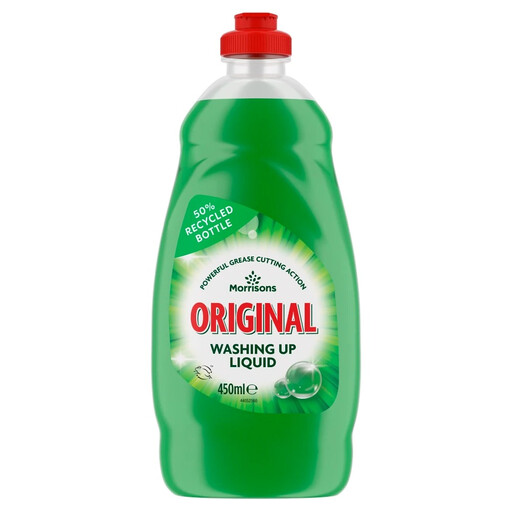
Why This Fits Their Persona: A practical 450ml bottle suits students, renters and smaller UK households that want an everyday washing up liquid without committing to a bulk format.
The compact format makes it easier to compare actual usage and avoid paying for excess volume that may be difficult to store.
Original fragrance, stated grease-removal performance and directions for use on dishes and food residues.
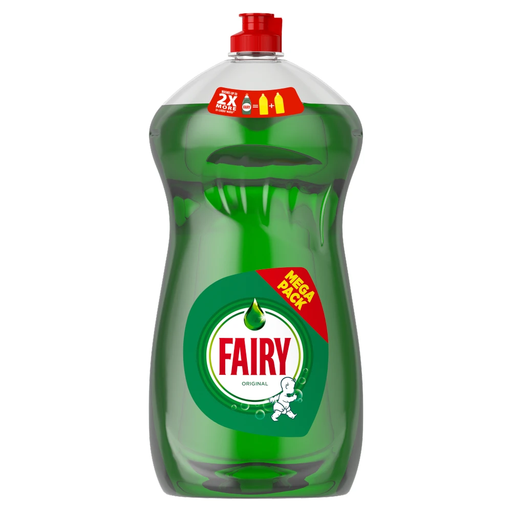
Why This Fits Their Persona: The 1,450ml size is suited to families who wash dishes every day and prefer a familiar original formula with fewer replacement trips.
Its stated ultra-concentrated format encourages measured dispensing rather than repeatedly pouring large amounts into the sink.
Large household-friendly volume and stated grease-cutting action for dishes, pans and leftover food.
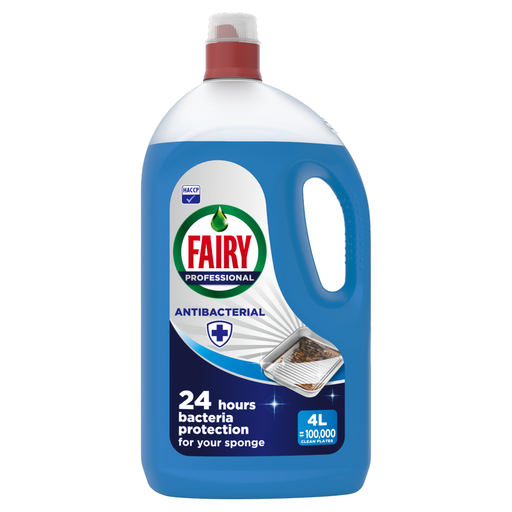
Why This Fits Their Persona: A 4-litre container is designed for high-demand settings such as cafés, restaurants, shared accommodation and large family kitchens.
The professional-size format reduces repeated small-bottle purchases, while the antibacterial positioning should still be checked against the current label and workplace procedures.
4-litre capacity and concentrated formula; product information also describes use on dishes, sponges and sink surfaces.
We have compiled a complete, real-time list of products that fully satisfy these strict selection criteria and UK safety regulations.
It can be, particularly when the recommended dosage is small. Compare the price per 100ml and the formula’s stated usage instructions rather than comparing bottle price alone. Over-pouring can quickly remove the value advantage.
It may offer an additional antibacterial feature, depending on the specific product and label instructions. It does not replace thorough washing, rinsing, clean sponges or appropriate food-safety procedures. Check the product packaging for the exact approved use.
There is no fixed lifespan because consumption depends on household size, washing frequency, grease levels and how much is dispensed per load. A 320ml bottle may suit light use, while 1,450ml, 4-litre and 5-litre formats are more practical for frequent or commercial dishwashing.