
24/7 Customer Support

Free returns

Same-day & Next-day Delivery

Quality Guaranteed

Unlock Your Welcome Offers: FREE Delivery | Up to 80% OFF | Free 30-day JoyPlus trial
Download the APP
Choosing washing up liquid seems straightforward until you compare concentration, bottle size, fragrance, skin claims and antibacterial wording. A low shelf price may not represent good value if the formula needs several squeezes per sink, while a large bottle can be inconvenient in a small UK kitchen.
This guide explains the practical details that matter, highlights common buying traps and matches selected products to different household needs.
A 1,450ml bottle looks more economical than a 320ml bottle, but size alone does not show how long it will last. Concentration and recommended dosage are more useful comparisons. A product designed for a small amount per wash may provide more usable cleaning sessions than a larger bottle that requires frequent top-ups.
For bulk washing up liquid, also consider storage space, pouring control and whether you can transfer the product safely into a smaller dispenser.
Antibacterial washing up liquid may include wording about helping reduce bacteria on dishes, sponges or surfaces. This does not remove the need to wash thoroughly, rinse properly and replace worn or unpleasant-smelling sponges. Always check the packaging for the precise claim, intended surface and contact instructions.
Avoid assuming that a stronger-sounding label is automatically more suitable for everyday plates and glasses. For most households, effective grease removal and proper rinsing remain central to a clean result.
Lemon washing up liquid and floral fragrances can make the sink area smell fresher, but perfume ingredients may not suit everyone. People with sensitive skin should read the ingredient list and product warnings rather than relying only on descriptions such as “gentle” or “kind to hands”.
Common ingredients include anionic surfactants, which help lift grease, along with non-ionic or amphoteric surfactants, preservatives and perfumes. If you have previously reacted to a cleaning product, choose carefully, follow the label and stop using it if irritation develops.
A concentrated washing up liquid can be useful for greasy pans and busy family kitchens because a small amount may produce sufficient lather. However, avoid dispensing by habit. Start with the label’s recommended quantity and increase it only when the sink contains heavier grease or baked-on food.
For direct application, place a small amount on a damp sponge or brush. For a full bowl of water, follow the stated dilution instructions where available. Using too much can create unnecessary foam, prolong rinsing and increase household consumption.
Choose the size around your washing routine:
Compare the price per 100ml, not just the ticket price. A multi-pack is only worthwhile if you can use the bottles before the product becomes difficult to store or the fragrance becomes unsuitable.
“Sensitive skin washing up liquid” is a useful search term, but product suitability varies between individuals. Look for clear information about perfume, preservatives and directions. Ecover Sensitive Lemon & Aloe Vera, for example, is described as dermatologically tested and made with biodegradable ingredients, while its label still carries an eye-irritation warning.
Keep all washing up liquid away from children, avoid eye contact and rinse dishes thoroughly. Product warnings and ingredients can vary between pack sizes and fragrances, so check the label supplied with your order.
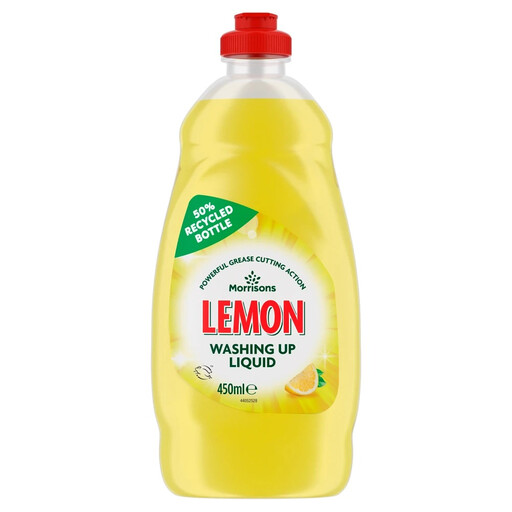
Why This Fits Their Persona: A practical 450ml bottle suits first kitchens, rented homes and shoppers wanting an everyday lemon washing up liquid without committing to a bulk format.
The clearly stated bottle size makes value easier to compare, while the directions recommend using a small amount rather than pouring freely.
450ml format; lemon fragrance; suitable for everyday dishes and food residue.
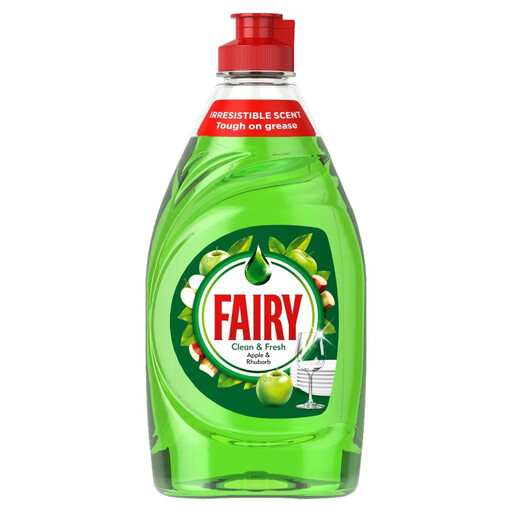
Why This Fits Their Persona: Suitable for shoppers who value a concentrated formula and a fruity-floral fragrance in a compact kitchen-friendly bottle.
The product information identifies it as highly concentrated, so buyers can assess dosage rather than judging value from fragrance or packaging alone.
320ml size; apple and rhubarb fragrance; listed anionic and non-ionic surfactants.
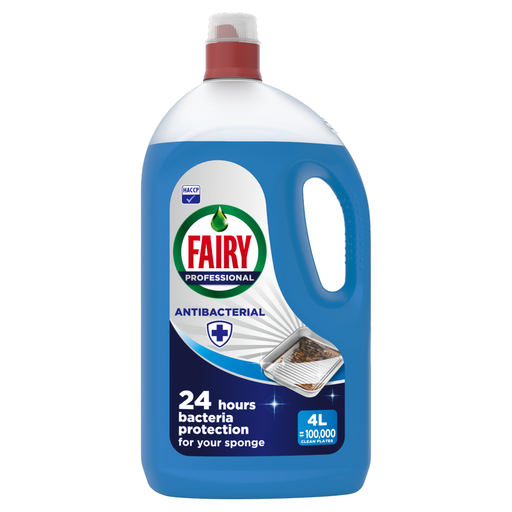
Why This Fits Their Persona: The 4L format is designed for frequent washing in large households, cafés, restaurants and other high-demand kitchen environments.
Its large capacity is matched with professional-use positioning and dosage guidance, making it more appropriate for heavy use than a small household bottle.
4L bulk format; antibacterial positioning; instructions cover dishes, pans and kitchen surfaces.
For environmentally conscious shoppers, check the exact packaging and formula claims rather than relying on green colouring or nature-inspired fragrance. Ecover Sensitive Washing Up Liquid, Lemon & Aloe Vera, 450ml is listed with biodegradable ingredients, a 100% recycled plastic bottle and Cruelty-Free International certification. It also carries specific eye-irritation guidance, so sustainable positioning does not remove the need for normal safe handling.
If you need a larger refill-style option, Deepio Professional Original 5L is described as concentrated and suitable for commercial kitchens, cafés and large families. Confirm storage arrangements before ordering, and use a smaller labelled dispenser to control each dose.
We have compiled a complete, real-time list of products that fully satisfy these strict selection criteria and UK safety regulations.
It can be, provided the recommended dose is genuinely small and you measure usage consistently. Compare bottle price, volume and instructions rather than assuming every concentrated formula offers the same number of washes.
Not necessarily. For everyday dishes, thorough washing, rinsing and clean equipment are important. If you choose an antibacterial formula, read its specific label instructions and do not treat it as a substitute for safe food-handling and cleaning routines.
Lifespan depends on bottle size, concentration, sink frequency and how much is dispensed per wash. A couple washing up daily may use a small bottle quickly, while a concentrated formula or 1,450ml pack can reduce replacement frequency. Tracking how long one bottle lasts in your household is the most reliable way to compare running cost.