
24/7 Customer Support

Free returns

Same-day & Next-day Delivery

Quality Guaranteed

Unlock Your Welcome Offers: FREE Delivery | Up to 80% OFF | Free 30-day JoyPlus trial
Download the APP
From a quick wipe of the worktop to a full-on battle with a Sunday roast tin, the humble washing up sponge is a cornerstone of the British kitchen. Yet, choosing the right one can feel surprisingly complicated. You buy a multi-pack expecting durability, only for them to fall apart in a week. You pick a "non-scratch" scourer that leaves fine marks on your favourite non-stick frying pan.
As the Joybuy Product Recommendation Officer, my role is to help you see past the marketing jargon. Before you add another pack of disappointing sponges to your basket, let's look at the common purchasing traps that lead to wasted money and frustration.
To ensure you get a product that performs well and offers good value, focus on these key features.
The most critical factor is the scourer's material. This determines what you can and cannot safely clean.
A sponge's lifespan is determined by its build quality. Look for a strong bond between the sponge and the scourer. For the sponge itself, materials like cellulose are highly absorbent and can be more durable than standard foams. Some designs also include a contoured "nailguard" shape, which makes the sponge more comfortable to grip and protects your fingers during vigorous scrubbing.
If environmental impact is a priority, look beyond simple claims. Check for specific features like:
To help you find the right tool for the job, here are a few options matched to different household needs.
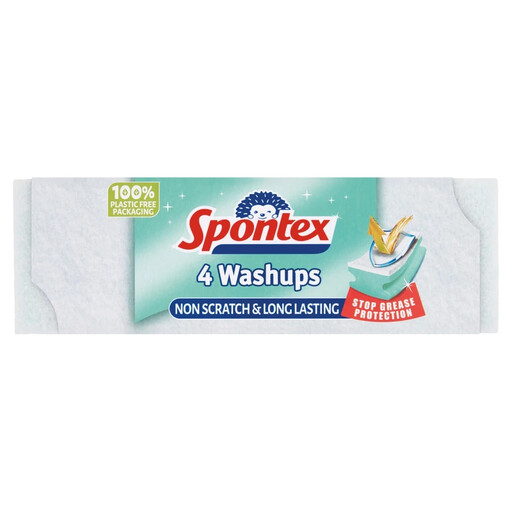
Why This Fits Their Persona: If your kitchen is full of non-stick pans and delicate glassware, protecting them is a priority. This user needs a reliable cleaning tool that provides peace of mind and won't cause accidental damage.
It directly counters the "gentle scourer that scratches" pitfall. The scourer is specifically engineered for effective cleaning on delicate surfaces without causing abrasion.
Features anti-grease technology to stay cleaner for longer and a contoured nailguard for better grip and protection during use.
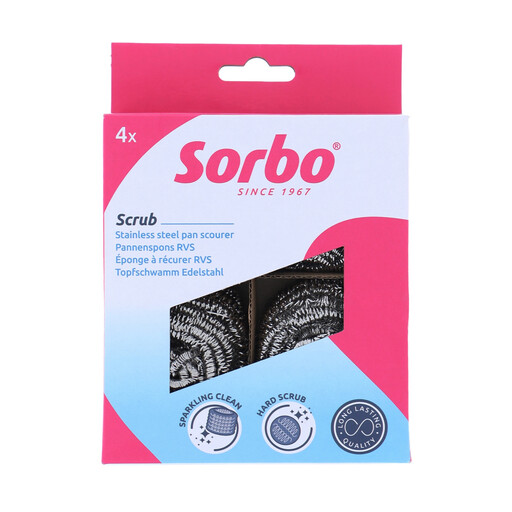
Why This Fits Their Persona: For those who frequently cook with cast iron, stainless steel or love a summer BBQ, a standard sponge just won't do. This user needs maximum scrubbing power for burnt-on food and grease.
This isn't a flimsy scourer that falls apart. Made from durable stainless steel, it avoids the "durable disappointment" pitfall by providing a robust, long-lasting tool for specific, heavy-duty jobs.
It is rust-resistant for a longer lifespan and has an open-coil design that makes it easy to rinse clean of food particles. Ideal for pots, pans, grills and BBQ grates.
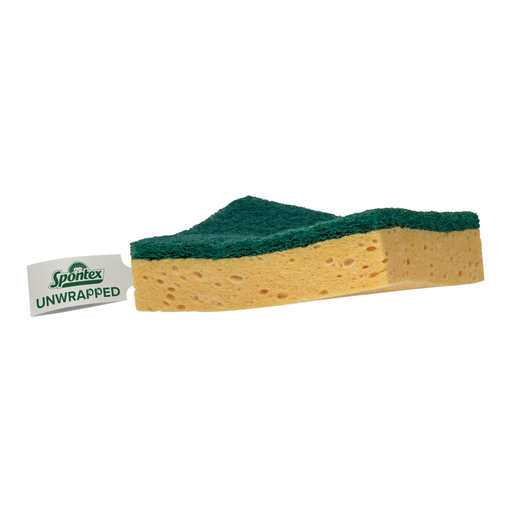
Why This Fits Their Persona: This person actively seeks to reduce their household waste and environmental footprint. They look for products made from sustainable materials with minimal, recyclable or zero packaging.
It completely avoids the "eco-friendly illusion" by delivering on its promises. It has zero packaging, the sponge is 100% biodegradable cellulose and the scourer is made from 100% recycled fibres.
This dual-sided scourer offers a truly sustainable cleaning cycle, from its plastic-free purchase to its biodegradable disposal, without compromising on cleaning performance.
We have compiled a complete, real-time list of products that fully satisfy these strict selection criteria and UK safety regulations.
For hygiene reasons, it is generally recommended to replace your kitchen sponge every one to two weeks, or sooner if it begins to smell or show signs of significant wear. A worn-out sponge is less effective and can harbour bacteria.
Yes, you can extend the life of a sponge and keep it hygienic. Many sponges, like some from Spontex, can be freshened by placing them damp in a microwave for about 30 seconds (always check product instructions first and allow to cool). Alternatively, running them through a hot cycle in the dishwasher or soaking them in a diluted solution of vinegar can also help to clean them.
The difference lies entirely in the material. A non-scratch scourer uses softer fibres designed to lift dirt without scratching delicate surfaces like non-stick coatings. A heavy-duty scourer uses tough, abrasive materials (like coarse polyester or stainless steel) to physically scrape away burnt-on residue from durable cookware like cast iron or stainless steel. Using the wrong one can permanently damage your pans.