Small-space workwear washer
If a shallow or awkward recess limits your choice, measure the usable space around connections and the loading door before comparing capacities. Allow space around freestanding machines for ventilation, pipes and plugs.


For washable workwear, choose a machine that fits the usable installation space and offers settings permitted by the garments' care labels. A shallow freestanding washer may suit a depth-limited recess, an integrated model needs compatible cabinetry, and a washer-dryer is worth considering when drying space is also scarce. None of these formats establishes that home laundering is appropriate for workwear contaminated with blood or body fluids; follow the workplace laundering procedure.
If a shallow or awkward recess limits your choice, measure the usable space around connections and the loading door before comparing capacities. Allow space around freestanding machines for ventilation, pipes and plugs.
Check the laundering instructions on each garment before choosing programmes. Arco highlights the importance of hi-vis care instructions, while the Health and Safety Executive says laundering potentially contaminated fabrics must account for decontamination and handling.
If you need clean garments between shifts, compare rated capacity with your actual loads and check the load and garment conditions attached to any quick programme. A short advertised cycle is not necessarily suitable for every workwear load.
Settle the installation format first, then check garment-care requirements before comparing capacity, cycle conditions and labelled operating information.
Consider it when: you need a stand-alone machine and the measured space accommodates its full installation and door opening; compare shallow and conventional-depth models against that space.
Trade-off: cabinet depth alone excludes the space needed for rear connections and access at the front.
Consider it when: the cabinetry is designed for an integrated appliance and a concealed installation matters to you.
Trade-off: the cabinet opening, furniture door and service access must suit the exact model.
Consider it when: drying space is also limited and the workwear labels permit machine drying.
Trade-off: check installed depth and separate washing and drying capacities before relying on one appliance for both tasks.
| Concern | What to check | Who this matters to |
|---|---|---|
| Installation fit | Measure the usable recess around pipes and plugs, then check the exact model's required clearance and door swing. Allow around 25 mm at either side and roughly 50–150 mm behind freestanding machines and washer-dryers. | If the recess is tight, I need the appliance, its connections and its open door to fit in practice. Around 36% of consumers put installation fit first. |
| Garment care | Match available programmes and temperature controls to each garment label. For potentially contaminated workwear, follow the workplace risk assessment and laundering procedure. | When I wash hi-vis or other care-restricted clothing, keeping to its laundering instructions matters more than using the fastest setting. Garment-safe laundering comes first for around 29% of consumers. |
| Load turnaround | Compare rated capacity with your loads and check the stated load size and conditions for quick cycles; use spin settings permitted by the garments. | With workwear needed again between shifts, I want enough capacity and a suitable cycle to maintain a clean rotation. Around 21% of consumers prioritise that turnaround. |
| Operating information | Compare the exact models' energy labels, programme conditions and stated noise information rather than using energy class alone. | If I wash workwear repeatedly in a small home, operating information and possible disturbance influence my choice. They are the primary concern for around 14% of consumers. |
A machine may fit the measured recess on paper but leave too little room for hoses, plug access or the loading door.
Measure the usable space and check the exact installation instructions. Allow around 25 mm at either side and roughly 50–150 mm at the back, but the model's requirements still need checking.
A short programme may have a restricted load size or unsuitable conditions for a particular garment or level of soiling.
Check the programme's stated load and settings against each garment's care label before counting on it for a shift-to-shift turnaround.
Blood or body-fluid contamination changes how garments must be handled and laundered; washer capacity does not resolve that risk.
Follow the workplace risk assessment and laundering procedure before deciding whether domestic laundering is appropriate. The Health and Safety Executive says the method must account for decontamination and prevention of cross-infection.
An energy label does not, by itself, tell you how a particular workwear load will wash or how its chosen cycle will perform.
Compare the exact models' labelled information and relevant programme conditions. Which? also assesses real-life energy and water use per kilogram in its washing-machine testing.
Beko lists an 8 kg freestanding BM3WT3841 at 54.6 cm deep and an 8 kg integrated WTIK84122F at 55 cm deep, giving two formats to compare against different installation spaces.
The Bosch WGE03408GB is a freestanding 8 kg model specified at 848 × 598 × 588 mm, for spaces that can accommodate its dimensions and installation clearances.
The Miele WWB360 WCS is listed as an 8 kg, 1,400 rpm front-loading model with QuickPowerWash and app connectivity.
These choices include freestanding washers to assess for depth-limited spaces and integrated washers to assess for compatible cabinetry. Check installation requirements and garment-care settings for the exact model before deciding.
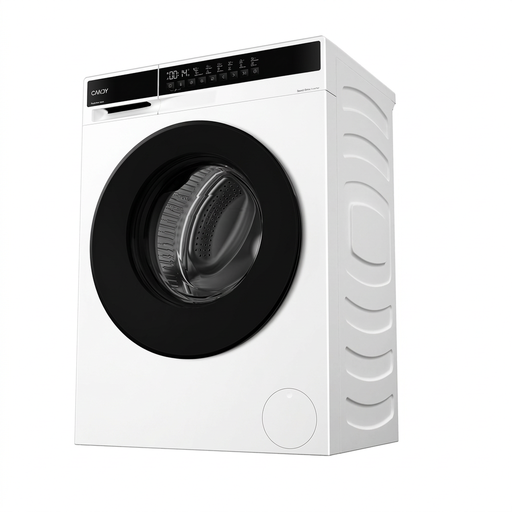 No image available
Consider this model if you need a freestanding washer for regular washable-workwear loads and can accommodate its installation clearances.
Stated capacity: 8 kg; spin: 1,400 rpm. Check the load conditions of any short programme and follow each garment's care label.
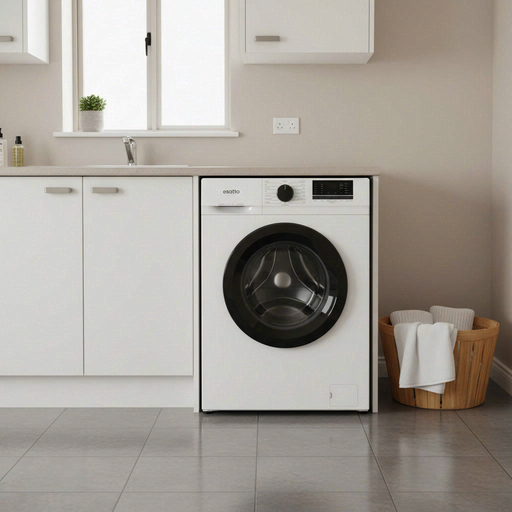 No image available
Consider this freestanding model if you are comparing washers for a limited-depth installation; check its full installed space against your measurements.
Stated capacity: 8 kg; spin: 1,400 rpm. Confirm quick-cycle load conditions before relying on a short cycle for workwear.
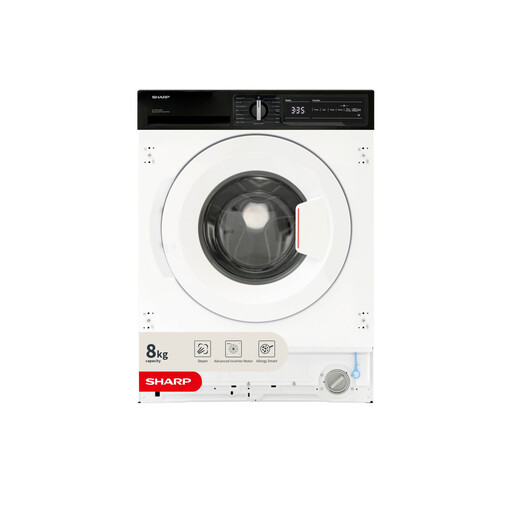 No image available
Consider this model where an integrated washer suits the cabinetry, provided its aperture, furniture door and service access are compatible.
Stated capacity: 8 kg; spin: 1,400 rpm. Check programme conditions against the workwear labels.
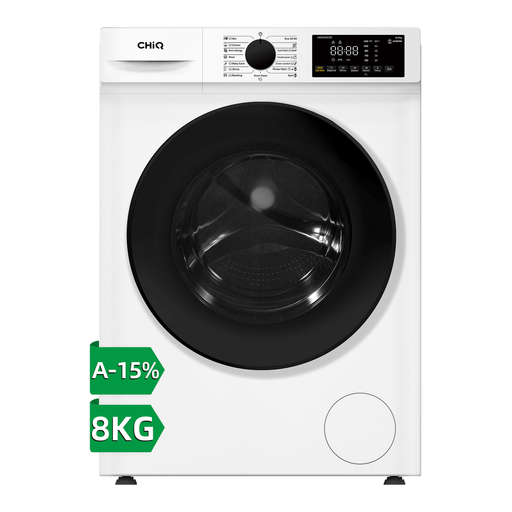 No image available
Consider this freestanding model for repeat washable-workwear loads if its installed dimensions leave room for connections and the loading door.
Stated capacity: 8 kg; spin: 1,400 rpm. Check the programmes available for your garments rather than assuming a particular turnaround time.
 No image available
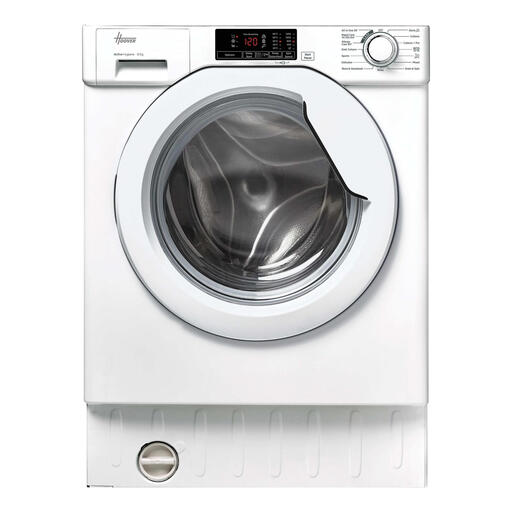
Consider this model for a compatible integrated installation where regular washable-workwear loads need an 8 kg rated capacity.
Stated capacity: 8 kg; spin: 1,400 rpm. Check cabinet-door and service clearances, and use rapid cycles only under their stated garment and soil conditions.
Measure the usable space around pipes and plugs, including room to open the loading door, and compare it with the exact appliance's installation instructions. Allow around 25 mm at either side and roughly 50–150 mm behind freestanding washing machines and washer-dryers for ventilation and connections.
Use an ordinary washer only with programmes and settings permitted by the specific garment's laundering instructions. Arco emphasises following hi-vis care labels; a machine's capacity or quick programme does not override them.
Do not decide this from the washer specification alone: follow the workplace risk assessment and laundering procedure before considering home laundering. The Health and Safety Executive says the method must account for decontamination and handling that prevents cross-infection.
No; compare the exact models' energy labels alongside the programmes and load conditions you expect to use. Which? assesses real-life energy and water use per kilogram in its washing-machine testing, illustrating why labelled class alone does not describe every cycle.